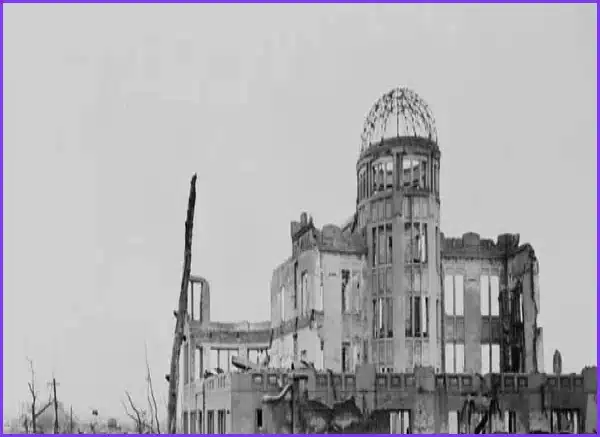
Eighty-one years after the atomic bombings of Japan, the world is witnessing a somber intersection of history and modern geopolitics. Terumi Tanaka, now 97, remains one of the few who can recount the blinding white glare and the subsequent destruction that leveled Nagasaki in 1945. As a hibakusha—the term for atomic bombing survivors—Tanaka describes the event as a "blazing inferno" that turned his city into ash in moments. He recalls sitting by a window, followed by a flash, thunder, and an "unbearable silence." As of March 2026, only 91,105 hibakusha remain, with an average age of 87. Their impending absence signals not only the loss of vital first-person testimony but, according to observers, a potential erosion of the world's moral compass regarding nuclear weapons.
For decades following the end of the Cold War, the horrors of Hiroshima and Nagasaki served as an invisible restraint on global policymakers. The "nuclear taboo," characterized by the non-possession, non-transfer, and non-use of such weapons, was widely considered a robust norm. Today, however, that consensus is fracturing as deterrence replaces disarmament as the primary focus of international statecraft. While total global warhead numbers have decreased from the 1986 peak of 70,300 to approximately 12,241 today, the trajectory of arms control has reversed. Currently, nine nuclear-armed states hold roughly 9,614 warheads in military stockpiles, and all are engaged in the modernization of their nuclear arsenals.
The expansion of these capabilities is most visible in China, which grew its stockpile from 350 warheads in 2022 to 620 by January 2026. Simultaneously, the United States and Russia are committing hundreds of billions of dollars to next-generation delivery systems, while Britain plans to raise its warhead ceiling and France pursues upgrades to its sea-based deterrent. Nuclear doctrines are also shifting to lower the threshold for potential use. Notably, the Stockholm International Peace Research Institute (SIPRI) reported this year that India has actively deployed 12 nuclear warheads as part of its sea-based deterrent, marking a departure from previous assumptions that warheads remained de-coupled from launchers.
The collapse of the post-Cold War belief that nuclear weapons were becoming politically less valuable is further underscored by the expiration of the New START Treaty on February 5, 2026. With this, the United States and Russia no longer share a legally binding bilateral agreement limiting their arsenals. Efforts at multilateral disarmament have also stalled, with the Conference on Disarmament in Geneva remaining paralyzed. While civil society groups have successfully pushed for treaties covering landmines, cluster munitions, and the Treaty on the Prohibition of Nuclear Weapons, the latter remains unratified by any of the nine nuclear-armed nations. As great power rivalry intensifies, nuclear weapons are increasingly viewed as instruments of routine statecraft rather than weapons of last resort.
Related Articles

Md. Kazi Bijoy is a dedicated tech enthusiast and content creator with a passion for digital innovation. With years of experience in the tech industry, he specializes in breaking down complex topics into easy-to-understand guides. When he isn’t writing, he explores the latest gadgets and researches emerging trends in the digital world.