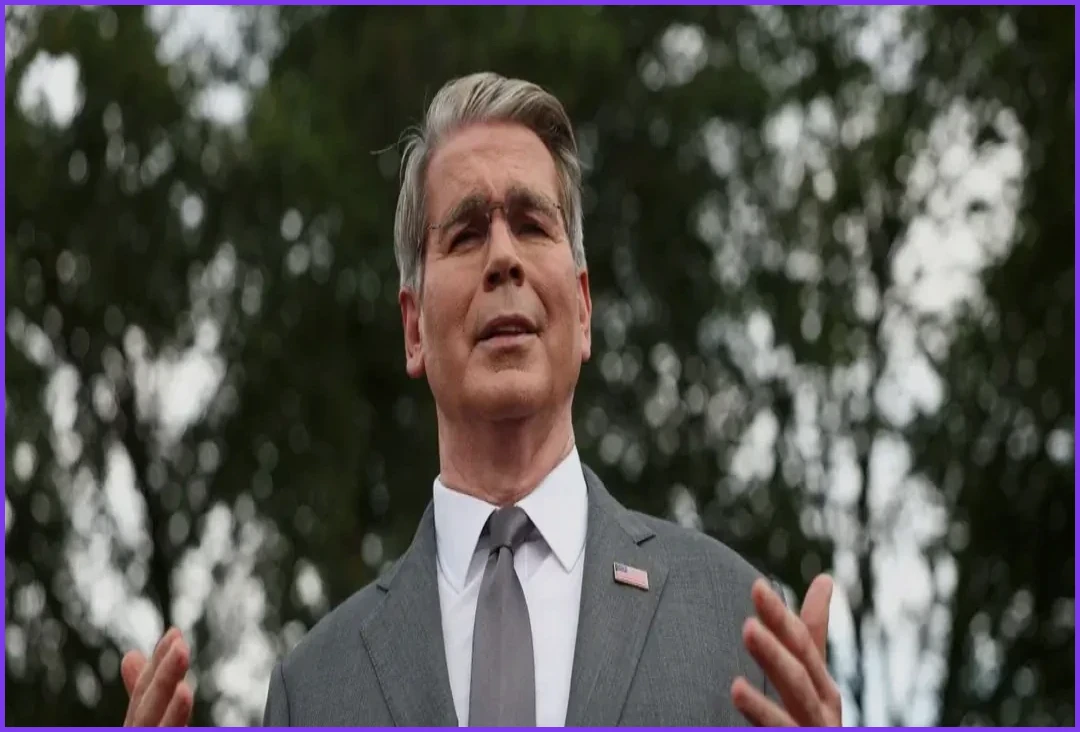
The United States Treasury has taken decisive action to sever Banque Misr UAE from the American financial system. Washington accused the Emirates-based branch of the Egyptian financial institution of processing approximately $1.8 billion for companies suspected of having links to Iran's shadow banking network. This major enforcement action comes only four days after US Treasury Secretary Scott Bessent introduced "Operation Economic Outcast," a comprehensive sanctions campaign designed to isolate Iran economically by cutting off its financial connections worldwide.
The latest financial crackdown comes nearly six months into the war, which remains without a lasting settlement. As military efforts continue, Washington is increasingly turning to intense economic leverage to squeeze Tehran's access to global markets and international banking. Treasury Secretary Bessent emphasized this global strategy when announcing the measures, stating that the objective is to sever every economic lifeline sustaining the Iranian regime until Tehran stands completely alone.
The campaign, described as an "economic D-Day," is hitting Iran at a time when its domestic economy is already under severe strain. According to Iran's Central Bank, the country's critical oil exports have ground to a halt, the national currency has plummeted to an all-time low, and international observers expect a major economic contraction. Abdolnaser Hemmati, the Governor of Iran's Central Bank, acknowledged the severe impact of these measures in a televised interview last week, confirming that oil exports have essentially dropped to zero. Hemmati noted that while there is no doubt restrictions are in place, the reality is that the country is currently unable to export any oil.
This halt in oil trade is largely driven by a US naval blockade on vessels traveling to and from Iranian ports, which was restored on July 14 following a brief period of eased restrictions. Data from the commodities intelligence firm Kpler highlights the immediate impact of the maritime enforcement: Iranian crude oil loadings fell sharply from an average of 893,000 barrels per day in July to just 156,000 barrels per day throughout August. Hemmati’s recent admission suggests that the pressure has only intensified since then, bringing shipments down to zero.
According to Max Gillman, the Friedrich A. Hayek Professor of Economic History at the University of Missouri-St. Louis, the naval blockade is likely to remain the primary tool of economic pressure for the foreseeable future. Gillman explained that the blockade pressures the economic resources available to the ruling Iranian regime and is expected to continue indefinitely.
In addition to halting oil exports, the US strategy focuses on preventing Tehran from accessing its existing foreign currency reserves. Hemmati stated that while the Iranian government and the Central Bank had prepared for a decline in revenues, they face severe constraints because Washington has frozen their foreign currency reserves and blocked withdrawals. Furthermore, Hemmati indicated that funds expected to be released under the Islamabad Memorandum—a framework agreement reached with Washington in June—have not yet been freed.
To bypass these restrictions, Iran has increasingly turned to alternative payment networks, shadow banking, cryptocurrency, and third-country intermediaries to move funds. In response, US authorities are targeting these channels to prevent Tehran from converting energy revenues into usable foreign currency. The US Treasury recently announced new categories of Iranian economic activity that could expose foreign businesses and individuals to secondary sanctions, including digital assets, technology, gold, aviation, and shipping.
The US Treasury is also preparing sanctions against more than 60 entities, individuals, and vessels accused of assisting Iran. Joint teams from the US Treasury, the State Department, and the military are actively meeting with foreign counterparts to establish strict timelines for halting these activities. Bessent warned that if countries do not take unilateral action within their defined timelines, the US will act through Treasury authorities. He specifically called for the closure of all branches of Iran's Bank Melli and warned that any entity facilitating money laundering for Iran will be removed from the US dollar system.
These measures are hitting Iran during a period of deep economic distress. The International Monetary Fund (IMF) projects that Iran's economy will contract by 6.1% in 2026, representing a downward revision of 7.2 percentage points from its January forecast. Average inflation is expected to reach 68.9% in 2026, up from 50.9% in 2025. Additionally, the labor market has weakened, with the official unemployment rate rising to 9.1% in the spring, and the number of employed people falling by approximately 450,000 compared to the previous year. Meanwhile, the Iranian rial reached a record low of about 2 million against the US dollar on the informal market, and point-to-point consumer inflation hit 87.9% in July, according to the Statistical Centre of Iran.
Despite the aggressive posture, there are clear limits to Washington's leverage. When asked why the US is giving foreign business partners a grace period to halt activities rather than imposing immediate penalties, Bessent explained that the administration wants to avoid destabilizing the global financial system. Additionally, trade restrictions on Iran carry risks for global energy markets. Gillman noted that keeping global crude oil prices within the $70 to $80 range helps maintain economic stability and limits Russian export revenues, making a blockade a less disruptive option than renewed large-scale military conflict. However, whether this intense economic pressure will force the political concessions Washington desires remains uncertain, as Iran has managed to survive decades of US sanctions without shifting its core policies.
Related Articles

Meet Md. Rubel Rana
As a core contributor to Worlddincidents.com, Rubel Rana brings a unique perspective to the world of journalism. Whether it’s deep-diving into historical trivia or covering the latest global headlines, Rubel Rana is committed to delivering high-quality, high-impact articles. Their writing blends meticulous research with a compelling voice, helping readers stay informed and curious about the world around them.
1 thought on “US Cuts Off Banque Misr UAE in Iran Sanctions Campaign”