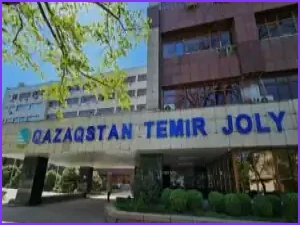
Kazakhstan’s ongoing transition from the Cyrillic alphabet to the Latin script has provoked strong and highly politicized reactions in Russian media. This response, however, is not a defense of the Russian language itself, but rather an effort to protect the symbolic, ideological, and geopolitical hierarchy of the "Russian world." The script reform, which began in 2017 under Kazakhstan’s first president, Nursultan Nazarbayev, is scheduled for full implementation by 2031. Officially, the reform aims to strengthen Kazakh national identity, bolster the Kazakh language, and restore authentic Kazakh pronunciation, which was distorted by the Soviet-imposed Cyrillic script. Crucially, the transition applies exclusively to the Kazakh language and does not alter the status or use of the Russian language.
Despite the reform's limited scope, Russian media has viewed the linguistic shift through a heavily politicized, colonial, and nostalgic lens. In July 2025, an analysis of over 200 articles published in an English-language feature argued that Moscow views Latinization as a geopolitical threat. Shortly after, Vladislav Makarov published an article titled "Latin Poison for Kazakhstan" in the Russian outlet Ritm Evrazii. Makarov criticized the "stubborn desire" of Kazakh officials to ban the Cyrillic alphabet, claiming it caused widespread "bewilderment among Russians." He further asserted that Moldovan and Azerbaijani cultures did not achieve global fame by switching to Latin, arguing instead that the script change merely serves to bind post-Soviet republics to "new overlords." Makarov defended Russia's right to comment on the reform by asserting that Kazakhstan has been "connected to the Russian World for centuries."
The "Russian world" (Russkiy Mir) is a socially constructed ideological and geopolitical order designed by Moscow to foster political loyalty, belonging, and hierarchy. It is anchored by the shared history, the Cyrillic alphabet, and the Russian language, with Russia placing itself at the legitimate center of this diverse community. This flexible construct is often contrasted with a supposedly declining Western civilization. Moscow operationalizes this on multiple levels, including through the state-run Russian World Foundation, which promotes Russian language and culture in Central Asia. Conceptually, Russian media employ the concept to perpetuate ideas of Russia's symbolic and civilizational power.
An analysis of 77 articles published between 2001 and 2025 across mainstream Russian outlets (such as Gazeta.Ru, Lenta.Ru, and Kommersant) and fringe nationalist platforms (like Regnum and Ritm Evrazii) demonstrates how the Russian world concept is weaponized against Kazakhstan's alphabet reform. These narratives frequently fuse the "Russian world" with Soviet and imperial history. For instance, a 2021 article by Lenta.Ru claimed that Kazakhstan's very statehood, culture, and script were created in Moscow, asserting that the Bolsheviks "turned Kazakhs into a nation and gifted them a state." From this perspective, the alphabet reform is framed as a sign of ingratitude toward Moscow, which views itself as the successor to the Soviet Union.
In 2017, another Lenta.Ru article criticized Kazakh history books for their critical stance on the Soviet era—particularly regarding the devastating 1930s famine that claimed the lives of over 1.5 million people, representing one-third of the ethnic Kazakh population. The outlet labeled Latinization as a "symbolic distancing from Russia’s legacy," pointing also to the renaming of Soviet geographical locations to Kazakh names. Similarly, a 2017 article in Vedomosti referred to Russia as a "metropole" from which post-Soviet states are attempting to break away out of fear of being "swallowed."
Within the Russian world framework, Cyrillic is treated not just as a writing system but as a visual representation of Moscow's transnational influence. Scholar Lara Ryazanova-Clarke identified a mechanism of "inverse transnational pride," where Moscow views the Russian language as a shared transnational commodity. However, when a foreign government adopts policies perceived as hostile, Russian media shifts to portraying the language as an object under threat that requires active defense. Consequently, Russian media has repeatedly described Kazakhstan's reform as an "offensive against the Russian language and Cyrillic," using militaristic language to equate the policy with a hostile operation.
Russian media claims that Latinization will trigger a mass outmigration of ethnic Russians, altering Kazakhstan's demographics. It also predicts a division within the Kazakh nation itself, claiming some citizens will refuse to read Latinized Kazakh and will turn entirely to Russian. To justify these warnings, Russian media has established a linguistic hierarchy. It portrays Russian as a superior, highly resourceful "donor-language" and denigrates Kazakh and other post-Soviet languages as merely "colloquial in nature." They argue that scientific and academic development in these nations is impossible without Russian proficiency. This sentiment has sometimes been echoed by Kazakh figures; in 2017, Regnum quoted Kazakh publicist and writer Seydakhmet Kuttykadam stating that Kazakh language and literature would "fade away" without Russian as a donor.
Russian media also securitizes the impact of Latinization on Cyrillic. The reform is called "terrible news for Russia" because it will no longer be able to "formulate cultural codes" through the alphabet, signaling a drift toward the West. These narratives demonstrate that Russian media views Latinization not as a linguistic reform but as a geopolitical reconfiguration impacting Russia's standing as a regional superpower. Authors rarely discuss the practical implications of the new alphabet, choosing instead to defend the hierarchical and symbolic order created by Russia.
Another prominent theme is the framing of Latinization as a plot orchestrated by external actors like Western powers or Turkiye. In 2010, KM.Ru claimed the script change was a preparation to "adapt" public consciousness to "European civilizational standards." In 2021, Nezavisimaya Gazeta accused "Anglo-Saxons" of using the Latin alphabet to gain "total control over defeated and enslaved peoples." Similarly, Makarov's 2025 piece questioned whether the Latin alphabet would truly bring Kazakhs closer to the Turkic world, asking if a Turk from Istanbul would feel closer to a Kazakh than a Russian from Chelyabinsk. This framing is intended to emphasize a natural and historical proximity between Kazakhstan and the Russian world, while portraying Kazakhstan-Turkiye relations as politically manufactured.
By attributing the script reform to external manipulation by Western or Turkish powers, Russian media strips Kazakhstan of its sovereign agency. This framing allows Moscow to ignore the domestic, self-determined goals of the reform and instead view it entirely as a geopolitical threat to Russia's regional superpower status. Ultimately, the media's reaction is not about the practicalities of the alphabet, but about defending a hierarchical, civilizational order centered in Moscow.
Related Articles

Md. Kazi Bijoy is a dedicated tech enthusiast and content creator with a passion for digital innovation. With years of experience in the tech industry, he specializes in breaking down complex topics into easy-to-understand guides. When he isn’t writing, he explores the latest gadgets and researches emerging trends in the digital world.
2 thoughts on “How Russian Media Attacks Kazakhstan’s Shift to Latin Script”