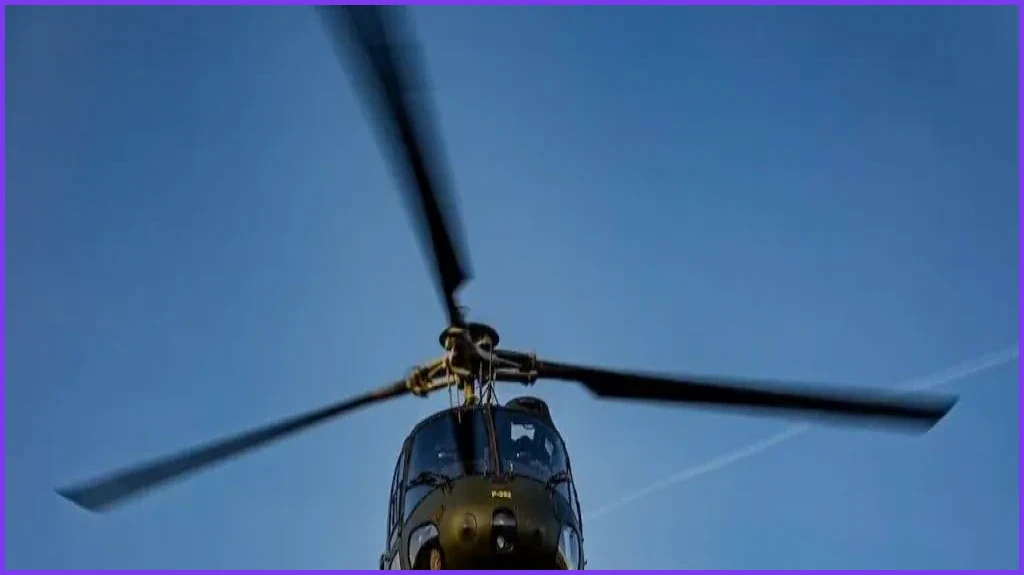
Denmark has officially summoned the Russian ambassador following a tense encounter in the Baltic Sea, where a Russian warship allegedly fired two emergency flares at a Danish military helicopter. The incident occurred on Monday while the Danish Fennec helicopter was conducting what officials described as a routine photographic operation. The helicopter was monitoring a Russian frigate located in international waters off the coast of Gedser at the time of the event.
According to a statement from the Danish armed forces, the action was unprovoked, and one of the two flares passed in close proximity to the aircraft. The Danish foreign ministry has characterized the incident as "completely unacceptable." Prime Minister Mette Frederiksen condemned the move as "reckless," asserting that the Russian action was specifically designed to "intimidate and divide." Foreign Minister Lars Lokke Rasmussen further accused Russia of "gradually shifting the boundary for what they consider acceptable behaviour," adding that this is a development Denmark cannot accept.
In response, the Russian ambassador to Denmark, Vladimir Barbin, stated that Moscow would "thoroughly investigate all the circumstances of the incident." However, the Russian side also issued counter-accusations, claiming that the Danish helicopter had carried out "dangerous manoeuvres" near Russian warships. Ambassador Barbin further alleged that this was not the first instance of Danish Air Force helicopters performing such actions near Russian vessels.
The incident has drawn wider international concern, with European Commission President Ursula von der Leyen labeling Russia's behavior as "reckless and dangerous." She added that this event, alongside a recent drone incident over Lithuania, is "part of a broader pattern of Russian aggression and provocation against Europe." Danish Defence Minister Jeppe Bruus noted that the frigate's crew made no attempt to establish contact with the helicopter during the encounter.
Regional security concerns were compounded by events elsewhere in the Baltic region. Overnight, Nato fighter pilots shot down a drone that entered Lithuanian airspace near the city of Kaunas shortly after midnight on Tuesday. While the Lithuanian national crisis management centre stated that the origins of the drone have yet to be determined, President Gitanas Nausėda emphasized that the event highlights increased Russian aggression.
Meanwhile, Poland announced that it had conducted "preventive" aviation operations in its airspace on Monday night due to the activity of Russian jet-powered unmanned aerial vehicles striking Ukrainian territory. Nato jets have been scrambled multiple times this year to intercept stray drones in Estonia and Latvia, incidents which Ukraine has attributed to Russian electronic warfare technology designed to disrupt flight paths.
Related Articles

Md. Kazi Bijoy is a dedicated tech enthusiast and content creator with a passion for digital innovation. With years of experience in the tech industry, he specializes in breaking down complex topics into easy-to-understand guides. When he isn’t writing, he explores the latest gadgets and researches emerging trends in the digital world.