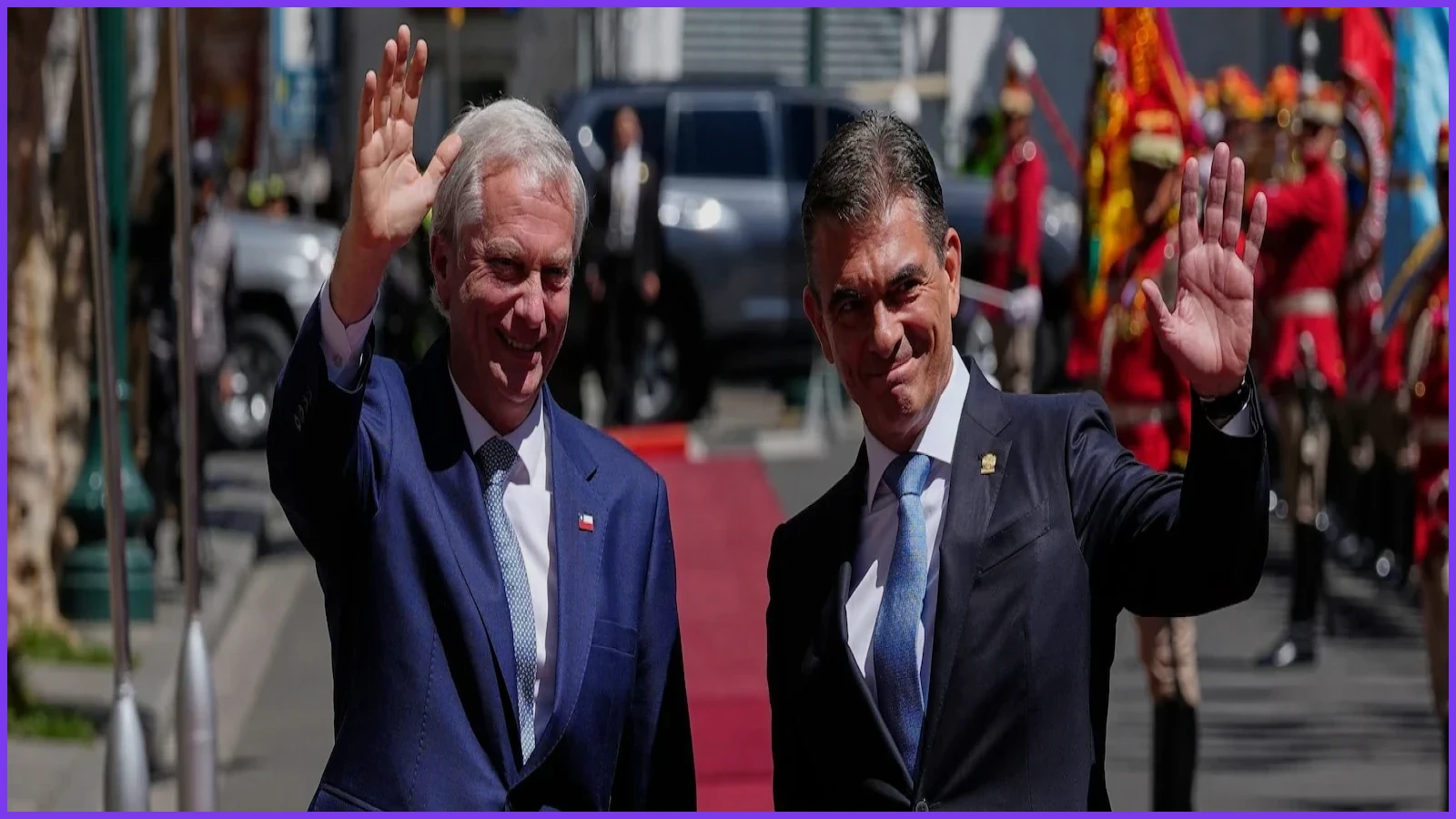
Chilean President José Antonio Kast arrived in La Paz on Friday for a state visit to Bolivia, marking the first trip by a Chilean leader to the neighboring nation in more than seven decades. The historic visit takes place amid a rightward political realignment across South America that is reshaping long-standing regional rivalries.
Both Kast and newly elected Bolivian President Rodrigo Paz are conservative leaders allied with U.S. President Donald Trump. As part of a broader push by Washington to build security partnerships with like-minded administrations throughout Latin America, both governments have signed onto the Trump administration's "Shield of the Americas" coalition against drug trafficking.
Marking the milestone visit, Kast wrote on X, "Today, after 71 years, a president of Chile returns on an official visit to La Paz. Let’s begin to build the future of our nations together." Despite the symbolic breakthrough, officials confirmed that restoring full ambassador-level diplomatic ties—which have been broken since 1978—was not on Friday's official agenda. The two South American neighbors currently maintain consulates and collaborate on immigration and trade.
Bolivian Minister of the Presidency Fernando Aramayo described the cautious approach to bilateral relations, stating, "It’s too early. There’s a path to work on to change the approach to relations, and it will take time." He emphasized that current talks are centered on "signing mutually beneficial agreements."
Relations between the two countries have been severely strained since Bolivia lost its Pacific Ocean coastline to Chile during the 1879–84 War of the Pacific. Notably absent from Friday's discussions was Bolivia's traditional demand for a sovereign corridor of land connecting it to the Pacific Ocean. That claim defined the foreign policy of former socialist President Evo Morales, who brought Chile to the International Court of Justice to force negotiations, ultimately losing the case in 2018.
Morales, now an outspoken critic of Paz, strongly condemned excluding the maritime claim from the talks, calling it "an affront to historical memory." Addressing the criticism, Aramayo stated that the current government has not abandoned the claim, but noted that officials must first "create the conditions to work on this matter."
Both nations have practical incentives to enhance economic and logistical ties. Landlocked since the late 19th-century war, Bolivia routes approximately 70% of its foreign trade through ports located in northern Chile. In return, Paz offered Chile potential access to the Paraguay-Paraná waterway, a vital river network connecting Brazil, Paraguay, Argentina, and Uruguay to the Atlantic Ocean.
The high-level talks occur as Paz faces mounting domestic pressure and public protests over his decision to eliminate fuel subsidies. Although Bolivia was once a major regional exporter of natural gas, the country currently grapples with severe fuel shortages and declining hydrocarbon production.
Related Articles

Meet Md. Rubel Rana
As a core contributor to Worlddincidents.com, Rubel Rana brings a unique perspective to the world of journalism. Whether it’s deep-diving into historical trivia or covering the latest global headlines, Rubel Rana is committed to delivering high-quality, high-impact articles. Their writing blends meticulous research with a compelling voice, helping readers stay informed and curious about the world around them.