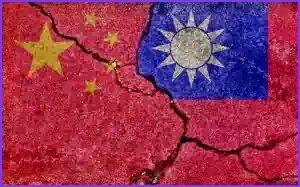
Chinese scholars at a symposium hosted by the University of Hong Kong’s Beijing Center have drafted a 12-point consensus outlining how Beijing could govern Taiwan following potential unification. The academic framework details proposed administrative, military, legal, and economic structures, offering a rare look into scholarly designs for post-conflict governance while highlighting stark divergences from official Chinese white papers and positions held by Taiwan's leadership.
The low-profile academic event, held on September 12, brought together more than 20 Chinese scholars to examine institutional models under the "One Country, Two Systems" principle. Their consensus directly incorporated post-conflict scenarios, proposing that if unification is achieved through "non-peaceful means," a three-to-five-year transition period of "quasi-military governance" would be established to target "Taiwan independence elements" or separatists. While Beijing's official policy stance remains centered on "peaceful reunification"—with military force described in its 2022 white paper as a last resort reserved for external interference or a small number of separatists—the symposium explicitly addressed post-conflict military control.
Under the scholars' 12-point consensus, all political authority in Taiwan would derive strictly from authorization by the central government in Beijing. Taiwan's existing armed forces would be completely disbanded, with their weapons collected and surrendered to the central authority. Defense responsibilities would shift entirely to Beijing, which would permanently station People’s Liberation Army (PLA) garrisons on the island, mirroring military deployments in Hong Kong and Macao following their handovers in 1997 and 1999. Taiwanese citizens would also be permitted to voluntarily enlist in the PLA. The PLA serves as the armed wing of the Chinese Communist Party (CCP) under the Central Military Commission led by Xi Jinping, operating under the directive that "the party commands the gun." In contrast, Article 138 of the Constitution of the Republic of China (ROC) requires Taiwan's military to maintain strict political neutrality above party affiliation.
The symposium’s stance on disarming Taiwan marks a shift from older official documents. Although Beijing's 2022 white paper titled "The Taiwan Question and China’s Reunification in the New Era" remained silent on the future of Taiwan's military, an earlier 1993 white paper on reunification explicitly stated that Taiwan would be allowed to retain its own military and that mainland China would not send troops or administrative personnel to the island.
Regarding governance and legal structures, the scholars recommended a "de-nationalization" and "de-centralization" of Taiwan's current legal framework, converting the existing legal body into Special Administrative Region (SAR) regulations under the principle of "patriots govern Taiwan." Existing political parties could be retained under a new constitution—a topic also omitted from the 2022 white paper—though the blueprint calls for a sweeping reorganization of Taiwan's administrative boundaries and electoral system. Educational curricula would also face mandatory reform, aligning Taiwanese textbooks with mainland China's "patriotic and national" standards.
Taiwan's functional multiparty democracy presents a direct contrast to Beijing's political framework. Since democratization in the 1990s, political power in Taiwan has alternated between the Kuomintang (KMT), which favors closer cross-strait engagement, and the Democratic Progressive Party (DPP), which emphasizes a distinct Taiwanese identity, maintains de facto independence, and supports preserving the cross-strait status quo. China operates as a single-party state where CCP leadership is embedded in the PRC Constitution. Eight other legally recognized parties exist in China, but all must accept CCP leadership and participate solely through the state advisory body, the Chinese People’s Political Consultative Conference, without contesting open elections.
On economic integration, the scholars' blueprint envisions incorporating Taiwan into a new "Zhejiang-Fujian-Taiwan Greater Bay Area," positioning the island as a high-tech industrial hub and regional economic operations center while expanding trade and cultural ties. Geopolitically, the consensus designates Taiwan as an "eastern bulwark of national security." Positioned within the First Island Chain—a strategic chain stretching from Japan through Taiwan to the Philippines—Taiwan is viewed by Beijing as both a gateway for Pacific access and a frontline against foreign military presence.
Military analysts view a potential conflict across the Taiwan Strait as one of the world's primary geopolitical risks. Security experts note that a large-scale confrontation—especially one involving the United States, Japan, or other regional allies—would create severe hazards for the CCP's core priority of maintaining political monopoly and regime survival. MIT professor and China researcher M. Taylor Fravel observed that Beijing has grown increasingly conscious of these strategic risks following Russia's 2022 invasion of Ukraine, even as China maintains military pressure through large-scale drills and gray-zone operations around the island.
Commentary regarding the HKU Beijing Center symposium noted that no scholars from Taiwan participated in the discussions, including figures who support closer cross-strait integration. One online analysis suggested Taiwanese academics were excluded to protect them from potential legal or social risks at home due to the sensitive discussions surrounding non-peaceful unification. However, the author also asserted that Taiwan's local interests should not override China's national objectives, leaving questions about how much decision-making authority Beijing would ultimately extend to Taiwan's population.
In late August 2026, shortly before the symposium, Ci-Ze Li, an associate professor at Taiwan’s National Changhua University of Education, published three essays offering a conditional model for a Taiwan-specific version of "One Country, Two Systems." Clarifying that his proposal was an academic exercise rather than evidence of Taiwanese public acceptance, Li proposed that under a unified sovereign framework, Taiwan should keep its democratic elections, judicial autonomy, financial control, and locally commanded defense forces. To ensure durability, Li called for explicit constitutional safeguards, including a dedicated Taiwan chapter in the PRC Constitution, a Basic Law, and a charter ratified by Taiwanese voters.
Although Li's proposal differed sharply from the symposium's 12-point plan, Beijing’s Taiwan Affairs Office (TAO) expressed openness to dialogue in Taiwan. TAO spokesperson Zhu Fenglian stated that engaging earlier and more broadly on governance ideas would yield greater benefits for Taiwan. However, Taiwan's government rejected both frameworks. Liang Wen-chieh, deputy minister of Taiwan’s Mainland Affairs Council (MAC), stated that Beijing would not accept Li’s conditions, asserting that China's strategy remains replicating the Hong Kong model. Liang added that as long as the CCP maintains absolute control, any promises offered by Beijing lack credibility, reiterating Taipei's stance that Taiwan will not accept the formula under any conditions.
The concept of "One Country, Two Systems" was originally devised by Beijing with Taiwan in mind. In September 1981, NPC Standing Committee Chairman Ye Jianying issued a nine-point proposal offering Taiwan a "high degree of autonomy" as an SAR. In 1982, Deng Xiaoping developed these ideas into the official formula later applied to Hong Kong during its transfer from British control on July 1, 1997—after more than 150 years of rule following the First Opium War (1839–1842)—and to Macao upon its transfer from Portugal on December 20, 1999.
Chinese President Xi Jinping has described unification as an "inevitable requirement for the great rejuvenation of the Chinese nation," emphasizing official narratives that Taiwan was ceded to Japan in 1895 after the First Sino-Japanese War (1894–1895) and returned in 1945 under the Cairo and Potsdam declarations, with the PRC inheriting sovereignty as the successor state in 1949. However, historical research by Frank S. T. Hsiao and Lawrence R. Sullivan published in Pacific Affairs showed that official CCP documents between 1928 and 1943 originally referred to Taiwanese as a distinct nation or nationality (minzu) and recognized Taiwan as a colony entitled to self-determination. Advocates for Taiwanese independence emphasize growing local identity and statehood criteria under Article 1(2) of the UN Charter, while Beijing contends that self-determination cannot overrule historical territorial integrity. Despite these competing legal positions, the PRC has never exercised jurisdiction over Taiwan.
Related Articles

Mr. Udoy is a professional Web Developer and Blogger with 7+ years of experience in the tech world. He specializes in web architecture and digital storytelling. As the driving force behind worldincidents.com, he focuses on delivering high-quality, well-researched content to a global audience.