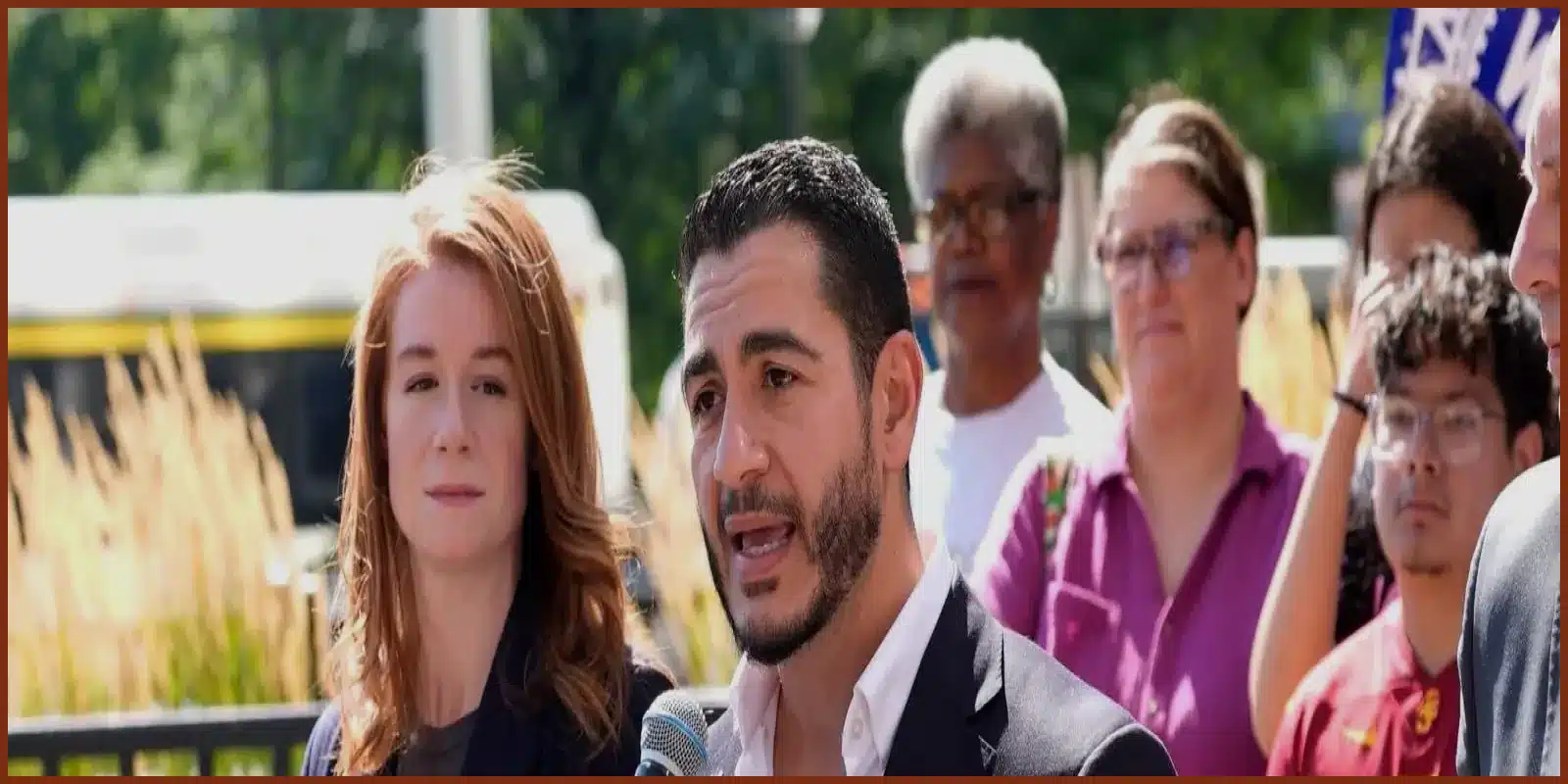
Abdul El-Sayed, an unabashed progressive who campaigned on a platform of empowering the working class, secured the Democratic nomination for Michigan's pivotal U.S. Senate race on August 4. His victory was largely driven by strong support from college-educated voters, particularly in areas like Ann Arbor, home to the University of Michigan, and Grand Rapids. Now, as the party looks to retain the seat currently held by Democratic Sen. Gary Peters, El-Sayed must pivot to unite a fractured Democratic base and appeal to moderate, independent voters to defeat Republican nominee Mike Rogers in November.
Securing the Michigan seat is widely viewed as a requirement for Democrats hoping to reclaim control of the Senate, where Republicans currently hold a 53-47 majority. While the party has opportunities to flip seats in Maine, Texas, and North Carolina, losing the Michigan seat would effectively end their chances of taking the chamber. The challenge ahead for El-Sayed is significant; he must bridge the gap with older Black voters who largely supported his primary opponent, Rep. Haley Stevens, and address concerns from those who believe a more moderate candidate would have been better positioned for the general election. Stevens, a moderate Democrat, consistently performed better in polling against Rogers and beat El-Sayed in Detroit, the state's largest Democratic stronghold.
Political analysts note that El-Sayed's campaign represents a test for progressive politics in a battleground state. Longtime Democratic strategist Simon Rosenberg noted that candidates aligned with the wing of the party represented by Sen. Bernie Sanders have generally struggled to win in competitive statewide races outside of deep blue regions. Rosenberg remarked on his podcast, “It's an experiment, and we'll see it how it goes,” while expressing concern that the candidate has polled lower than other Democrats in key battleground contests this year. “We should be a little worried that this politics has no track record of winning in places like Michigan or in competitive House races, but we need it to win this time,” he added.
El-Sayed, a fiery and charismatic former public health official in Detroit, campaigned on expanding Medicare for all and taxing billionaires, though he avoids the socialist label used by other progressives. His victory has drawn immediate fire from the opposition. The National Republican Senatorial Committee released a 30-second ad labeling him “the most radical Senate candidate in America” and referring to him by his full name, “Abdulrahman Mohamed El-Sayed.” If elected, he would be the first Muslim to serve in the U.S. Senate. Donald Trump also weighed in on Truth Social on August 5, calling him “a Communist loser who hates Jews and Israel” and labeling the nomination “great news for the Republican party.”
These attacks come as El-Sayed faces scrutiny for his harsh stance on the Israeli government, having previously called the Israeli government “evil.” In a speech after securing the nomination, El-Sayed sought to address concerns from Jewish Michiganders, stating, “My commitment to your safety, to Jewish safety, is the same commitment I have to the safety of my own daughters.” Political science professor Matt Grossman of Michigan State University noted that El-Sayed’s candidacy has exposed internal party rifts over Israel and Gaza, and that Republicans believe they have significant ammunition against him. Grossman also noted that El-Sayed must overcome his relative newness to electoral politics and potential voter bias against Muslim candidates.
His opponent, Mike Rogers, is a former FBI agent and longtime congressman who previously chaired the House Intelligence Committee. Rogers, who has been endorsed by Donald Trump, is a seasoned campaigner who narrowly lost to Sen. Elissa Slotkin in 2024 by just 19,006 votes. Rogers has positioned himself as a staunch supporter of the former president. Despite the internal party tension, Democratic leadership has signaled a desire for unity. Senate Minority Leader Chuck Schumer and Sen. Kirsten Gillibrand, who chairs the Democratic Senatorial Campaign Committee, issued a joint statement praising El-Sayed’s campaign for its focus on working families and declaring that the party is united by the common goal of checking Donald Trump's influence. Schumer had previously refused to say whether he would endorse El-Sayed if he emerged as the nominee, but stated, “Bottom line, we are going to win Michigan, take back the Senate, and have a majority.”
As the campaign moves toward November, El-Sayed faces the dual task of overcoming his status as a newcomer to electoral politics and navigating the skepticism of centrist groups like Third Way. Kate deGruyter, vice president of communications for the organization, argued that El-Sayed needs to move away from positions that the GOP can easily paint as extreme, pointing to his past association with media figure Hasan Piker and his wearing of an “abolish ICE” shirt. “Our view is that he needs to ditch the extremism now, and that’s going to take some real work because he’s dug a pretty big hole for himself with general election voters,” she said. Conversely, Joseph Geevarghese, executive director of Our Revolution, credited El-Sayed with energizing Democratic activists and helping him overcome an onslaught of negative advertising. Geevarghese believes Democrats need a populist economic pitch to win back the “heartland,” and said El-Sayed’s campaign will “test that proposition.” Michigan has not elected a Republican U.S. senator since 1994, and Democrats remain hopeful that they can leverage their recent momentum in special elections to maintain their long-standing hold on the Michigan seat.
Still, if there's any year a progressive firebrand can win in a competitive purple state, Democrats have reason for optimism that it's 2026.
Democratic candidates have overperformed in a series of special elections and off-year races over the past year in a sign of a potential blue wave in November. Meanwhile, President Donald Trump's approval rating has hovered below 40% for months, with voters expressing widespread dissatisfaction with the state of the ec
Related Articles
Md. Kazi Bijoy is a dedicated tech enthusiast and content creator with a passion for digital innovation. With years of experience in the tech industry, he specializes in breaking down complex topics into easy-to-understand guides. When he isn’t writing, he explores the latest gadgets and researches emerging trends in the digital world.