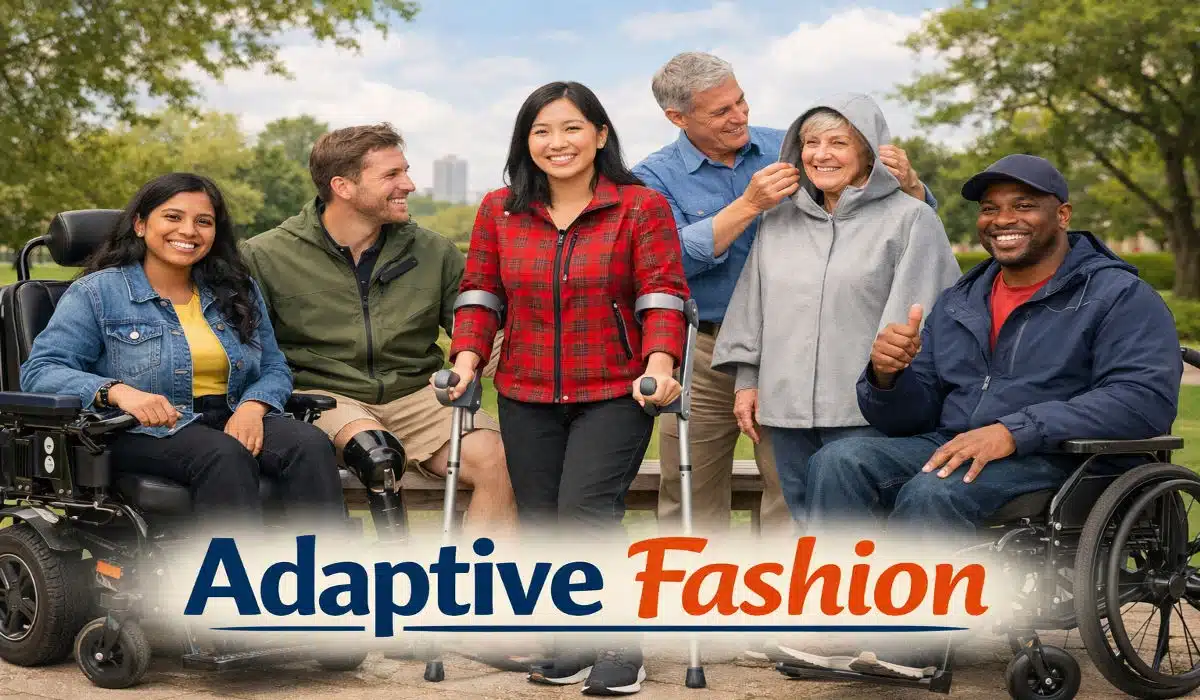
Adaptive FashionThe global market for Adaptive Fashion is projected to exceed $19 billion by the end of 2026. This growth is driven by a demographic shift—an aging population and a growing awareness of neurodiversity—paired with a demand for “Social Equity” in the retail space.
Unlike the clinical-looking garments of the past, modern Universal Fashion utilizes hidden technology. To the naked eye, a 2026 adaptive blazer looks identical to a luxury runway piece, but its construction features silent magnetic snaps and “stretch-recovery” seams that cater to those with limited dexterity or mobility.
Functional Features for Every Body
The brilliance of Universal Fashion lies in its small but life-changing modifications. In 2026, we are seeing three major technical breakthroughs:
Magnetic Fastenings: Replacing fiddly buttons and hooks, magnetic snaps allow garments to “self-close.” This is a cornerstone of Universal Fashion for individuals with arthritis or Parkinson’s.
Sensory-Friendly Textiles: For the neurodivergent community and those with sensory processing sensitivities, Universal Fashion now prioritizes tagless designs, flat-locked seams, and ultra-soft, breathable fabrics that prevent overstimulation.
Height-Adjustable Hems: Brands are introducing garments with internal “snap-and-lock” systems that allow the wearer to adjust pant lengths or sleeve heights without needing a tailor—a vital feature for wheelchair users and people of diverse statures.
Designing for the Wheelchair Silhouette
One of the most underserved segments in history has been the wheelchair community. Standard clothing is designed for a standing silhouette, leading to bunching, discomfort, and skin irritation for those who spend the majority of their time seated.
In 2026, Adaptive Fashion has perfected the “Seated Cut.” These garments feature:
Higher Back Rises: To prevent pants from sliding down while seated.
Angled Pockets: Moved from the side to the front of the thigh for easy access.
Seamless Rear Panels: Eliminating pressure points that can lead to pressure sores, making Adaptive Fashion a literal lifesaver for long-term seated comfort.
Biometric Fabrics and the Future of Wearable Care
The “Smart” era of Adaptive Fashion has arrived in 2026. High-tech textiles are now being infused with biometric sensors that monitor heart rate, body temperature, and posture. These “Smart Adaptive” pieces are particularly popular in the athletic and geriatric segments, allowing the garment to act as a silent caregiver. If a wearer’s temperature spikes or their posture indicates a potential fall, the Adaptive Fashion piece can send a real-time alert to a smartphone or caregiver app.
Top Brands Leading the Inclusive Charge
While many start-ups are entering the field, several legacy and luxury brands have set the gold standard for Adaptive Fashion in 2026:
Tommy Hilfiger Adaptive: Continues to lead with its iconic aesthetic, integrating magnetic zips and one-handed dressing options.
Nike FlyEase: Revolutionized the footwear industry with hands-free sneakers that allow users to “step-in” without bending down.
IZ Adaptive: The pioneer of seated-wear, offering high-end denim and coats specifically for wheelchair users.
Zappos Adaptive: Now serves as the largest global marketplace for curated Adaptive Fashion, featuring everything from orthotic-friendly boots to post-surgery wear.
The Rise of “Interchangeable” Adaptive Wear
In 2026, Adaptive Fashion has embraced a modular philosophy. Rather than buying a static garment, consumers can now purchase “interchangeable” components. Using low-profile magnetic zippers and invisible snaps, users can swap standard sleeves for wider ones to accommodate a cast or brace, or attach different leg lengths to the same waist unit. This modularity reduces the need for a massive wardrobe and allows Adaptive Fashion to evolve with the user’s changing physical needs, particularly for those recovering from surgery or managing progressive conditions.
3D Knitting and Customization for Unique Geometries
Traditional garment manufacturing often fails individuals with limb differences or significant scoliosis. In 2026, Adaptive Fashion has been revolutionized by 3D Knitting technology. This process allows brands to create seamless, “zero-waste” garments that are knit to a person’s exact biometric scans. By eliminating seams that cause skin irritation and creating custom “pockets” for prosthetics, 3D-knit Adaptive Fashion provides a level of comfort and aesthetic symmetry that was previously impossible with mass-produced clothing.
Sustainable Circularity in the Adaptive Market
The 2026 Adaptive Fashion movement is no longer just about people; it’s about the planet. Designers are now using bio-based materials—like Mycelium (mushroom) leather and Algae-based fibers—to ensure that high-tech features like magnetic snaps are housed in eco-friendly textiles. Because Adaptive Fashion often requires specialized hardware that can be difficult to recycle, many brands have launched “Take-Back” programs. These initiatives ensure that the expensive magnetic components are refurbished and reused, while the bio-textiles are composted, creating a truly circular life cycle for inclusive apparel.
Therapeutic Wellness
Expanding on sensory-friendly design, 2026 has seen the arrival of Therapeutic Adaptive Fashion. These garments are engineered to provide “Deep Pressure Therapy” (similar to a weighted blanket) through strategically weighted panels that look like standard fashion details. Additionally, some Adaptive Fashion lines now feature micro-encapsulated fabrics that release calming scents like lavender or cooling agents when they detect a spike in the wearer’s skin temperature. This transformation turns everyday clothing into a tool for emotional regulation and physical wellness.
The Rise of “Digital Twin” Fitting for Virtual Inclusion
In 2026, the biggest barrier to Adaptive Fashion—the difficulty of trying on specialized clothing—has been solved through “Digital Twin” technology. For individuals with limited mobility or those who find physical shopping malls overwhelming due to sensory issues, brands are now offering high-fidelity 3D avatars. By using a smartphone to capture a 360-degree biometric scan, users create a “Digital Twin” that precisely mirrors their unique physical geometry, including seated postures or limb differences.
This technology allows users to see exactly how Adaptive Fashion garments will drape, where magnetic closures will sit, and if a “seated-cut” pair of trousers will provide enough coverage. This digital layer of Adaptive Fashion reduces the high return rates associated with online shopping and ensures that the user receives a garment that fits their specific needs perfectly on the first try.
FAQ
Q1: Is Adaptive Fashion more expensive than regular clothing?
Ans: Historically, yes, due to the specialized hardware like magnets and Velcro. However, in 2026, mass-market integration has lowered production costs. Many Adaptive Fashion lines are now priced competitively with standard mid-range retail.
Q2: Can someone without a disability wear Adaptive Fashion?
Ans: Absolutely. The philosophy of “Universal Design” means that Adaptive Fashion is often more comfortable and easier for everyone. Magnetic shirts and elastic waists are increasingly popular among commuters and busy professionals who value speed and comfort.
Q3: How do I find the right size in Adaptive Fashion?
Ans: Most 2026 Adaptive Fashion brands offer “Virtual Fitting Rooms” that allow you to input specific mobility needs (e.g., “seated fit” or “one-handed dressing”) to find a garment tailored to your specific physical requirements.
read more : Heat Hornets

Mr. Udoy is a professional Web Developer and Blogger with 7+ years of experience in the tech world. He specializes in web architecture and digital storytelling. As the driving force behind worldincidents.com, he focuses on delivering high-quality, well-researched content to a global audience.