AL-MUGHAYYIR, West Bank — On the first day of the new Palestinian school year, the head-teacher of al-Mughayyir boys school arrived at work before dawn. Bassam al Assaf walked past freshly installed barbed wire fencing and reinforced school gates as the sun began creeping through the olive trees surrounding the village, located deep inside the occupied West Bank. "We are scared," al Assaf said. "The students are afraid, and their parents are afraid."
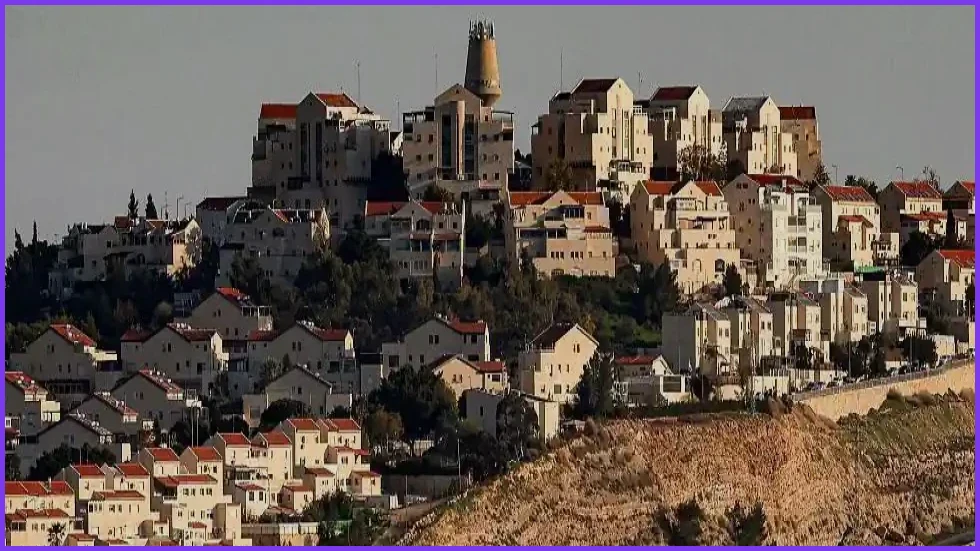
The school is situated on the isolated edge of Al-Mughayyir, a village north-east of Ramallah. The community is increasingly hemmed in by Jewish settler outposts and frequently blocked by Israeli forces operating an ad-hoc checkpoint at the entrance. In an effort to reassure families, al Assaf installed a long barbed-wire fence around the compound and reinforced the school gates. Ambulance crews are now stationed on the road outside, and several parents have volunteered to wait outside the school all day to provide an extra layer of protection.
Among the volunteers is Haroon Bishara, whose sons are in the first and second grades. "I came because it makes the children feel their parents are with them, that they are safe, it gives them a kind of security," Bishara said. "We fear for our children more this year. We know the situation is not safe at the school." Despite the terror, he emphasized a collective determination not to let the threat of settler attacks force them to abandon their homes.
The anxiety felt by the community is rooted in a history of violent incidents. English teacher Waheed Abu Naem recalls an attack in April when two young students rushed into his classroom to warn him that settlers were near the school wall. While trying to guide the pupils to safety inside the school gate, a settler opened fire toward them. Mobile phone footage captured the moment a student named Aws was shot. Waheed recounted turning the boy onto his back, only to see blood coming from his nose and mouth and a bullet lodged in his head. "We lost him," Waheed said. During the same attack, Waheed's brother, Jihad, was killed by an Israeli soldier. Bullets continued to strike the school building as students hid behind classroom walls or lay on the floor.
At the time of the April shooting, the Israeli military released a statement claiming that stones had been thrown at a vehicle carrying "civilians including a reservist soldier." According to the military, the reservist exited the vehicle and fired at suspects. Israeli media later reported that the reservist was suspended from duty and that an investigation had been launched.
Since that day, the toll has continued to rise. Over the summer, two more pupils from the school were shot dead by Israeli forces during settler attacks and incursions in the village. A 19-year-old who had recently left the school was also killed. In both of those summer cases, the Israeli army stated that its forces were responding to instigators of "a violent riot." The deaths have left three empty desks in the classrooms, making some parents extremely reluctant to send their children back for the new term.
As pupils lined up in the playground for their first assembly of the year, teachers repeatedly drilled them on safety instructions: if soldiers or settlers approach, do not shout, do not go near them, and do not react. Just over an hour after classes commenced, settlers were spotted through the school windows. Two men were seen driving sheep through Palestinian fields a couple of hundred meters from the school while Israeli soldiers stood nearby. Minutes later, another settler appeared with a flock of sheep. Waheed Abu Naem noted that the settlers have moved closer to the village since April, stating that they used to keep their sheep behind a nearby hill, but now soldiers bring them directly up to the village.
The Israeli army was asked for a response to the allegations raised in this report but was unable to provide one prior to publication.
Under international law, all Israeli settlements in the occupied West Bank are illegal. Furthermore, many of the small, ad-hoc settler outposts that have emerged around al-Mughayyir are also illegal under Israeli law. Despite this, an ambulance driver in the village, Hadi al-Naasan, reported that Israeli soldiers have begun actively supporting and enabling settler incursions instead of removing the illegal outposts.
Al-Naasan described a significant shift in the behavior of Israeli forces over the past year, which he says is reflected in the rising number of Palestinian deaths and injuries in al-Mughayyir. "At the beginning of 2025, settler attacks were few, due to the army's interventions," al-Naasan said. "In 2026, the situation changed completely: the settlers became fully protected by the occupation soldiers. This year, the number of martyrs is higher, the number of injuries is also much higher – and the number of child injuries is higher too."
Al-Naasan and other residents believe that some settlers are deliberately targeting children to pressure families into leaving the village. This observation aligns with a United Nations Commission of Inquiry report published in June, which concluded that settler attacks "have instrumentalized children… as part of a broader coercive strategy to drive Palestinians off their land." The UN report detailed "a pattern of settlers intentionally targeting Palestinian children" while they played near their homes, walked to and from school, tended to farms, or herded livestock, thereby "turning everyday spaces into sites of fear." Israel dismissed the UN findings as a "libellous sham."
Local sheep farmer Sami Abu Rahma is among those convinced that violent settlers are targeting children. At the end of July, his nine-year-old son, Salim, was shot and injured while playing with his siblings on the family's sheep farm outside al-Mughayyir. The bullet remains lodged in the young boy's arm.
Related Articles

Meet Md. Rubel Rana
As a core contributor to Worlddincidents.com, Rubel Rana brings a unique perspective to the world of journalism. Whether it’s deep-diving into historical trivia or covering the latest global headlines, Rubel Rana is committed to delivering high-quality, high-impact articles. Their writing blends meticulous research with a compelling voice, helping readers stay informed and curious about the world around them.