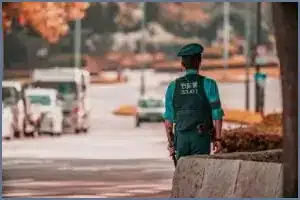
By 2050, roughly one-third of East Asia's population is projected to be 60 or older, cementing its status as the world's fastest-aging region. While public discussions on this demographic shift typically focus on healthcare, economic growth, pensions, and housing, an equally profound transformation is quietly unfolding in law enforcement. Across these rapidly graying societies, police forces are increasingly acting as "catch-all" social service agencies, taking on unprecedented workloads that stretch far beyond traditional crime-fighting.
Today, police officers are routinely mobilized to search for missing seniors, respond to late-night calls from disoriented citizens, and act as first responders during medical emergencies such as falls, strokes, and heart attacks. They are also tasked with conducting welfare checks to combat social isolation, addressing cases of elder abuse or neglect, and managing traffic safety campaigns targeting elderly drivers. Additionally, the rise of AI-powered scams has forced officers into roles as digital educators, teaching older adults how to identify and avoid financial fraud.
This surging demand has broken down traditional, hierarchical police structures, forcing law enforcement to build rapid partnerships with hospitals, care facilities, neighborhood associations, and local businesses. Rather than establishing entirely new systems, East Asian societies are adapting their existing, unique infrastructures—ranging from transit networks to high-tech surveillance—to scale these collaborative solutions.
In Japan, the community guardianship model is anchored by neighborhood police stations, known as koban. These local hubs work alongside social workers, volunteers, and businesses through "SOS networks" to track down missing dementia patients. These networks span from megacities like Tokyo to smaller municipalities like Omuta. To support these efforts, children are taught in schools and community centers how to recognize and assist wandering seniors, establishing an educated, intergenerational safety net that police can easily mobilize.
Hong Kong has leveraged its massive public transportation infrastructure. Because wandering seniors in the densely populated city heavily rely on the Mass Transit Railway (MTR)—which runs over 7,500 daily services and carries more than 4.7 million riders—police have partnered directly with the transit authority. When an older adult goes missing, police can input their Octopus transit card number (a card held by 98 percent of the working-age population) into the MTR system. If the card is tapped, it automatically locks the exit gate, alerts station staff, and notifies police of the individual's exact location.
China relies on its extensive surveillance apparatus and digital crowdsourcing. Law enforcement utilizes integrated command platforms to access a network of an estimated 700 million CCTV cameras—averaging roughly one camera for every two citizens. Drones are also deployed to pinpoint locations during active searches. Furthermore, police crowdsource assistance by mobilizing millions of smartphone users through public-interest missing-person apps like Douyin Xunren, creating a hybrid search system that blends state surveillance with citizen participation.
In South Korea and Taiwan, the focus is on preemptive tracking and identification. South Korean police, local governments, and health agencies distribute GPS tracking devices to individuals with dementia. Families can pre-register their relatives' photos, fingerprints, and guardian contact details in a centralized police database to ensure rapid identification if they wander. Taiwan utilizes a similar biometric pre-registration and fingerprinting system, alongside tracking bracelets. In some Taiwanese cities, elderly residents are given low-power Bluetooth positioning devices designed to look like traditional temple lucky charms to encourage them to wear the trackers.
Ultimately, the traditional boundaries of law enforcement are fading. Police work is increasingly defined not just by arresting criminals, but by protecting vulnerable populations. To manage the demands of rapidly aging societies, policymakers must continue to promote these multi-sector collaborations, redistributing public safety responsibilities across public, private, and community lines.
Related Articles

Meet Md. Rubel Rana
As a core contributor to Worlddincidents.com, Rubel Rana brings a unique perspective to the world of journalism. Whether it’s deep-diving into historical trivia or covering the latest global headlines, Rubel Rana is committed to delivering high-quality, high-impact articles. Their writing blends meticulous research with a compelling voice, helping readers stay informed and curious about the world around them.
1 thought on “How Aging Populations Are Reshaping Police Work Across Asia”