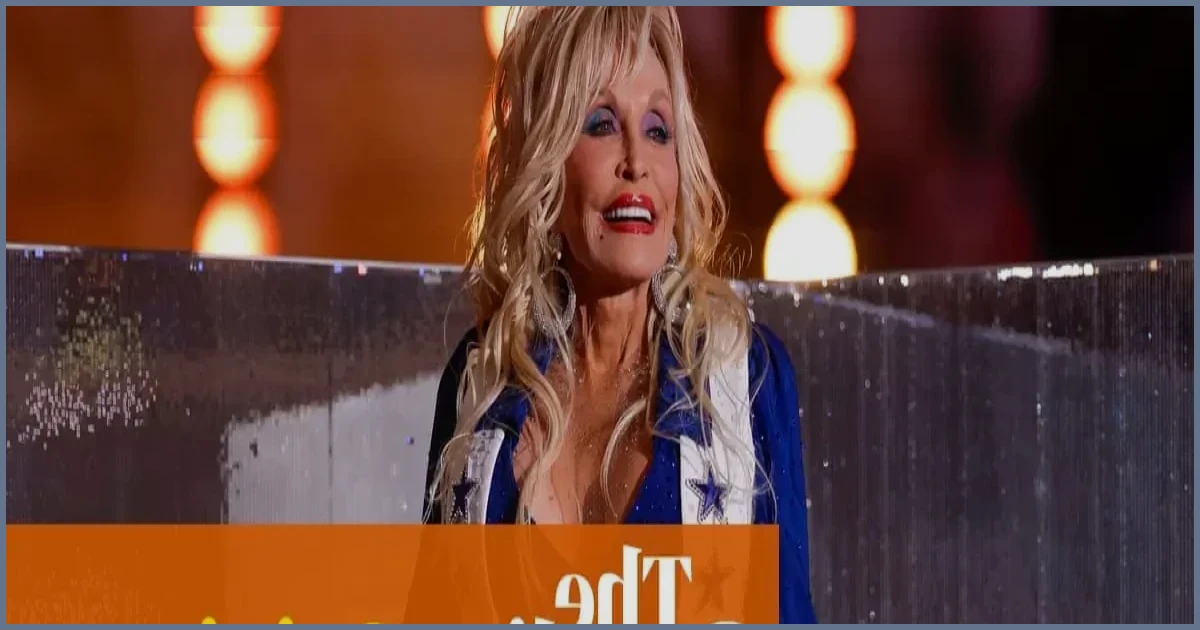
Dolly Parton, the iconic US country star, actor, and philanthropist, has died at the age of 80. Her passing marks the end of a peerless career that saw her evolve from a Nashville sensation into an international superstar, all while fundamentally reshaping the public’s understanding of country music.
Parton’s journey was often defined by her ability to subvert expectations. A famous television interview with Barbara Walters once captured the public’s complicated perception of the singer. Walters, appearing skeptical of Parton’s collection of wigs and “hand-washable and wrinkle-free” stage outfits, famously asked if the singer ever felt like a joke. Parton’s response was immediate and composed: “The joke’s on the public. I know exactly what I’m doing and I can change it any time … I’m sure of myself. I’m sure of my talent.”
That self-assurance was backed by a catalog of imperishable country standards. Parton wrote iconic songs including Jolene, I Will Always Love You, Coat of Many Colours, My Tennessee Mountain Home, Down from Dover, Little Bird, Kentucky Gambler, Love Is Like a Butterfly, The Bargain Store, and The Seeker. She often cited the “town tramp” from her home in Pittman Center, Tennessee, as the inspiration for her glitzy, rhinestone-heavy image, which she used as both a marketing tool and a protective shield.
Her songwriting frequently touched on themes that challenged the conservative Nashville establishment. Long before the industry-wide debates regarding sexism in country music, Parton wrote feminist-leaning tracks such as Just Because I’m a Woman and When Possession Gets Too Strong. Her song Down from Dover, which depicted the struggles of an outcast unmarried mother and ended with the birth of a stillborn baby, was so controversial that her duet partner, Porter Wagoner, urged her not to release it. She did so anyway, leading to a ban by country radio.
Parton’s career was also defined by steely self-determination. After joining Wagoner as a duet partner in 1967, she eventually left the partnership as her own success began to eclipse his, a move that resulted in a $3 million lawsuit. She also famously turned down Elvis Presley’s request to record I Will Always Love You because his manager demanded a portion of the songwriting royalties. Her 1973 album My Tennessee Mountain Home, a self-penned autobiographical concept record, remains one of her most critically acclaimed works.
In the late 1970s, Parton made a bold move toward the pop mainstream. Despite fears of alienating her core audience, she achieved massive success with hits like Here You Come Again, which reached No 3 on the Hot 100, and 9 to 5, which hit No 1. She continued to experiment with genres, including disco and bluegrass, while maintaining her country essence. Though her mainstream pop crossover period slowed by the late 1980s, she returned to her roots with the 1989 album White Limozeen. Later, in 1999, she earned a Grammy for The Grass Is Blue, the first of a trio of stark, critically lauded bluegrass and folk albums.
Parton’s influence on pop culture grew significantly in the 21st century. Whitney Houston’s cover of I Will Always Love You became the biggest-selling single of all time by a female artist, and Jolene has been covered nearly 90 times by artists ranging from the White Stripes to One Dove. Younger stars, including Taylor Swift, Miley Cyrus, and Sabrina Carpenter, have frequently cited her as a major influence. In 2024, Parton even duetted with Carpenter on a remixed version of the hit Please Please Please. Her involvement in Beyoncé’s Cowboy Carter album, where she provided a spoken-word introduction to a new version of Jolene, cemented her status as a constant presence in modern music. The question of whether she was a “joke” had been answered long ago; she was, in every sense, a force of evolution and transformation in the industry.
Related Articles

Md. Kazi Bijoy is a dedicated tech enthusiast and content creator with a passion for digital innovation. With years of experience in the tech industry, he specializes in breaking down complex topics into easy-to-understand guides. When he isn’t writing, he explores the latest gadgets and researches emerging trends in the digital world.