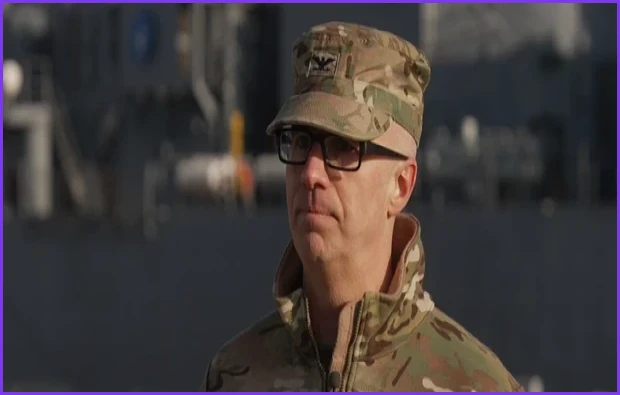
Military incidents involving explosive drones, naval mines, and commercial vessels have surged dramatically in the Black Sea, escalating tensions along NATO's eastern flank and raising the risk of drawing the alliance and the United States directly into the conflict between Russia and Ukraine. Operating off Constanța, Romania, the Romanian Navy maintains constant vigilance over the waterway, searching for hazardous wartime debris drifting into NATO-controlled waters.
According to NATO military spokesperson Colonel Martin O'Donnell, incidents across the Black Sea have increased roughly tenfold this year. While fewer than 50 maritime incidents were recorded in the waterway throughout 2025, that figure has jumped to between 400 and 500 in 2026. The rapid escalation has transformed the vital shipping corridor—essential for global grain and fuel supplies—into a deadlier environment than the Strait of Hormuz. Figures from the International Transport Workers' Federation show that at least 40 sailors have been killed in the Black Sea this year, surpassing the 25 fatalities recorded in the Strait of Hormuz by the International Maritime Organization during the same period, where both sides in the U.S.-Iran conflict have attempted blockades to exert economic pressure.
Highlighting the strategic importance of the maritime theater, O'Donnell noted, "I would say the Black Sea is just as important, and then depending on who you talk to, some might argue could perhaps even be more important … in terms of global trade." He warned that any imbalance in the flow of fuel and food "can have global implications that can impact America just as much as it can any of the nations here."
Three of the six countries bordering the Black Sea—Romania, Bulgaria, and Turkey—are NATO members. Defending these maritime boundaries presents distinct challenges compared to land borders. "We do not have a fence into the Black Sea to state this is our border, that is the other border," explained Romanian Navy Captain Mihai Iordache. To protect its territorial waters, the Romanian Navy is deploying specialized divers and drones to scour the depths for unexploded weapons. Captain Iordache cautioned that naval resources are severely strained, noting, "Four years ago, we were ready for one drifting mine, and right now we are ready for tens of drifting drones." He added, "So I presume we'll be ready in the future, who knows what the future will bring," concluding, "Could be hotter, could be colder, who knows. Let's hope for peace."
The naval conflict has expanded well beyond the Black Sea itself. Over the weekend, Ukrainian forces reported striking an advanced Russian warship alongside a cargo vessel, which subsequently drifted ablaze into the waters of NATO member Finland. Additionally, Ukraine stated on Sunday that it had sunk a Russian warship docked in Libya.
The maritime escalation coincides with growing pressure on NATO. On Friday, Poland accused Russia of an "intentional provocation" after Russian cruise missiles landed in its southeastern region. Since Russia launched its full-scale invasion on Feb. 24, 2022, drones have repeatedly entered the airspace of Poland and other NATO countries, primarily near Ukraine. Under Article 5 of NATO's founding charter, an attack against one of its 32 member nations is considered an attack on all. Asked whether the alliance will defend itself if necessary, O'Donnell stated, "I would say that there should be no doubt on NATO's willingness and ability to act."
Related Articles

Mr. Udoy is a professional Web Developer and Blogger with 7+ years of experience in the tech world. He specializes in web architecture and digital storytelling. As the driving force behind worldincidents.com, he focuses on delivering high-quality, well-researched content to a global audience.