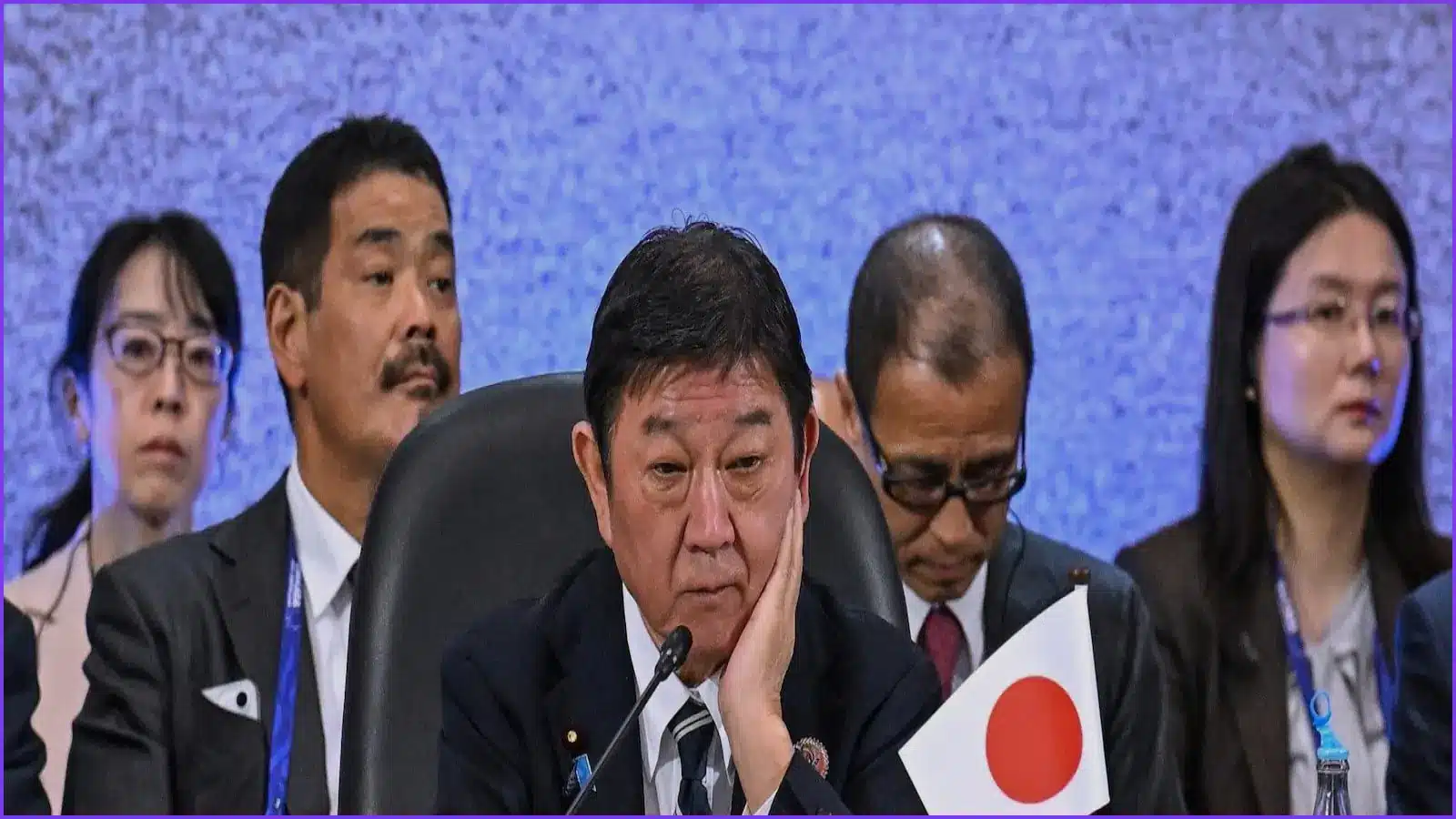
A diplomatic disagreement has surfaced between Tokyo and Beijing regarding whether a meeting took place between their respective foreign ministers during last week's ASEAN regional gathering in the Philippines. Japanese Foreign Minister Toshimitsu Motegi initially informed reporters that he had engaged in a brief discussion concerning bilateral relations with his Chinese counterpart, Wang Yi, after the two officials encountered one another at the summit site.
However, the narrative from the Chinese government stands in direct opposition to the Japanese claim. On Monday, Chinese Foreign Ministry spokesperson Lin Jian addressed the matter during a daily briefing, explicitly denying that any such interaction occurred. "Let me make it clear once again that during his visit to Manila, Foreign Minister Wang Yi did not have a meeting with the Japanese side on his schedule, nor did any brief exchanges take place on the site," Lin stated.
The conflicting reports highlight the significant deterioration in diplomatic ties between the two nations, a trend that has accelerated since November. Relations soured following comments made by Japanese Prime Minister Sanae Takaichi regarding Taiwan, which drew sharp condemnation from China. While Tokyo has expressed a desire to seek opportunities for rebuilding relations, China has maintained a cold stance toward its neighbor. These tensions have extended beyond the political sphere, impacting economic cooperation—notably through a decline in Chinese tourism to Japan—and increasing mutual unease regarding the expansion of each nation's military capabilities.
Last week, Motegi emphasized the necessity of continued communication, stating, "As we have repeatedly noted, Japan is open to dialogue at all levels, and that I believe it is extremely important that we continue our dialogue as both Japan and China hold a major responsibility for regional peace." While Motegi maintained that he and Wang discussed bilateral ties, Japanese media reports suggested the exchange was limited to brief greetings and pleasantries.
Prime Minister Takaichi reiterated on Monday that the two countries are engaging in dialogue at various levels, citing the interaction between Motegi and Wang. The current friction is rooted in Takaichi's parliamentary remarks in November, when she was asked if a Chinese blockade of Taiwan could trigger Japanese involvement under the country's policy of collective self-defense. Takaichi responded that such a scenario could be considered a "survival-threatening situation" if it involved military actions. Although she has refused to retract the statement, she later told a parliamentary committee that she would refrain from discussing specific self-defense scenarios in the future. China, which claims Taiwan as its territory, views such remarks as a violation of its diplomatic red lines.
Related Articles

Md. Kazi Bijoy is a dedicated tech enthusiast and content creator with a passion for digital innovation. With years of experience in the tech industry, he specializes in breaking down complex topics into easy-to-understand guides. When he isn’t writing, he explores the latest gadgets and researches emerging trends in the digital world.