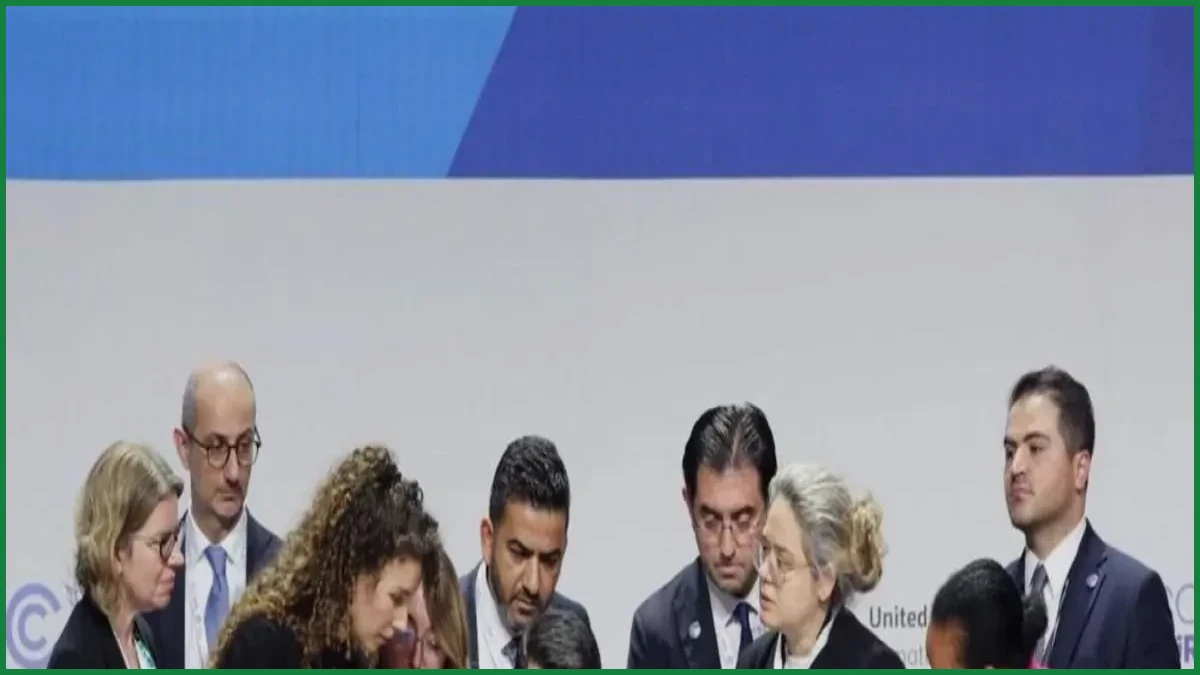
The UN's COP31 climate conference concluded on Sunday without a primary political agreement, marking the first such collapse since the 2009 summit in Copenhagen. Originally scheduled to finish on Friday, the negotiations extended into the weekend, making this the longest UN climate conference in history, yet participants were unable to find common ground. The failure of the summit has raised significant questions regarding whether the UN's consensus-based climate process can continue to succeed in an increasingly geopolitically divided world.
UN Secretary General Antonio Guterres, attending his final COP before stepping down, expressed that he was “deeply disappointed” by the outcome. He took aim at what he described as “powerful fossil fuel interests,” accusing them of taking “a page from Big Tobacco's playbook: distorting the science, delaying policy, blocking action, and piling up huge profits while people everywhere pay the price.”
A major sticking point throughout the talks was the issue of financial support for poorer nations to adapt to the impacts of climate change, such as more intense heatwaves and severe droughts. Many developing countries objected to the absence of clear financial commitments from wealthier nations. Mohamed Adow of Power Shift Africa, an African climate and energy think tank, stated that “rich nations and polluting governments cannot keep arriving empty-handed.” This follows an agreement made at COP30 in Brazil to triple the finance for such purposes.
The European Union expressed strong opposition to the lack of progress. Irish Minister Darragh O'Brien, representing the EU, stated that the decisions reached “go nowhere near the level of ambition needed to tackle climate change.” He further noted it was “unconscionable that we would have a climate pact that makes no mention of fossil fuels.” Conversely, Russia cautioned against moving away from fossil fuels too rapidly, warning that such a shift could lead to “fuel poverty,” while Saudi delegate Mohammad Ayoub argued that Arab nations have engaged in good faith while noting they account for only a small proportion of historical greenhouse gas emissions.
The UK’s Energy Secretary, Miatta Fahnbulleh, described the failure as “immensely disappointing” while reaffirming the UK’s “unwavering” commitment. Although the talks were hosted in Antalya, Turkey, Australia led the official negotiations, a dynamic some observers characterized as chaotic. Chris Bowen, the Australian government minister and COP31 president of negotiations, cited “unbridgeable red lines” and described the setting as “the most complicated and fraught geopolitical environment in living memory.”
The impasse comes as the world faces increasing climate risks. The year 2026 may finish as the hottest on record, marked by extreme weather events including flash flooding in Nepal and drought in Europe. COP31 was the first UN conference to formally address the likelihood that the international goal established in the 2015 Paris Agreement—to limit global warming to 1.5C above pre-industrial levels—will be missed. Current government policies suggest the world is on track to limit warming to approximately 2.8C by 2100. Meeting the 1.5C target will require the large-scale deployment of carbon dioxide removal technologies that do not yet exist.
Following the breakdown in negotiations, UN climate chief Simon Stiell indicated he would seek advice on reforming the consensus-based process, though he maintained that the current system “can work” as it did in Paris, even if it “fell short” this time. The UN climate process has “suffered setback before and come back stronger,” Stiell told delegates. “It must do so again.” The next conference, COP32, is scheduled for November 2027 in Ethiopia.
Last year at COP30 in Brazil, nations agreed to triple the finance for that purpose.
Related Articles

Meet Md. Rubel Rana
As a core contributor to Worlddincidents.com, Rubel Rana brings a unique perspective to the world of journalism. Whether it’s deep-diving into historical trivia or covering the latest global headlines, Rubel Rana is committed to delivering high-quality, high-impact articles. Their writing blends meticulous research with a compelling voice, helping readers stay informed and curious about the world around them.