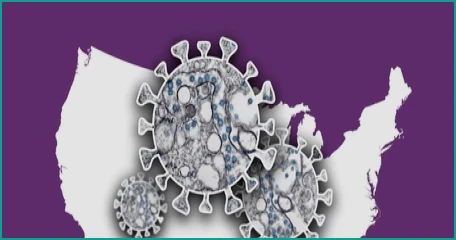
With the arrival of colder weather and shorter days, the annual respiratory illness season is beginning to take shape, marked by a noticeable upward trend in COVID-19 cases. According to Dr. Anne Rimoin, a professor of epidemiology at the UCLA Fielding School of Public Health and director of the Center for Global Health Security, the current landscape of the virus varies significantly by region. The West is experiencing a substantial increase, while activity is also rising across parts of the Northeast and Midwest. Meanwhile, the South appears to be further along in its current wave.
Data provided by the CDC confirms that at least 12 states are currently seeing moderate to very high levels of COVID-19 activity. While the agency reports overall low levels of the virus, independent surveillance paints a more active picture. WastewaterSCAN, a program operated out of Stanford University, indicates that COVID-19 activity remains high nationwide and has seen a sharp rise in recent weeks. Amanda Bidwell, the scientific program manager for WastewaterSCAN, noted that national COVID-19 levels in wastewater for September are up 55% compared to August. In both the South and the West, current concentrations have surpassed those observed during the 2025-2026 winter peak.
Wastewater testing serves as a critical early warning system, allowing public health officials to detect infectious disease trends even when residents are not exhibiting symptoms. This method helps identify potential outbreaks and shifts in disease activity within states. According to CDC Rt estimates, which track the speed at which respiratory viruses spread, COVID-19 infections are currently growing or likely growing in 27 states. In 13 states, infections are declining or likely declining, while in 10 states, activity remains unchanged.
Dr. Rimoin emphasized that this regional variation is not unusual, as COVID-19 waves do not move across the country uniformly or peak simultaneously. She added that because the virus is a relatively new pathogen, it has not yet settled into the predictable seasonal patterns seen with influenza, continuing instead to produce waves throughout the year. As symptoms for COVID-19 and the flu often overlap, health professionals are urging everyone 6 months of age and older to get vaccinated. Experts warn that an infection from one virus may weaken the immune system, leaving individuals more vulnerable to others.
Unable to view our graphics? Click here.
Doctors and health professionals are recommending that everyone 6 months of age and older get vaccinated against COVID-19 during the flu season because the symptoms overlap. Your immune system may be weakened by one infection, leaving you more vulnerable to others.
Related Articles

Md. Kazi Bijoy is a dedicated tech enthusiast and content creator with a passion for digital innovation. With years of experience in the tech industry, he specializes in breaking down complex topics into easy-to-understand guides. When he isn’t writing, he explores the latest gadgets and researches emerging trends in the digital world.