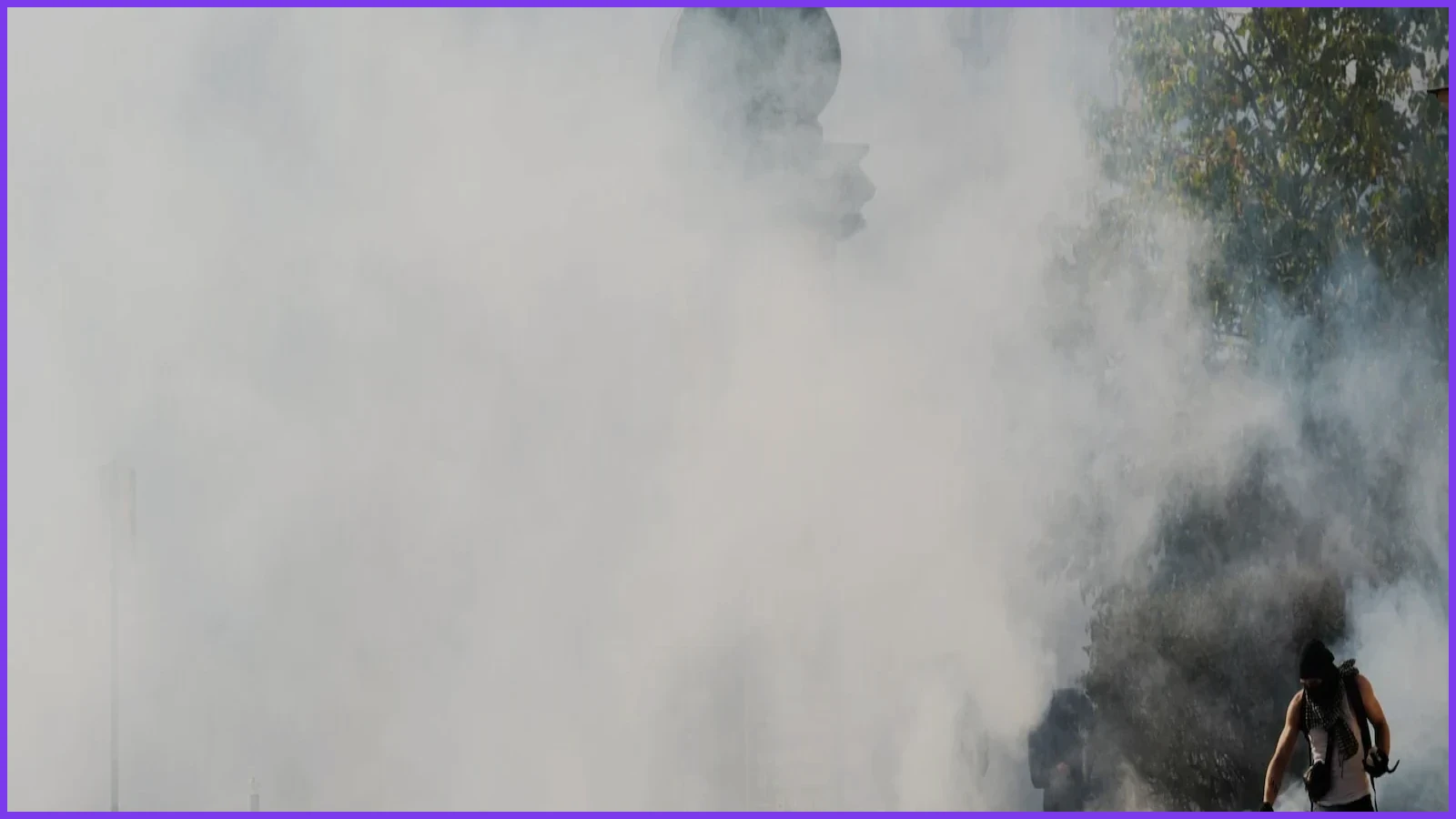
French activists and opposition lawmakers are urging authorities to suspend the police use of tear gas during crowd control following growing concerns that exposure to the chemical irritant causes severe menstrual disruptions and other reproductive health problems. While scientists and medical experts emphasize that a direct medical connection has not been established, the demands have intensified after law enforcement deployed tear gas during recent student protests and demonstrations against the rising cost of living, some of which involved violence.
The calls for a ban come as women who attended or were near the demonstrations report experiencing unusual physical symptoms after exposure. Reports include severe abdominal cramps, unexpected bleeding, and irregular menstrual cycles. An advocacy organization named Lacrymos de sang, or "Tears of blood," revealed that it has collected more than 10,000 complaints from individuals describing adverse health responses following exposure to the gas.
French police rely on tear gas grenades containing CS, a chemical irritant dispersed into the air as fine particles of crystalline powder that affect the eyes, skin, and respiratory tract. The severity of its impact depends on the volume released and the duration of exposure. Those exposed during recent demonstrations have included not only violent rioters but also peaceful protesters, nearby residents, children, pregnant women, and older individuals.
Several individuals have shared specific accounts of physical distress following exposure. Mélina Galland, a 24-year-old independent photographer covering Oct. 17 protests in Paris marked by rioting and looting, wore a diving mask alongside a double surgical mask. Upon returning home, she experienced intense abdominal pain that was highly unusual for her menstrual cycle stage. Similarly, 25-year-old photographer Chloé Baroux first observed irregular periods and pain after documenting protests against a security bill in 2020 and 2021. Although her cycle eventually stabilized, she noticed it became irregular again over the past two months after covering the latest demonstrations.
The advocacy group Lacrymos de sang was established during the recent demonstrations by Eva-Luna Tholance, a former journalist who investigated the topic six years ago. The group launched a questionnaire last month requesting details on exposure and symptoms to raise public awareness regarding potential effects on pregnancies and menstrual cycles. Although the gathered self-reported accounts have not been reviewed by independent medical professionals and cannot determine the exact prevalence of symptoms, Tholance noted that thousands are seeking answers about changes in their bodies.
According to Tholance, reports range from mild cramps to severe pain far exceeding normal menstrual discomfort. Experiences of unexpected bleeding have varied from light spotting to heavy bleeding lasting several days or even weeks. In addition, some reports came from individuals who were postmenopausal or taking hormonal contraceptives that typically prevent menstrual bleeding entirely.
Despite mounting public outcry, Interior Minister Laurent Nuñez has rejected demands to halt tear gas deployment. Nuñez defended the chemical agent as an essential tool for police crowd control, describing it as a necessary alternative to using more dangerous weaponry. Meanwhile, opposition lawmakers continue to press for an immediate suspension alongside independent scientific research into the potential long-term health consequences.
Scientific evidence linking CS gas to reproductive issues remains limited and inconclusive. A prior investigation into 2020 Black Lives Matter protests in the United States found there had been limited study and oversight of tear gas, though it did raise concerns about tear gas exposure in confined spaces, excessive use, and canisters fired directly at people. A recent study collected accounts of symptoms reported after the BLM protests and identified a "potential relationship" between exposure and adverse reproductive health outcomes, though it did not prove direct cause and effect due to single-point data collection and potential response bias.
Asha Hassan, a researcher at the University of Minnesota Medical School and lead author of the U.S. study, emphasized that much early research on tear gas focused on healthy young men in military settings, which may explain why potential reproductive health impacts went undocumented. "There’s a lot of theories. We don’t really 100% know," Hassan stated, calling for urgent further research into the issue.
France's Interior Ministry maintained that no published scientific studies demonstrate that CS gas leads to miscarriages or menstrual changes. The ministry acknowledged that while most side effects resolve within hours, certain longer-lasting symptoms affecting the eyes and skin "cannot be ruled out," and other bodily effects have been "suggested, but not demonstrated." Although the ministry conducted several internal studies in 2021 and 2022 assessing tear gas exposure among law enforcement officers, it did not provide copies of those findings upon request. Additionally, two major French police tear gas grenade suppliers, Alsetex and Nobel Sport, did not respond to requests for comment. AP journalist Teresa Suarez contributed to this story.
Related Articles

Meet Md. Rubel Rana
As a core contributor to Worlddincidents.com, Rubel Rana brings a unique perspective to the world of journalism. Whether it’s deep-diving into historical trivia or covering the latest global headlines, Rubel Rana is committed to delivering high-quality, high-impact articles. Their writing blends meticulous research with a compelling voice, helping readers stay informed and curious about the world around them.