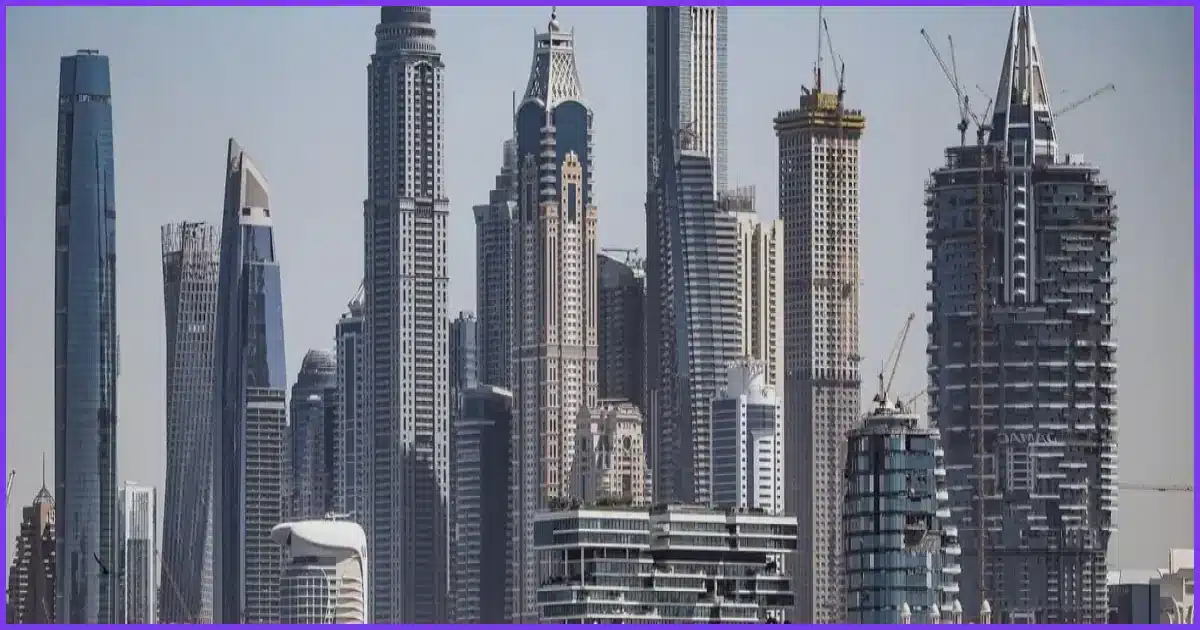
The United States' intensified economic campaign against Iran, which President Trump has described as an "unprecedented" level of economic warfare, may depend heavily on the actions of the United Arab Emirates. Treasury Secretary Scott Bessent has declared the administration's intent to "collapse" the Iranian regime through what he characterized as the "toughest sanctions in history."
A primary challenge for U.S. officials is curbing Iran's access to foreign capital. According to Miad Maleki, a former official with the U.S. Treasury, Dubai acts as a central hub for the Iranian economy. "About 80% of Iran's foreign currency exchange is done in Dubai. So Dubai has served as a major source for Iran's foreign currency," Maleki noted. He explained that a common scheme involves Iran selling oil to China and subsequently moving those proceeds through exchange houses in jurisdictions like the UAE to bypass international restrictions.
Maleki suggested that the UAE's cooperation is "very instrumental" in cutting off the regime's ability to procure foreign currencies and access oil-generated reserves held in various banks. To address this, the U.S. Treasury has recently increased pressure on shell companies linked to the UAE, which the administration claims function as a shadow banking system for Tehran.
Specific enforcement actions include targeting entities such as the Dubai-based HMS Trading FZE. In a statement released on August 7, the Treasury asserted that the firm "plays a critical role in helping the Iranian regime retrieve revenue from its oil sales overseas." The same statement identified Iran's Shahr Bank, which is associated with the Islamic Revolutionary Guard Corps, as having relied on two Dubai-based currency exchange firms to facilitate money laundering. Consequently, U.S. nationals are now prohibited from engaging with these companies, and secondary sanctions have been implemented against foreign banks that knowingly transact with them.
A Trump administration official stated that the combination of "crushing sanctions" and a U.S. naval blockade has left Iran "completely broke." The official added that there are "many levers the president can crank harder in the weeks and months ahead."
In response to the mounting pressure, the UAE has signaled a shift in its stance. Afra Al Hameli, a spokesperson for the UAE Ministry of Foreign Affairs, announced this week that "all trade, commercial exchanges, and financial transactions with Iran have been halted until further notice," emphasizing the country's commitment to the integrity of the international financial system.
This decision follows a period of heightened regional tension. Emirati officials reported that Iran recently fired two ballistic missiles at the UAE, forcing the activation of national air defenses, though the projectiles reportedly landed in the sea. Additionally, Reuters reported that Iran allegedly attacked an Abu Dhabi National Oil Company vessel in the Strait of Hormuz. Observers suggest these incidents have prompted the UAE to abandon its sideline position and adopt a more proactive approach toward Iranian economic activity.
Related Articles

Mr. Udoy is a professional Web Developer and Blogger with 7+ years of experience in the tech world. He specializes in web architecture and digital storytelling. As the driving force behind worldincidents.com, he focuses on delivering high-quality, well-researched content to a global audience.
1 thought on “Dubai’s Role in U.S. Economic Pressure Against Iran”