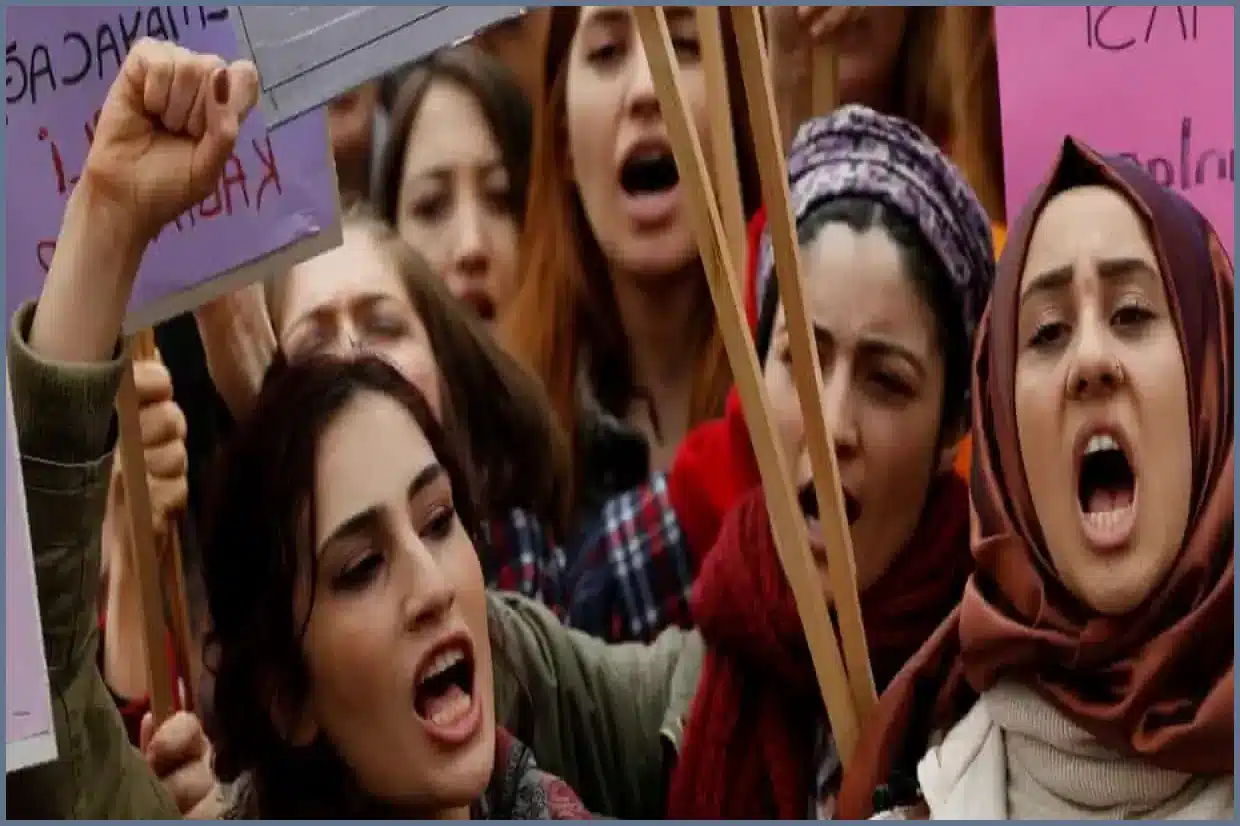
The feminist movement is navigating a profound internal crisis, marked by stark divisions that contrast sharply with the vibrant global solidarity of the previous decade. While the 2010s saw women worldwide uniting to demand systemic change—ranging from abortion rights in Ireland to the right to drive in Saudi Arabia—today’s landscape is often characterized by polarization and ideological exhaustion. Yet, beneath the noisy conflicts of social media, a quiet and resilient network of grassroots activists is working to rebuild solidarity through practical, offline community organizing. This shift from digital debates to local action forms the core of a renewed push for collective liberation, as explored by author and campaigner Natasha Walter in her latest work, Feminism for a World on Fire.
Reflecting on the trajectory of the movement, Walter recalls a hopeful day in June 2015 outside the Yarl’s Wood immigration removal centre near Bedford. Hundreds of women—including refugees, campaigners, lawyers, politicians, actors, and writers—gathered to demand freedom for those locked inside, inspired by graffiti on the walls reading "Set her free" and "Shut it down." At the time, Walter had founded Women for Refugee Women, an organization dedicated to helping female asylum seekers in Britain share their stories and campaign for safety. The era was defined by an enthusiastic, cross-political willingness to support other women. Marchu Belete, a former colleague of Walter's who now serves as the director of Migration Exchange, remembers the period fondly. "Back then, women were so open, enthusiastic and creative about campaigning with migrant women," Belete notes. "We didn’t realise how incredible that time was. It was amazing."
This confidence in the UK was mirrored globally during the 2010s. Women took to the streets to protest digital sex crimes in South Korea, sexual violence and femicide in India, Argentina, Brazil, Italy, and Turkey, and systemic oppression across the globe. Although Walter cautions against idealizing those years, she acknowledges there was a distinct brightness and optimism regarding the connections feminists could forge and the progress they could achieve. Today, however, that optimism has largely been replaced by fragmentation.
While divisions within the struggle for women's liberation are not new—historically manifesting between suffragists and suffragettes, colonizers and the colonized, working-class and middle-class women, or opposing factions in the pornography debates—the modern discord feels uniquely depleting. A Black woman in her 60s, who co-founded an organization supporting migrant female survivors of violence, recently expressed her concern to Walter, stating that the movement in Britain has lost its way. "We’ve lost our way. There used to be a vision that brought women together. It wasn’t just about personal advancement or separate communities. I don’t know if that still exists," she lamented.
This fragmentation is increasingly evident in how easily self-described feminists dismiss the hardships of those outside their immediate political or social circles. Walter points out that this dismissal spans the entire political spectrum. Left-leaning activists may struggle to find empathy for conservative figures like Ann Widdecombe when facing an attacker in her kitchen, while those on the right may ignore the plight of women fleeing global oppression. Similarly, polarized debates make it difficult for people to simultaneously hold empathy for Palestinian and Israeli women targeted by armed conflict, or to take seriously both the abuse of girls by grooming gangs and the violence faced by women beaten by protesters outside asylum hotels.
Social media bears a significant portion of the responsibility for these widening chasms. Online platforms routinely reward anger and intransigence with increased attention, clicks, and followers. The intense and destructive debates surrounding the place of transgender women within feminism became exceptionally wounding due to these digital outrage dynamics. Once these polarized battle lines are drawn online, coordinating collective campaigns for shared goals offline becomes immensely difficult.
Despite these visible online fractures, vital alliance-building continues quietly in physical spaces. One such initiative is Mothership, founded by former journalist Jessie Brinton. The project facilitates in-person "kitchen table conversations" across Britain, allowing women to gather and discuss the issues that directly impact their daily lives. By focusing on face-to-face dialogue, the project aims to bypass digital hostility and foster genuine connection.
In Wigan, Gill Wright of Northern Heart and Soul echoes the sentiment that frontline community support is currently the most crucial work for feminists. Wright co-founded the women-led organization after coordinating a mutual aid group during the COVID-19 pandemic. Northern Heart and Soul focuses on empowering individuals dealing with severe challenges such as poverty, homelessness, and poor health. Through practical initiatives like play days for children with special educational needs, arts projects, community gardening, and mental health peer support, Wright has watched local connections reform. "We aren’t putting our energy into changing the system," Wright explains. "We are focusing our energy on building alternatives."
This grassroots focus frequently translates into direct political engagement aimed at revitalizing local democracy. In the north-east of England, campaigner Cullagh Warnock has spent decades organizing women. Following the 2024 establishment of the North East Mayoral Combined Authority, which granted expanded powers to local councils and the regional mayor, Warnock and her peers saw an opportunity to amplify women's voices. They launched One Million Women and Girls, a network that links local women directly with politicians through face-to-face hustings and community events.
Warnock observes that the concerns raised by women during these physical meetings are deeply practical, contrasting sharply with the abstract arguments found on social media. "Women’s safety comes up all the time – women’s safety on public transport, on the streets. And jobs – politicians talk about green jobs, but they are so often male-dominated. Women are asking about how this transition is going to work for women," she says. Predictions suggest that future green jobs, from wind energy to waste management, may skew as much as three to one in favor of men. Warnock believes that focusing on these concrete, everyday issues allows women to bypass inflammatory online rhetoric and secure the safety and dignity they need, noting that "what works for women works for everyone."
The necessity of improving women's daily lives has become even more urgent with the rise of the far right, which exploits feelings of insecurity to advance divisive political agendas. In Belfast, Elaine Crory of the Women’s Resource and Development Agency has spent years supporting women against male violence. She identifies the rise of the far right as the "single biggest issue making things worse for women. It is distracting people from fighting the patriarchy and making the situation less safe for women."
Crory stresses the importance of structured, in-person conversations where facilitators can actively counter online radicalization and social media misinformation. Despite the slow and difficult nature of this work, Crory is encouraged by the way women have stepped up to lead resistance against far-right activities. During recent violent incidents, which she describes as "racist pogroms" in Belfast, local communities came together quickly. "Communities came together quickly, led by women – migrant women and white women – everyone doing what they could. Women were organising, cooking meals, giving lifts, taking a child to school, literally turning up to houses on fire and getting families to safety. And even now that the immediate need for food and shelter has died down, we are ready. If and when it sparks again, women will organise," Crory asserts.
Ultimately, these grassroots efforts in Belfast, Wigan, London, and Newcastle demonstrate that women are actively constructing alternatives to division. Belete maintains that these local, ground-level connections are essential to overcoming modern threats, stating: "Feminists need to be in communities, we need to be on the ground pushing back. The way to defeat the far right is through the women’s movement."
While these local examples of resilience are inspiring, Walter warns against falling into naive optimism. The challenges facing women globally are severe, with rights threatened by authoritarianism and misogyny. These dangers are compounded by resource scarcity driven by the climate emergency, rising inequality, and global conflict. While one response to these pressures is to retreat into isolation, build walls, and embrace division, Walter argues that the alternative is to insist on the power of care and connection. Across the globe, women are choosing this second path, quietly weaving the social fabric back together day by day. Feminism for a World on Fire by Natasha Walter is published by Little, Brown Book Group and is available for £25.
Related Articles

Md. Kazi Bijoy is a dedicated tech enthusiast and content creator with a passion for digital innovation. With years of experience in the tech industry, he specializes in breaking down complex topics into easy-to-understand guides. When he isn’t writing, he explores the latest gadgets and researches emerging trends in the digital world.
1 thought on “How Grassroots Activists Are Rebuilding a Divided Feminist Movement”