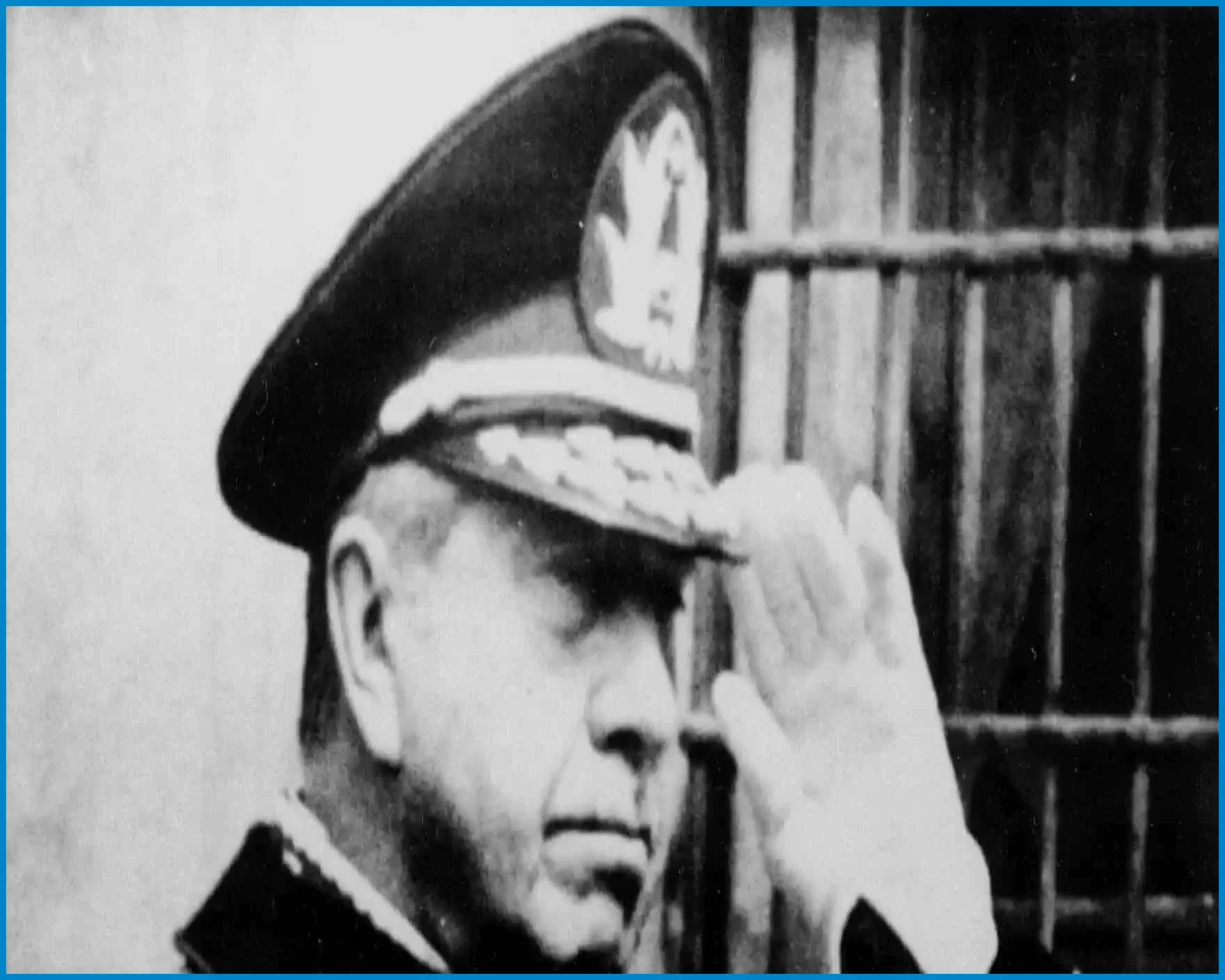
For decades, our understanding of psychopathy was defined by prison populations. The classic checklist for psychopathy was developed in 1980 by Professor Robert Hare, who remains the recognized pioneer in the field. His 20 traits, which ranged from pathological lying to a lack of empathy, were formulated by studying incarcerated individuals. This approach allowed Hare to compare personal interviews and self-reporting with official records to identify inconsistencies. However, Hare recognized the limitations of his work. As early as 1976, he admitted he did not know how well his findings generalized to non-incarcerated psychopaths, including women, concluding that research into "socially successful" psychopaths was badly needed. Even in the early 2000s, when Hare sought to study psychopathic traits in politics, he had to turn to prisons, specifically researching Chilean dictator Augusto Pinochet's henchmen in jail.
Studying high-functioning psychopaths—those who avoid detection or do not resort to overt crime—has long proved elusive, largely because standard self-reporting questionnaires fail. Psychopaths are notorious for lying. Rather than coming from forensic psychology, a breakthrough in understanding these individuals has emerged from corporate research. Dr. Karen Mitchell, who spent 30 years working as a consultant on large-scale corporate culture changes, began researching these behaviors after observing how many workplace crises—including market alignment issues, deaths, and suicides—stemmed from specific individuals with predatory traits. She expanded her research to other fields, including religious child abuse, coercive control in human trafficking, domestic violence, and terrorism, noting that global knowledge on human predators remained highly fragmented across disciplines.
This fragmentation has made it difficult to recognize predatory personalities in daily life and spot broader patterns. Different fields use a confusing array of terms, including malignant narcissist, dark triad, psychopath, coercive controller, primary psychopath, grandiose narcissist, corporate psychopath, Machiavellian, dark tetrad, covert narcissist, and toxic leader. Mitchell argues these are all expressions of a single underlying phenomenon: the Dark Personality, or the Persistent Predatory Personality. In a PhD study published in 2024, Mitchell conducted qualitative interviews with professionals who deal with these personalities, including human resources personnel, social workers, family court officials, FBI and law enforcement agents, church leaders, and academics.
Mitchell's qualitative approach led to conclusions that challenge traditional clinical definitions of psychopathy, which heavily emphasize impulsivity. She notes that checklists like Hare's, built on criminal offenders, are too blunt to be applied to sophisticated, CEO-type behaviors. Her interviews revealed that even seasoned professionals harbor deep fears of these individuals. An HR professional admitted, "I constantly worry that he will ruin my career," while a social worker stated, "I worry that they will … want to seek revenge." An expert practitioner from the charity sector remarked, "I am pretty sure there are no lengths to which this man would not go to, to see that I am destroyed." A forensic expert practitioner noted that people outside their fields often cannot comprehend the level of malice, making it hard for victims to be believed.
Based on five years of research, Mitchell developed a template of 20 attributes grouped into four clusters, along with 25 identifying tactics. Cluster one features a need for control, a grandiose sense of self, a pathological inner response to challenge, vengefulness, and a refusal to compromise. Cluster two includes predatory or exploitative behavior, sadism and cruelty, low regard for laws and social codes, lack of sexual boundaries, and unreasonable expectations of others. Cluster three focuses on deception: keeping up a facade of normality, behaving like a chameleon, dishonesty, manipulativeness, and refusing to take responsibility for harm. Cluster four details their inner life: fabricated emotions, a lack of affinity or joy, callousness, lack of empathy, lack of remorse, self-interest, and brazenness.
Essi Viding, a professor of developmental psychopathology at UCL and co-director of the Developmental Risk and Resilience Unit, often describes these individuals as having "an in-group of one." From an evolutionary standpoint, while humans survive through collaboration and altruism, some individuals exploit this cooperation for self-interest. Viding notes that society struggles to protect itself because these individuals disrupt our natural danger-detection signals. Unlike most people, who show discomfort or embarrassment when caught lying, high-functioning predators remain entirely calm. This combination of extreme confidence and total untruth, highlighted in a 2019 paper in the Journal of Personality Disorders, allows them to cause significant damage before being caught.
The impact of these behaviors is highly visible outside of prison walls, including in public life. The concept of a "pathocracy"—a democracy co-opted by psychopaths—was originally proposed by Andrew Lobaczewski, a Polish psychologist who lived under both Nazi and Soviet regimes. His work was largely ignored because publishers found it either too political or too psychological, according to editor Harrison Koehli. Today, diagnosing public figures remains highly taboo under the Goldwater Rule, established after 1,189 psychiatrists declared Barry Goldwater unfit for office during the 1964 US presidential election. However, Viding argues that a formal diagnosis is secondary to recognizing how these traits manifest in public behavior.
One public tactic identified by Lobaczewski is the "reversive blockade," where an absurd lie is told so confidently that the public struggles to process it, often trying to find a "golden mean" between the lie and reality. This sows confusion and division, causing some to accept the lie, others to adjust their reality, and some to become desensitized to public dishonesty. On a personal level, this brazenness manifests as DARVO (deny, attack, reverse victim and offender), a tactic common in domestic abuse that leaves victims doubting their own credibility. In workplaces, spectators are often manipulated into believing the predator is the actual victim, destroying the careers of individuals with excellent professional histories.
The scale of harm can be devastating. Mitchell recounted an instance where the head of a large Catholic diocese in charge of child abuse investigations reported an abuser, only to be dismissed by the Holy See because the accused was "such a nice guy." In corporate settings, extreme workplace torment has had fatal consequences. A landmark 2019 court ruling in France held executives accountable for creating a toxic culture at France Télécom, where 19 employees took their own lives, 12 attempted suicide, and eight suffered from severe depression between 2006 and 2009. Jane Monckton-Smith, a professor of public protection at the University of Gloucestershire, has previously noted that including provoked suicides could multiply domestic homicide statistics by five, six, or seven times.
Even in historical military contexts, these traits are pronounced. A 20-year study of Pinochet's commanding officers, written up in 2022, showed that high-ranking officers possessed exceptionally high levels of psychopathic features, particularly a lack of empathy. Mitchell concludes that these individuals have fundamentally different brains, comparing the difference between them and normal people to that "between a domestic cat and a wild cat." Because these traits are unlikely to be weeded out of the human population, both Mitchell and Viding emphasize the urgent need to educate the public on these behavioral red flags to inoculate people against becoming victims.
This causes much more havoc outside prisons than it does in them. While Mitchell says she stays out of politics, her tactics, once you see them assembled, are strikingly visible on the world stage. Indeed, the first time I read the phrase “dark triad” was when Donald Trump got elected the first time around.
Related Articles

Md. Kazi Bijoy is a dedicated tech enthusiast and content creator with a passion for digital innovation. With years of experience in the tech industry, he specializes in breaking down complex topics into easy-to-understand guides. When he isn’t writing, he explores the latest gadgets and researches emerging trends in the digital world.