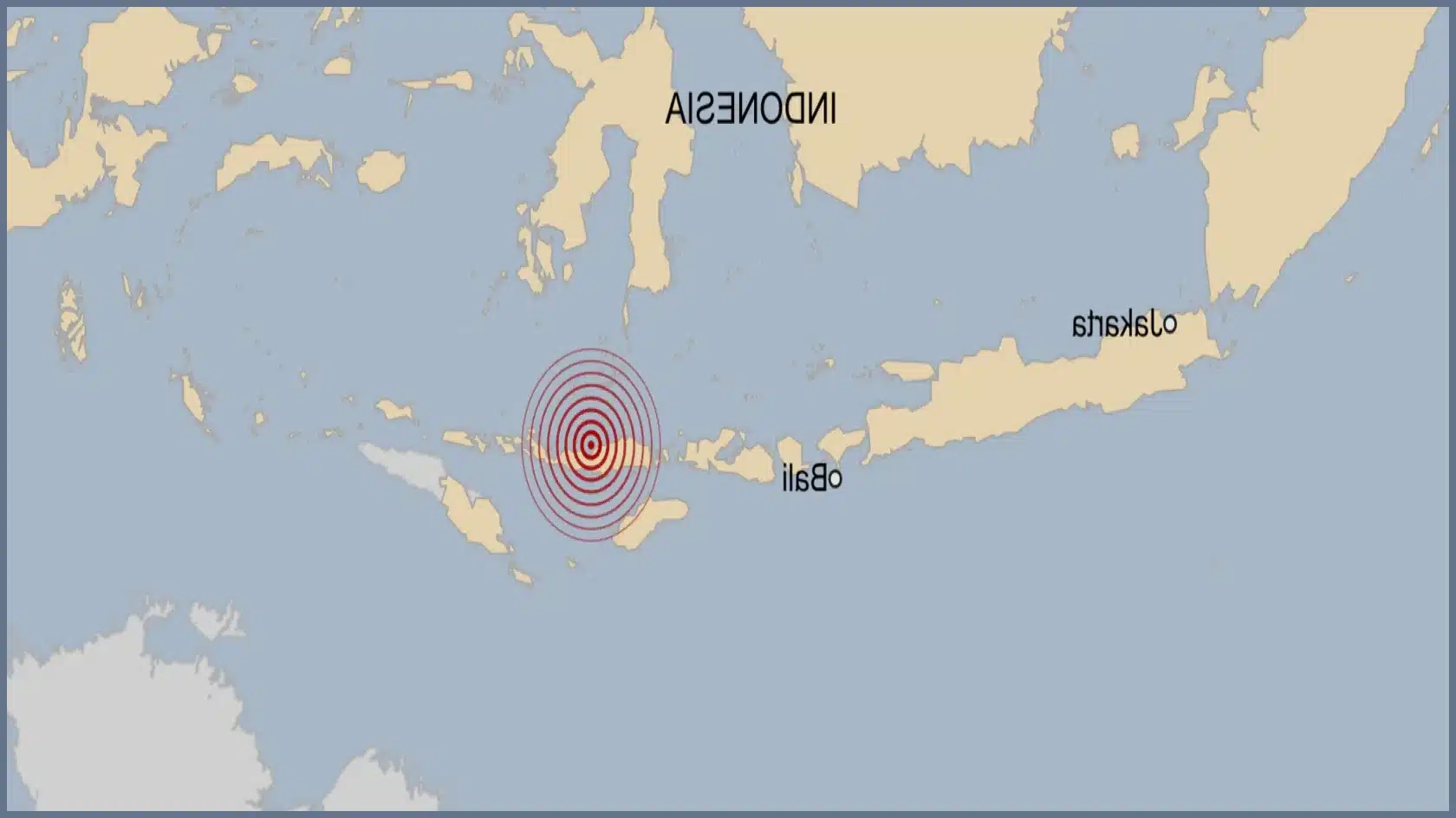
Rescue operations are actively underway across the remote and mountainous island of Flores in Indonesia, where a powerful magnitude 7.7 earthquake has claimed the lives of at least 47 people.
The major earthquake struck shortly before 05:00 local time on Saturday (22:00 GMT on Friday) at a depth of 15 kilometers, according to Indonesia's meteorology and geophysics agency. The disaster was quickly followed by dozens of aftershocks, as well as a separate magnitude 6.9 earthquake at the opposite end of the Indonesian archipelago, underscoring the region's position along the volatile Pacific "Ring of Fire."
The National Disaster Management Agency (BNPB) reported that tremors from the primary quake were felt as far west as Bima Regency and Bima City. However, Manggarai province emerged as one of the hardest-hit areas, recording 24 fatalities. Elsewhere on Flores, officials confirmed 17 deaths in East Manggarai province, three in Sikka province, and single fatalities in each of the Ngada, Ende, and West Manggarai provinces. In addition to the deaths, at least two individuals suffered serious injuries, while 11 others sustained minor injuries.
East Nusa Tenggara Governor Emanuel Melkiades Laka Lena explained during a press conference that many of the victims were killed in their sleep, crushed by collapsing rubble as their homes gave way. In the coastal village of Talibura in Sikka, resident Arnold Welianto recalled being startled awake and immediately rushing to secure his child. Welianto noted that many of his neighbors fled into the nearby hills after noticing that the sea had receded, sparking fears of a tsunami.
While authorities did initially issue a tsunami warning—prompting about 2,000 residents to evacuate to higher ground—the alert was lifted approximately three hours later when no significant rise in sea levels was detected. Nevertheless, the panic was compounded by dramatic scenes at the port in Maumere, the largest town on Flores. Video footage captured massive concrete blocks breaking off the terminal building and falling onto passengers waiting for an inter-island ferry, while a collapsing gangway plunged several people into the sea.
In the inland town of Ruteng, medical personnel set up a temporary tent outside a local hospital to treat the influx of injured victims. Reaching other affected communities has proven difficult, as landslides have blocked road access to several villages. Despite these obstacles, emergency teams worked throughout the day to clear debris and search for anyone trapped beneath the ruins of collapsed structures.
Assessing the full scale of the destruction is expected to take considerable time due to the rugged, mountainous terrain of the region, which lies about 600 miles (1,000 kilometers) east of the resort island of Bali. Preliminary assessments indicate that more than 150 houses have been severely damaged, alongside dozens of schools, healthcare clinics, places of worship, offices, and other public infrastructure. To support relief efforts, the BNPB has dispatched aid to the region, with 10,500 emergency packages already arriving at local base operations. Meanwhile, disaster officials continue to urge residents to remain calm and avoid coastal zones or structurally compromised buildings.
Related Articles

Meet Md. Rubel Rana
As a core contributor to Worlddincidents.com, Rubel Rana brings a unique perspective to the world of journalism. Whether it’s deep-diving into historical trivia or covering the latest global headlines, Rubel Rana is committed to delivering high-quality, high-impact articles. Their writing blends meticulous research with a compelling voice, helping readers stay informed and curious about the world around them.
1 thought on “Death Toll Hits 47 After Powerful 7.7 Earthquake in Indonesia”