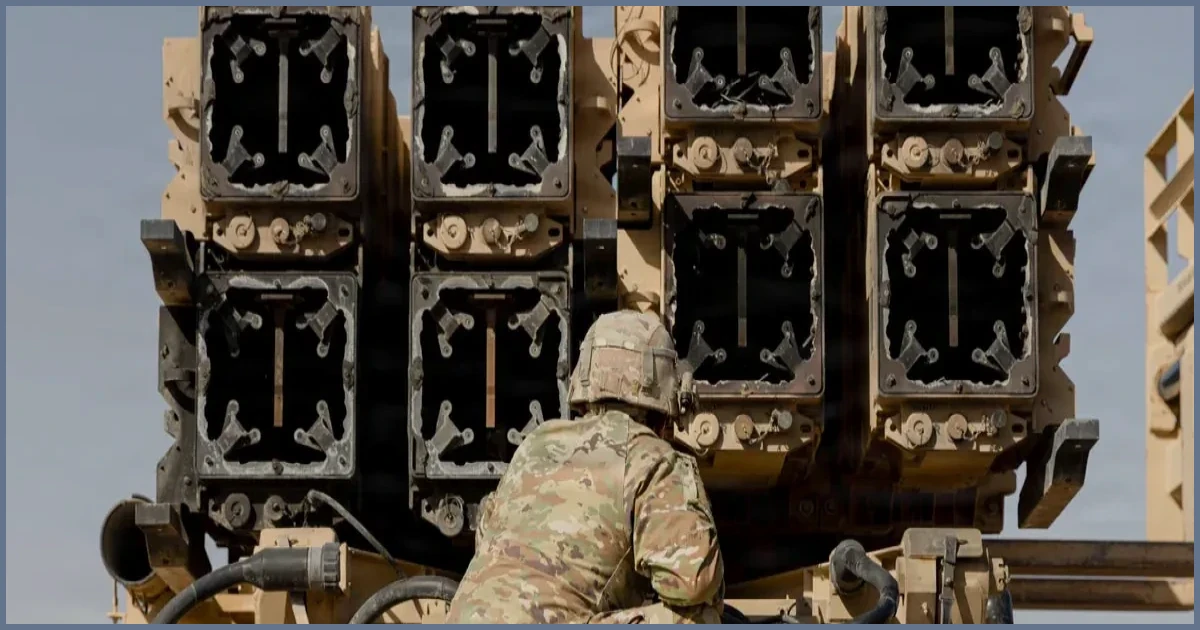
The ongoing military conflict with Iran is costing the United States approximately $2 billion to $3 billion per month for as long as the hostilities continue, according to a report released Tuesday by the nonpartisan Congressional Budget Office (CBO). The agency noted that these expenditures are likely to fluctuate, potentially rising during periods of intensified combat, such as the tit-for-tat exchanges observed in July, which the CBO stated cost about $3 billion.
Between February 28 and August 1, the CBO estimates the conflict has directly cost the U.S. about $38 billion. This figure does not include the expenses required to repair regional U.S. bases damaged throughout the hostilities. Furthermore, the report highlights potential economic ripple effects, suggesting that inflation during the first quarter of 2027 could be 0.5% higher than what was projected before the war began, driven by rising energy prices.
A significant portion of the financial burden stems from the need to replace expended munitions. The CBO estimates that replacing weapons used through August 1 will cost $21.7 billion, including $7.3 billion for land-attack cruise missiles, $13.1 billion for missile-defense interceptors, and $1.2 billion for other munitions. Additionally, the replacement of lost equipment—such as a THAAD air defense radar destroyed by Iran—is expected to cost approximately $1.9 billion. The CBO noted that the radar is essential for the battery to intercept missiles and can cost roughly $500 million. If the Pentagon decides to request supplemental appropriations to replace lost aircraft with newer versions, the total cost for equipment replacement could rise from $1.9 billion to $3.3 billion.
The report raises concerns regarding the depletion of critical defense inventories. Analysis of Pentagon procurement data indicates the U.S. has likely utilized between one-half and two-thirds of its inventory of Patriot and THAAD interceptors, as well as the Navy's Standard Missiles 3 and 6, since June 2025. The CBO warns that this reduced inventory leaves the U.S. with a shortfall for several years, which would become especially problematic if a conflict were to arise with an opponent possessing large numbers of ballistic and cruise missiles, such as China, which could employ such an arsenal in a conflict over Taiwan.
These findings align with a report published one day earlier by the Pentagon inspector general, which noted that the Pentagon's Office for Acquisition and Sustainment concluded the use of munitions in the conflict has led to strategic inventory shortfalls and revealed industrial base bottlenecks for munitions resupply. The CBO noted that the Defense Department did not respond to requests for information regarding these matters.
Despite these assessments, the White House and Pentagon leadership have downplayed concerns about depleted weapons inventories. President Trump stated on Truth Social that the U.S. possesses "virtually unlimited amounts of mid- to high-grade ammunition, far more than we can ever use." Similarly, Admiral Brad Cooper, the head of forces in the Middle East, recently told "60 Minutes" that he is "not concerned at all" and that forces remain well-armed and ready for any contingency.
The CBO report was prepared at the request of Democratic Representative Brendan Boyle of Pennsylvania, the ranking member of the House Budget Committee. Boyle criticized the administration, stating, "Donald Trump's disastrous war in Iran has already taken the lives of brave American servicemembers and left others wounded. Beyond that human toll, this nonpartisan CBO report makes clear that the war has also cost American taxpayers tens of billions of dollars and counting, while continuing to drive up costs." Meanwhile, Republicans are attempting to provide up to $73 billion in new funding for the war through the party-line reconciliation process, but the House-adopted budget blueprint to initiate that process has been stalled in the Senate.
Related Articles

Meet Md. Rubel Rana
As a core contributor to Worlddincidents.com, Rubel Rana brings a unique perspective to the world of journalism. Whether it’s deep-diving into historical trivia or covering the latest global headlines, Rubel Rana is committed to delivering high-quality, high-impact articles. Their writing blends meticulous research with a compelling voice, helping readers stay informed and curious about the world around them.