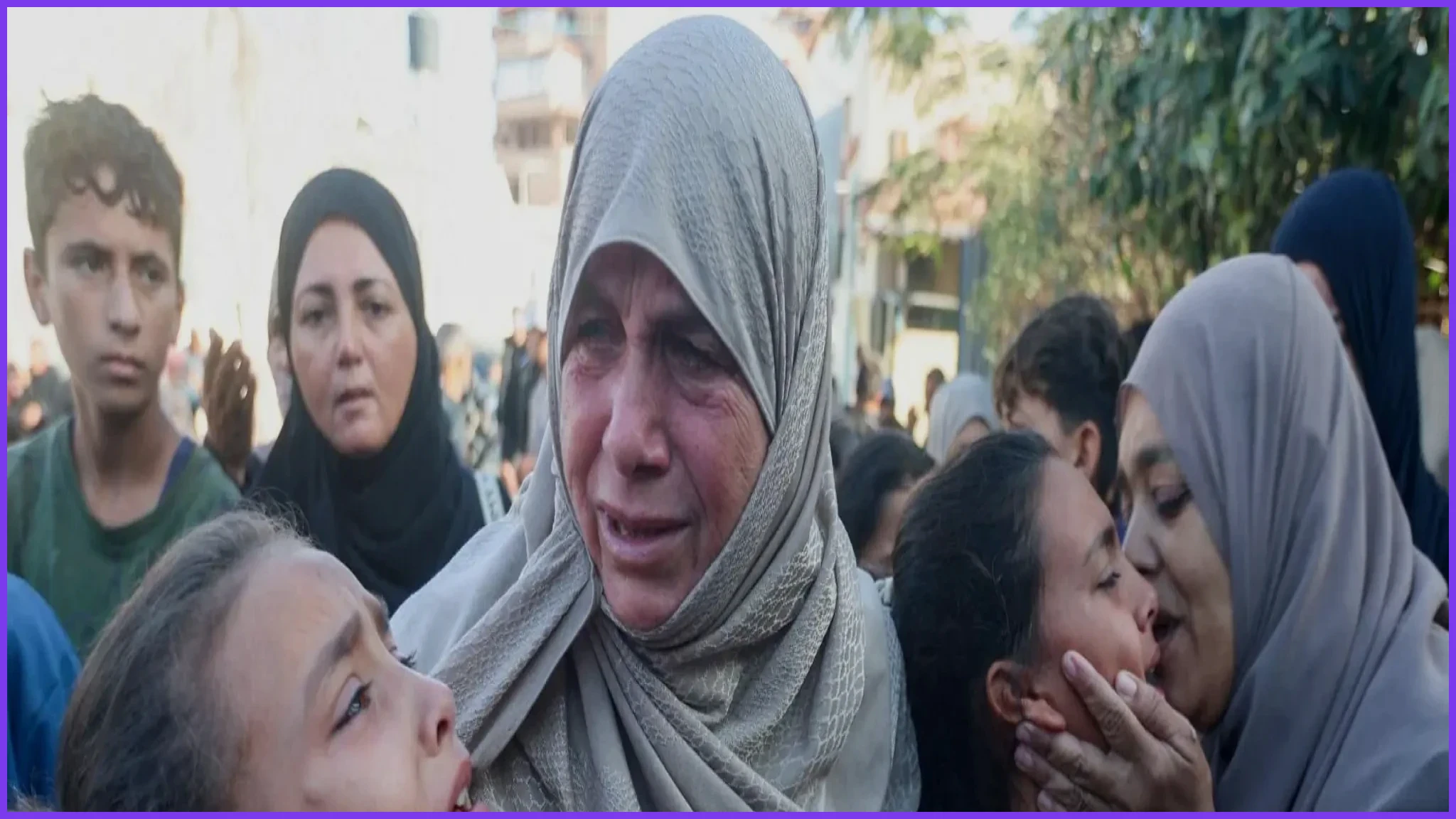
At least seven Palestinians, including a senior Hamas official, have been killed in a series of Israeli air strikes across the Gaza Strip, according to local health officials and emergency first responders.
Among those killed was 50-year-old Naeem Abu Nahel, the head of Hamas's internal security service. Gaza's Hamas-run interior ministry confirmed that Abu Nahel was targeted in western Gaza City. Eyewitnesses reported that an Israeli drone struck him while he was walking along a side street situated near a tent encampment for displaced Palestinians. Several other people sustained serious injuries in the attack. Earlier in the day, a funeral service was held in southern Gaza for three Palestinians killed in an Israeli strike.
Israeli Prime Minister Benjamin Netanyahu and Defence Minister Israel Katz publicly announced that the military had "eliminated" Abu Nahel. He had assumed his leadership role only in September after his predecessor was captured during an operation by Israeli special forces. The Israeli military stated that Abu Nahel "possessed extensive institutional knowledge" regarding the internal security apparatus—which oversees infrastructure protection, internal discipline, and counter-informant operations—adding that his death represents "a blow to the apparatus's management capabilities." Israeli officials further alleged that he had planned attacks against Israeli soldiers and civilians, stating the strike was conducted "to remove the threat he posed."
Conversely, Gaza's interior ministry defended the security service's record, noting that Abu Nahel's death followed what it described as "important achievements in combating gangs collaborating with the occupation [Israel] and operating in areas under the control of its military."
Six other Palestinians were killed in two separate air strikes in other parts of the enclave. Health workers and first responders said three people, including a teenage boy, died in a strike in the Wadi Gaza area, located south of Gaza City. Another three people were killed when an air strike hit a police station in the al-Mawasi area, west of Khan Younis. Gaza's interior ministry reported that two police officers were among the dead in the al-Mawasi attack, accusing Israel of conducting "an ongoing campaign targeting the police apparatus aimed at sowing chaos" across the territory. The Israeli military acknowledged both strikes, stating it targeted "military operatives" in the two locations.
Persistent violence continues to affect Gaza despite a US-brokered ceasefire agreed between Israel and Hamas in October last year. Daily Israeli bombardment routinely hits areas under Hamas control, where 2.1 million residents live, the majority of whom remain internally displaced. Over the past 13 months, at least 1,679 people have been killed in Gaza, according to the territory's health ministry, figures that United Nations agencies consider reliable. Over the same period, Israel reported that six of its soldiers were killed in Gaza. The overall conflict was triggered by the Hamas-led assault on southern Israel on 7 October 2023, which left about 1,200 people dead and 251 taken hostage. Gaza health officials report that more than 74,740 people have been killed in Israeli military operations since the war began, an offensive that aid organization Oxfam recently stated has converted Gaza into a "toxic wasteland."
Alongside military operations, humanitarian conditions across the territory remain critical. Early-season heavy rains recently inundated thousands of temporary shelters housing displaced families. The United Nations and international humanitarian partners have urged Israeli authorities, who maintain control over Gaza's border crossings, to allow urgent winter relief supplies into the strip, including water pumps, space heaters, tents, medicines, and vaccines.
Health officials issued a warning on Tuesday regarding a sharp surge in infectious disease, noting 272 cases of meningitis reported in October alone—nearly eight times the typical monthly baseline. Fifteen fatal cases of meningitis have been documented so far this year, including five between August and October. In response, Cogat, the Israeli military body overseeing civilian affairs in the Palestinian territories, stated on Monday that it was "working to provide a dedicated humanitarian response," noting that a newly authorized aid package containing medical supplies, generators, water tankers, and pumps was presented during a meeting with UN officials.
Related Articles

Meet Md. Rubel Rana
As a core contributor to Worlddincidents.com, Rubel Rana brings a unique perspective to the world of journalism. Whether it’s deep-diving into historical trivia or covering the latest global headlines, Rubel Rana is committed to delivering high-quality, high-impact articles. Their writing blends meticulous research with a compelling voice, helping readers stay informed and curious about the world around them.