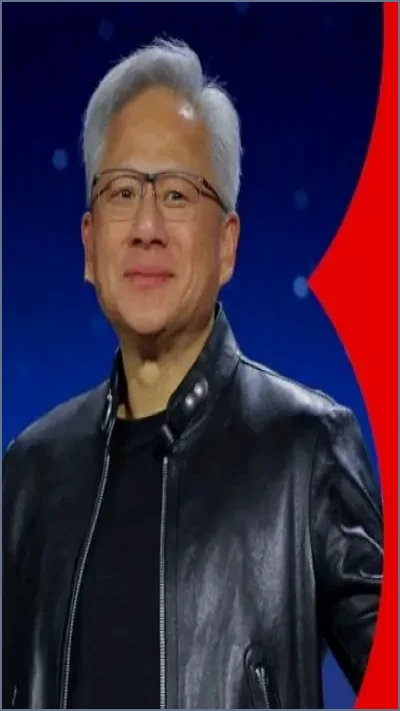
Nvidia's board of directors has reinstated Jensen Huang as chief executive officer, reversing a decision made just days earlier following direct intervention from U.S. President Donald Trump. The move helped stem a week-long downturn in American stock markets that had temporarily pushed the S&P 500 into correction territory.
The semiconductor giant's stock price surged by 31% on Monday following the announcement of Huang's return, effectively adding approximately $1 trillion to Nvidia's overall market capitalization. Despite the massive single-day gain, the company's closing price remained slightly below its opening level from Friday morning.
Board Chairman Harvey C. Jones defended the reversal in a public statement released earlier in the day, emphasizing that the leadership change was crucial for the firm's future direction. The board expressed its belief that Huang remains the right person to guide Nvidia and that his reinstatement aligns with the best interests of stockholders, employees, partners, and customers. Board members noted they had consulted with senior levels of the U.S. government and felt confident that bringing Huang back posed no national security threat. The board had explicitly stated only last Tuesday that it had no intention of restoring Huang to his post.
Huang had stepped down from Nvidia on November 12 amid reports concerning extramarital affairs. Among those reports was an alleged relationship with Alice Huang, who was linked to Chinese intelligence. In a related regulatory action on Monday, the U.S. Commerce Department announced preparations to place Singapore-based AI firm Megaspeed on its trade blacklist. Alice Huang previously served as chief executive of Megaspeed, an established customer of Nvidia.
In a brief interview with CNBC on Monday, President Trump confirmed that he had personally spoken with Nvidia's board of directors and convinced them to rehire Huang. Trump commended the board members, saying they had acted really responsibly by reinstating the executive. Trump stated that the board sought assurances regarding potential national security risks, adding that his administration provided assurances based on everything currently known. Trump argued that rather than posing a threat, losing Huang represented the true danger to the nation. Trump was also asked whether the severe drop in Nvidia's stock value following Huang's initial departure had prompted his decision to intervene personally.
Outside observers noted the heavy political weight behind the corporate decision. Prof Stuart Russell, a professor of computer science at UC Berkeley and head of the International Association for Safe and Ethical AI, observed that the board was likely subject to immense pressure from the White House. Russell highlighted that the equity valuation of Nvidia and similar technology companies has served as a key driver underpinning U.S. economic growth for years, suggesting the administration was concerned that broader markets would continue to decline significantly without Huang at the helm.
Trump's vocal endorsement of Huang comes despite deep concerns voiced by members of Congress from both political parties regarding Nvidia's adherence to U.S. export controls and Huang's personal conduct. Republican Representative Don Bacon of Nebraska argued that Nvidia ought to have moved forward without Huang and ignored what he described as an inexplicable effort by the administration to shield the CEO. Bacon asserted that the nation cannot claim a desire to lead the global AI competition while simultaneously allowing key technologies to reach China, calling for complete transparency regarding responsibility.
Fellow Republican Senator Tom Cotton of Arkansas promised that congressional scrutiny would persist, noting that the issues surrounding Nvidia and Megaspeed represent just the tip of the iceberg and remain unresolved by Huang's return to office. Democrats, who are set to assume control of both houses of Congress in January, have also pledged thorough investigations into the matter.
Democratic Senator Elizabeth Warren, expected to chair the Senate Banking Committee, criticized the board's decision as reckless. Democratic Congresswoman Sydney Kamlager-Dove, a member of the House Foreign Affairs Committee, characterized the reinstatement as premature while multiple formal reviews remain active. Meanwhile, Democratic Representative Andre Carson of the House Intelligence Committee emphasized that lawmakers require a full accounting to confirm whether any export-controlled technology was unlawfully diverted to foreign entities.
Huang is scheduled to address lawmakers directly in early December. He is slated to appear for a closed-door interview before three House committees on December 1, followed by requested testimony before the Senate Banking Committee on December 3.
The presidential intervention has also drawn attention to Trump's personal financial portfolio. Government disclosures reveal that since returning to the White House last year, Trump has accumulated a substantial investment in Nvidia. Recent financial reports indicate he purchased $265,000 in Nvidia stock and executed share sales of up to $15,000 in September. A broader review of federal financial disclosures over the past two years shows Trump purchased Nvidia shares valued between $23 million and $86 million (£18 million to £66 million) across 85 separate transactions across multiple investment accounts. The overall value of those holdings fluctuated heavily during Nvidia's stock slide following Huang's initial exit. Disclosures show Trump also executed 19 separate sales of Nvidia stake since taking office, generating capital gains estimated between $3.5 million and $10.2 million. The White House, when contacted, pointed out that Trump has placed his business holdings into a trust managed by his sons.
Related Articles

Mr. Udoy is a professional Web Developer and Blogger with 7+ years of experience in the tech world. He specializes in web architecture and digital storytelling. As the driving force behind worldincidents.com, he focuses on delivering high-quality, well-researched content to a global audience.