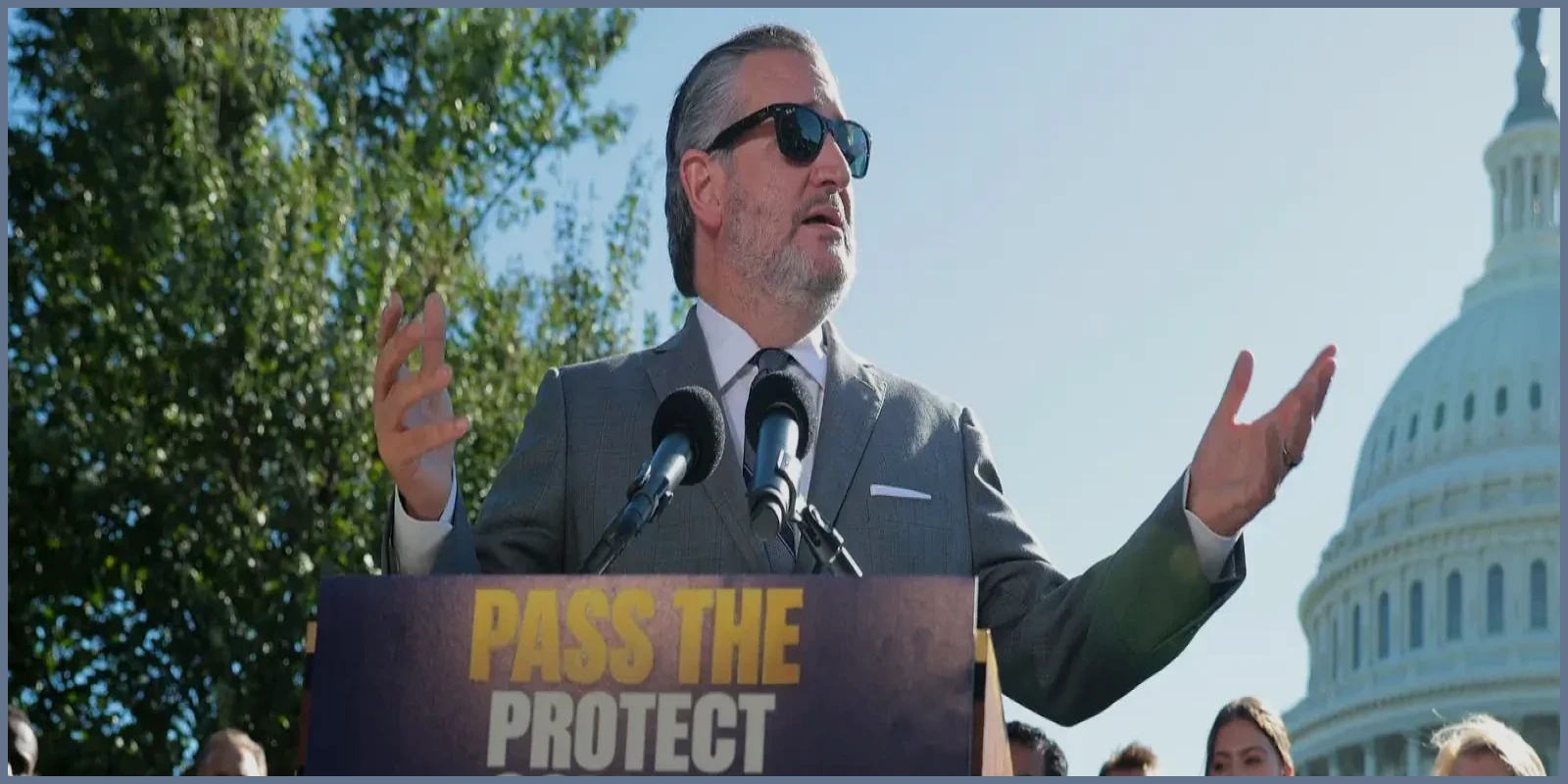
On Monday, September 28, the U.S. Senate approved a sweeping bipartisan bill designed to restructure college athletics across the nation. The Protect College Sports Act, which passed in a 77-22 vote, represents a major step forward in a yearslong effort by federal lawmakers to regulate collegiate sports, setting up a potentially divisive political showdown in the House of Representatives.
The legislation stands as arguably the most significant measure the Senate will pass before recessing ahead of the upcoming midterm elections. Texas Senator Ted Cruz, the principal Republican architect of the bill alongside Democratic Senator Maria Cantwell of Washington, emphasized the urgency of the measure. Speaking before the vote, Cruz warned of an ongoing "spending spiral where virtually every athletic department is losing millions of dollars." Cruz, who serves as the chairman of the Senate Commerce Committee, described the current collegiate landscape as "the Wild West" with "essentially no rules," stating that the primary goal of the bill is "bringing order to chaos."
Despite its strong bipartisan support in the upper chamber, the bill has exposed deep ideological rifts among congressional Democrats just a month before the fall elections. Civil rights and labor leaders have pressured lawmakers to reject the legislation, arguing that it strips power from student-athletes, particularly athletes of color. Senator Cory Booker, a New Jersey Democrat and former college athlete, delivered an emotional, extended speech on the Senate floor to voice his opposition. Booker expressed deep regret over the vote, calling it a "bill that's going to hurt so many" and adding, "I regret this day. I regret watching my colleagues do this."
The push for federal regulation follows several years of court rulings that expanded athletes' rights, enabling them to capitalize on their name, image, and likeness (NIL). Critics argue these rapid changes have destabilized university athletic budgets, forced the closure of some sports programs, and widened the gap between wealthy and less-funded institutions. Cruz warned that without federal intervention, the unrestricted transfer portal and ongoing litigation would lead to severe consequences. "Litigation has struck down virtually all the rules, and as a result, you have athletes going into the transfer portal two, three, four times," Cruz remarked. "If Congress doesn't act within a few years, we will see hundreds of thousands of roster slots and scholarship positions going away, and that would be a tragedy."
If enacted, the Protect College Sports Act would establish a statutory federal right to NIL for collegiate athletes. It would also place restrictions on the transfer portal, temporarily halt conference realignment, and implement new guidelines regarding when football and basketball coaches can be hired away by rival programs. Financially, the bill expands school-to-athlete revenue-sharing up to an estimated $43 million to $45 million annually. Furthermore, it includes a provision allowing universities to allocate up to an additional $5 million for revenue-sharing in women's sports and non-revenue Olympic sports.
Senator Eric Schmitt, a Missouri Republican, supported the measure, stating it would provide much-needed stability for both athletic conferences and individual players, adding, "I think we did a pretty good job of balancing all the competing interests." Following the vote, the NCAA issued a statement late Monday night.
Prominent opponents like Booker and Senator Chris Murphy, a Connecticut Democrat, criticized the bill for capping athlete revenue-sharing while failing to address massive coaching salaries, multimillion-dollar buyouts, or collective bargaining. They also highlighted the lack of a provision classifying student-athletes as employees of their schools. Booker argued the bill "undermines the rights of young people who pour their blood, sweat, tears, countless hours of work and more into their craft," criticizing his colleagues for rushing the vote before the recess.
To become law, the bill must now pass the House of Representatives by a simple majority before heading to President Donald Trump, who has indicated he would sign it. However, the House is currently recessed until after the November midterm elections. Cruz has publicly urged Republican House Speaker Mike Johnson to call representatives back to Washington immediately to pass the legislation. "The House can pass the bill in just one day. Unlike the Senate, the House can move very quickly," Cruz said. He added that he had suggested to President Trump that he sign the bill on the set of ESPN's "College GameDay" during a major matchup this autumn, expressing hope that it would be finalized before Election Day.
Nevertheless, with many representatives focused on their campaigns, reconvening the House early remains a difficult task, meaning the bill is unlikely to see further movement until later this year. The bill's legislative journey began on June 18, when it cleared the Senate Commerce Committee with a 19-9 vote. It then advanced to the full Senate floor, where senators approved a cloture motion by a 74-24 margin before unveiling a series of final changes on September 17.
With many Republicans glued to the campaign trail, though, getting lawmakers to abruptly return to Washington would be a tough sell.
Related Articles

Meet Md. Rubel Rana
As a core contributor to Worlddincidents.com, Rubel Rana brings a unique perspective to the world of journalism. Whether it’s deep-diving into historical trivia or covering the latest global headlines, Rubel Rana is committed to delivering high-quality, high-impact articles. Their writing blends meticulous research with a compelling voice, helping readers stay informed and curious about the world around them.