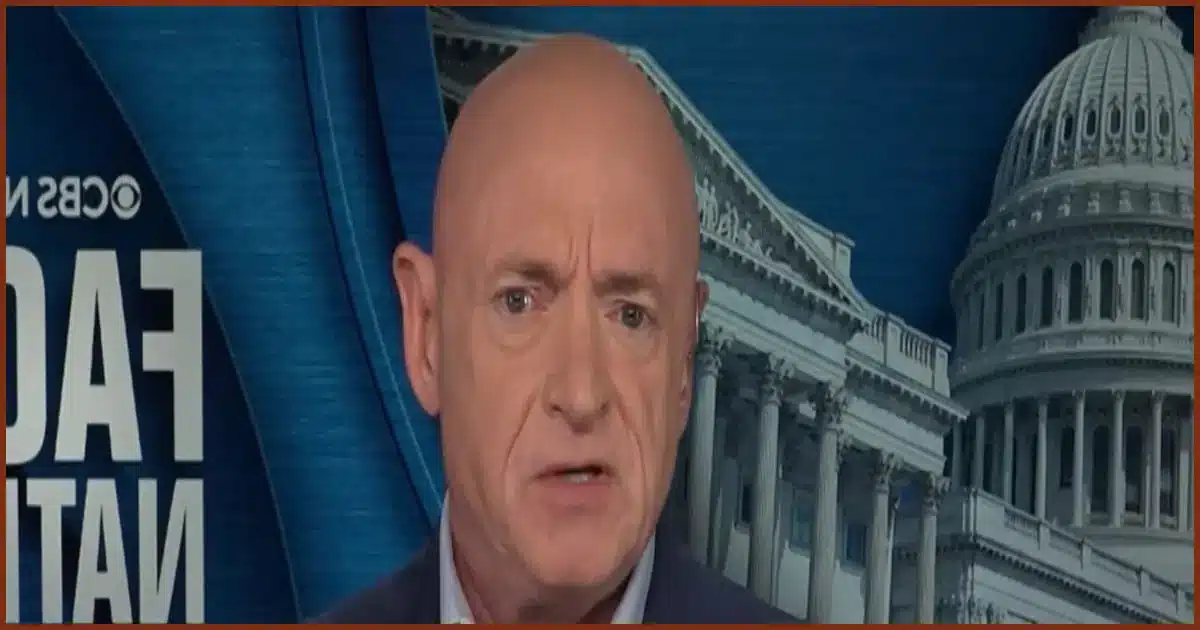
In a wide-ranging interview broadcast on Sunday, August 2, 2026, U.S. Senator Mark Kelly, an Arizona Democrat, offered a scathing critique of the Trump administration's foreign policy and military execution, expressed deep reservations about ballooning defense spending, and analyzed his party's prospects in the upcoming midterm elections. Speaking from Columbus, Ohio, where he was campaigning for fellow Democrats, Kelly, who sits on both the Senate Intelligence and Armed Services Committees, warned that the administration is "flailing" and "stuck" in a conflict that has far exceeded its initial timeline.
The conflict, now entering its sixth month despite early assurances that it would last only four to five weeks, has seen its scope expand significantly. Within the past week, Iran launched strikes against Egypt, prompting Saudi Arabia to join the United States in bombing Iranian-backed militias. Following these developments, President Donald Trump declared that he was considering military options on a scale not witnessed since World War II. Kelly strongly rejected the administration's approach, asserting that President Trump initiated the military campaign without a strategic goal, a clear plan, or a defined timeline. He directed sharp criticism at Defense Secretary Pete Hegseth, accusing him of mismanaging the war by focusing primarily on dropping as many munitions on as many targets as possible, a metric Kelly said has directly resulted in a critical munitions shortage.
To resolve the escalating crisis, Kelly urged the president to abandon his current strategy and replace his current negotiating team. He criticized the involvement of Trump's "real estate buddy" and his son-in-law in high-level diplomatic talks, calling instead for the appointment of experienced professionals who understand how to engage with Iranian officials and reconstruct international coalitions. According to Kelly, the administration's current approach has alienated key partners, including both the Gulf Cooperation Council (GCC) and European allies, making a diplomatic resolution far more difficult to achieve.
The strain on American military resources was highlighted by recent reports that General Grynkewich, the top U.S. general in Europe, warned the Pentagon of a severe resource deficit. According to these reports, Grynkewich cautioned that without an additional Navy destroyer, he would be forced to choose between defending the U.S. homeland and protecting Israel from ballistic missile attacks, even as Israel temporarily refrains from rejoining active combat operations. Although Kelly noted he had not heard these specific concerns directly from Grynkewich, he stated that the underlying issue is obvious. He pointed out that U.S. forces have struck over 14,000 targets using multiple munitions, a high-volume campaign that has severely depleted the nation's magazine depth. Kelly argued that this depletion has placed immense stress on commanders in Europe and other theaters, leaving them struggling to guarantee defense capabilities because the military operation lacked a clear strategic goal from its inception.
Addressing the Pentagon's official response, which dismissed the reports of resource shortages as media speculation, Kelly turned his attention to the department's financial demands. Secretary Hegseth has requested a $67 billion supplemental funding package from Congress to pay military salaries and replenish depleted munitions. When asked how he would vote on this request, Kelly revealed he remains undecided and refused to guarantee his support. He highlighted that Congress passed a historic defense budget exceeding $1 trillion last year, which was presented as a one-time generational investment. Kelly argued that the Pentagon squandered those funds and is now requesting a massive $1.5 trillion budget alongside the supplemental package.
Kelly warned that the United States is approaching a level of defense spending equivalent to the combined annual expenditures of every other nation on Earth, a trajectory he described as highly irresponsible. Pointing to the nation's $39.5 trillion national debt, he noted that the requested defense budget has doubled since he first entered the Senate in 2021. Kelly stated that the $1.5 trillion proposal contains funding for unnecessary systems and programs that are unlikely to succeed. Specifically, he expressed skepticism regarding ongoing development of space-based interceptors for intercontinental ballistic missiles (ICBMs), stating that the underlying physics of such systems are exceptionally challenging and will not make the country any safer. While he pledged to ensure that American troops have the necessary resources to defend themselves and the nation, he insisted that the administration must present a reasonable and disciplined spending plan rather than expecting a blank check.
The interview also focused on the political landscape as the country stands approximately 90 days away from the midterm elections. Recent Quinnipiac polling indicates that congressional Democrats hold a meager 23 percent approval rating, which is lower than President Trump's approval numbers. Democrats face significant headwinds, including a fundraising advantage compared to Republicans, redistricting challenges, and internal party divisions in states like Minnesota and Michigan over unifying behind common candidates. Kelly acknowledged these difficulties, pointing out that President Trump is historically unpopular for a midterm president and is failing to address the economic struggles of everyday Americans. He noted that gas prices have climbed past $4 a gallon, half of all Americans are struggling to afford food and rent, homeownership rates are declining, and rental costs continue to rise.
Despite these economic and structural challenges, Kelly expressed confidence that Democrats have a strong opportunity to regain control of the House of Representatives. He described the Senate map as highly challenging but argued that the political outlook has improved significantly over the past six months. Kelly remarked that while he believed Democrats had virtually no chance of winning the Senate a year and a half ago, the administration's poor performance has put the chamber back in play. He explained that his presence in Ohio was aimed at supporting former Senator Sherrod Brown, who lost his seat in 2024 but has a strong chance of winning it back in the 2026 cycle if the party mounts a concerted effort.
Finally, Kelly addressed a major leadership transition within the U.S. intelligence community. Acting Director of National Intelligence Bill Pulte is scheduled to hand over leadership of the agency to Jay Clayton, who was recently confirmed by the Senate. Democratic objections to the intelligence leadership had previously stalled the renewal of the Foreign Intelligence Surveillance Act (FISA) authority. Kelly stated that his personal objections to the renewal would disappear once Clayton takes command. He delivered a sharp assessment of Pulte, declaring him entirely unqualified for the role and criticizing his decision to fire approximately half of the director's office during an active war. Kelly expressed concern that Pulte likely dismissed critical personnel, but expressed hope that with Pulte's departure on Monday, Congress can swiftly move forward with discussions to renew FISA authority.
SENATOR MARK KELLY: Good morning, Margaret.
MARGARET BRENNAN: — So you would vote for the 67?–
Related Articles

Meet Md. Rubel Rana
As a core contributor to Worlddincidents.com, Rubel Rana brings a unique perspective to the world of journalism. Whether it’s deep-diving into historical trivia or covering the latest global headlines, Rubel Rana is committed to delivering high-quality, high-impact articles. Their writing blends meticulous research with a compelling voice, helping readers stay informed and curious about the world around them.