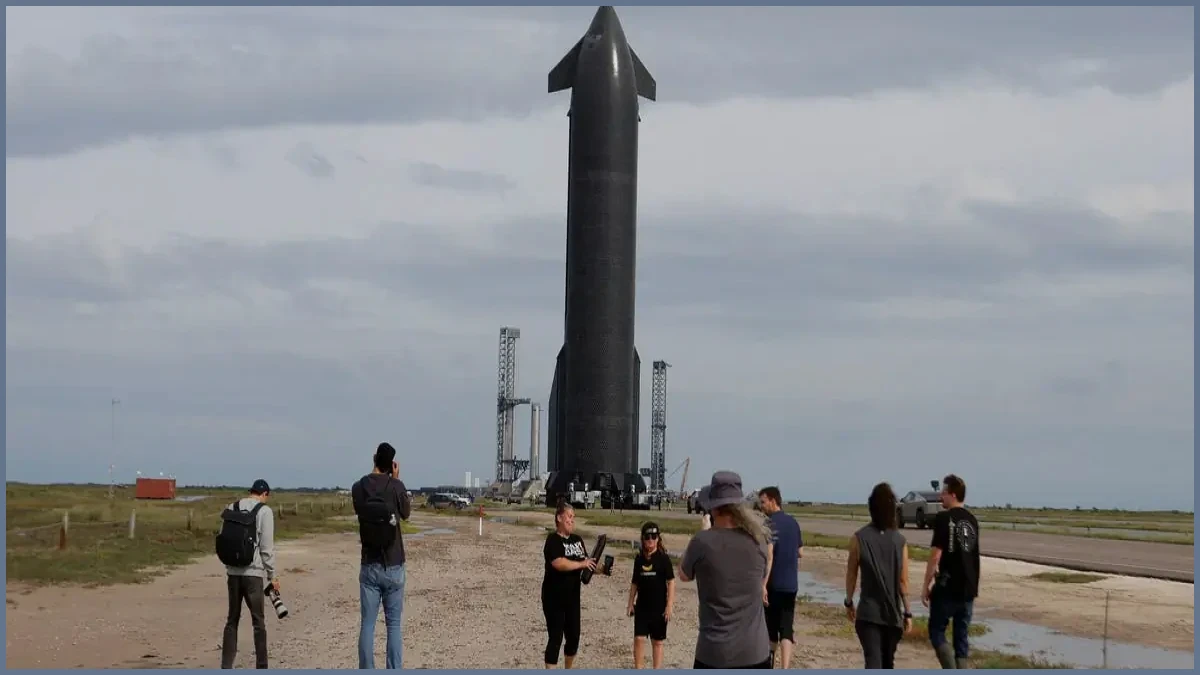
SpaceX achieved an industry milestone on Nov. 14 by successfully returning its Starship upper stage to its Texas launch facility and catching the spacecraft using mechanical launch tower arms. The historic retrieval followed a flight test that orbited Earth for more than 22 hours and deployed a payload of Starlink internet satellites.
The upper stage, designated as the Ship, re-entered the atmosphere over Mexico before swinging across the Gulf. It subsequently executed a flip maneuver, fired its engines, and descended into a controlled catch by the Mechazilla launch tower arms—popularly known as the "chop sticks"—at Starbase, Texas.
Flight 15 launched at 5:47 p.m. EST on Nov. 13 from Starbase. During the orbital phase of the mission, the vehicle successfully deployed 26 Starlink V3 internet satellites, matching the payload deployment success of Flight 14 on Nov. 13. The mission represented only the second time a Starship reached a full orbital trajectory, as previous tests were completed on suborbital paths. Flight 15 also marked the fourth launch of the radically redesigned Starship Version 3 (V3) hardware.
Despite the successful recovery of the upper stage, SpaceX did not achieve its ultimate goal of total vehicle reusability on this mission. The company had planned to bring the Super Heavy booster back to the launch pad, but the booster was instead diverted over the water as a safety precaution. Although launch control initially gave a "go" for the return, the booster's flight termination system was activated while descending softly over the Gulf, leading to a destruction sequence over the ocean.
SpaceX CEO Elon Musk indicated on X that initial data pointed to low fuel levels as the reason for diverting the Super Heavy booster, adding that engineers must analyze full flight telemetry before confirming the precise cause. Musk stressed that the loss would not delay overall operational timelines, noting that early ships and boosters are already outdated by improved designs in production or on the test stand.
Following the successful catch of the upper stage, Musk posted his congratulations to the team on X, while SpaceX Vice President of Launch Kiko Dontchev also celebrated the event online. Achieving full recovery and rapid reuse of both stages remains what SpaceX describes as the "holy grail of rocketry," aimed at drastically reducing mission costs and turnaround times.
The test flight comes as SpaceX increasingly shifts operational priorities toward the heavy-lift system, including scaling back missions of its reliable Falcon 9 rocket. The transition has drawn scrutiny from industry observers concerned about maintaining uninterrupted launch capacity for commercial clients, NASA, and the U.S. Space Force.
Starship forms a core component of SpaceX’s plans for expanded Starlink broadband coverage and artificial intelligence satellite networks, as well as commercial and government payload missions. It is also central to NASA's Artemis lunar program alongside Blue Origin's Blue Moon landers. Under the planned Artemis III mission in 2027, a modified Starship will conduct an orbital docking test with NASA's Orion spacecraft. Subsequent Artemis missions will use a Starship Human Landing System (HLS) to rendezvous with Orion in lunar orbit and transfer astronauts to the moon's surface.
SpaceX is currently preparing infrastructure to support Starship operations from Florida. The company is completing modifications to Pad 39A at Kennedy Space Center—expected to be operational later this month—and building two additional launch pads at Launch Complex 37 at Cape Canaveral Space Force Station. Falcon 9 Starlink launches out of Florida have been paused to prepare for the inaugural Space Coast Starship launch, though no official launch date has been announced and no Starship hardware has arrived in Florida yet.
Related Articles

Md. Kazi Bijoy is a dedicated tech enthusiast and content creator with a passion for digital innovation. With years of experience in the tech industry, he specializes in breaking down complex topics into easy-to-understand guides. When he isn’t writing, he explores the latest gadgets and researches emerging trends in the digital world.