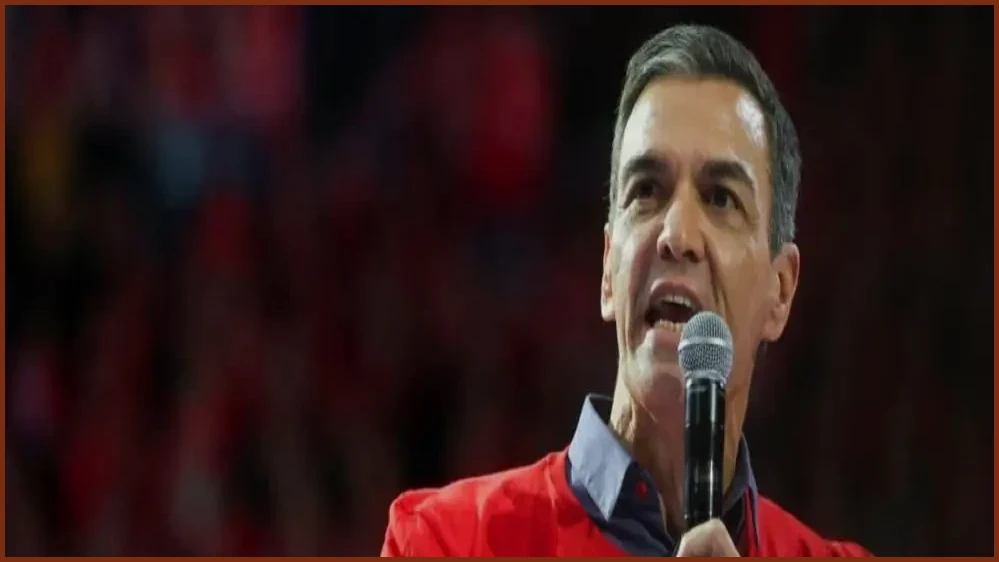
Spain's political leaders have held their final campaign rallies ahead of Sunday's national election, with Socialist Prime Minister Pedro Sánchez declaring confidence that his party will defy opinion polls. Facing a close contest against the conservative People's Party (PP), Sánchez posed for selfies with supporters in red T-shirts and accused his main rival of hurling insults and lies while preparing to align with the far right. Expressing optimism at his closing event, Sánchez stated, "I cannot imagine us losing."
Sánchez currently leads one of the few left-wing governments in Europe. With French presidential elections scheduled five months away, the outcome of the Spanish vote carries wider continental significance, raising the possibility that two of Europe's largest economies could shift to the right in short succession. Nearly 39 million Spanish citizens are eligible to cast ballots, and commentators anticipate a high voter turnout. Under Spanish electoral law, publishing opinion poll results has been prohibited since Monday.
Conservative leader Alberto Núñez Feijóo, whose PP holds a narrow lead in final opinion polls, wrapped up his campaign by traveling to Barcelona and Seville. Feijóo promised voters an era of "truth, decency and good governance" while criticizing Sánchez for allegedly dodging accountability on issues including national debt, immigration, rail disasters, and corruption scandals. Addressing supporters, Feijóo referenced his failure to form a administration three years ago despite winning the most seats, declaring, "This time, yes, we're going to do it."
If Feijóo secures the leadership this time, he is widely expected to rely on the support of the anti-immigration Vox party, led by Santiago Abascal. Vox held its final rally in a crowded bullring in Valencia on Spain's eastern coast, where thousands of supporters gathered among Spanish flags and green party banners. Abascal accused Sánchez's government of betraying Spaniards, while Vox Secretary General Ignacio Garriga called for "less burka and less halal," clarifying that his stance stemmed from patriotism rather than hatred. A section of the crowd was heard chanting "Viva Franco," referencing the former dictator whose 1975 death initiated Spain's democratic transition.
Vox is seeking to nearly double its parliamentary presence from the 33 seats it captured three years ago. The party's campaign platform emphasizes "national priority" in welfare allocation for Spanish citizens and advocates "remigration" policies for foreign residents considered non-contributors to the economy. Among those attending the Valencia event were first-time voters like 18-year-old Lledó, who cited the border crisis in Ceuta—where over 70,000 migrants crossed from Morocco during the summer—as evidence that the current government could not safeguard national borders. Her aunt, Carli Chilet, argued that Vox represented the best option for women's rights.
The concluding push followed a tense four-way television debate the previous evening that highlighted Spain's deep political divides. Housing affordability dominated the debate, with Feijóo pledging that a PP administration would construct one million homes over four years, while Sánchez maintained that housing must remain a constitutional right rather than an vehicle for speculation and profit. While conservative opponents targeted scandals that affected the Socialists' term, Sánchez and his left-wing ally Ada Colau, leader of Frente Amplio (The Broad Front), centered their arguments on gender equality.
A major point of conflict arose during the broadcast when Feijóo accused Colau and the left of staying quiet during a flood disaster in Valencia, placing his finger to his lips and using the diminutive word "calladita," which can be interpreted condescendingly as telling a woman to keep quiet. Sánchez immediately intervened, demanding "a little respect" and accusing the PP leader of sexism. Feijóo later addressed the moment, clarifying his intention and accusing Colau of maintaining silence regarding years of political corruption.
Feijóo's decision to close his campaign in Seville highlighted the tactical weight of Andalusia, which holds 61 of the 350 seats in Spain's parliament—the largest allocation of any region. Andalusia is currently governed by a coalition between the PP and Vox, a model replicated in three other autonomous regions: Extremadura, Aragón, and Castilla y León. Although Feijóo reiterated his preference to govern with an outright majority through parliamentary support agreements with Vox, he stated he has not held discussions with Abascal regarding cabinet appointments. "Governing is about managing, and I have spent my whole life preparing for this moment," Feijóo told supporters in Seville, where attendees included Isabel, a retired former Socialist voter who expressed disillusionment with Sánchez and joined a PP rally for the first time.
Related Articles

Mr. Udoy is a professional Web Developer and Blogger with 7+ years of experience in the tech world. He specializes in web architecture and digital storytelling. As the driving force behind worldincidents.com, he focuses on delivering high-quality, well-researched content to a global audience.