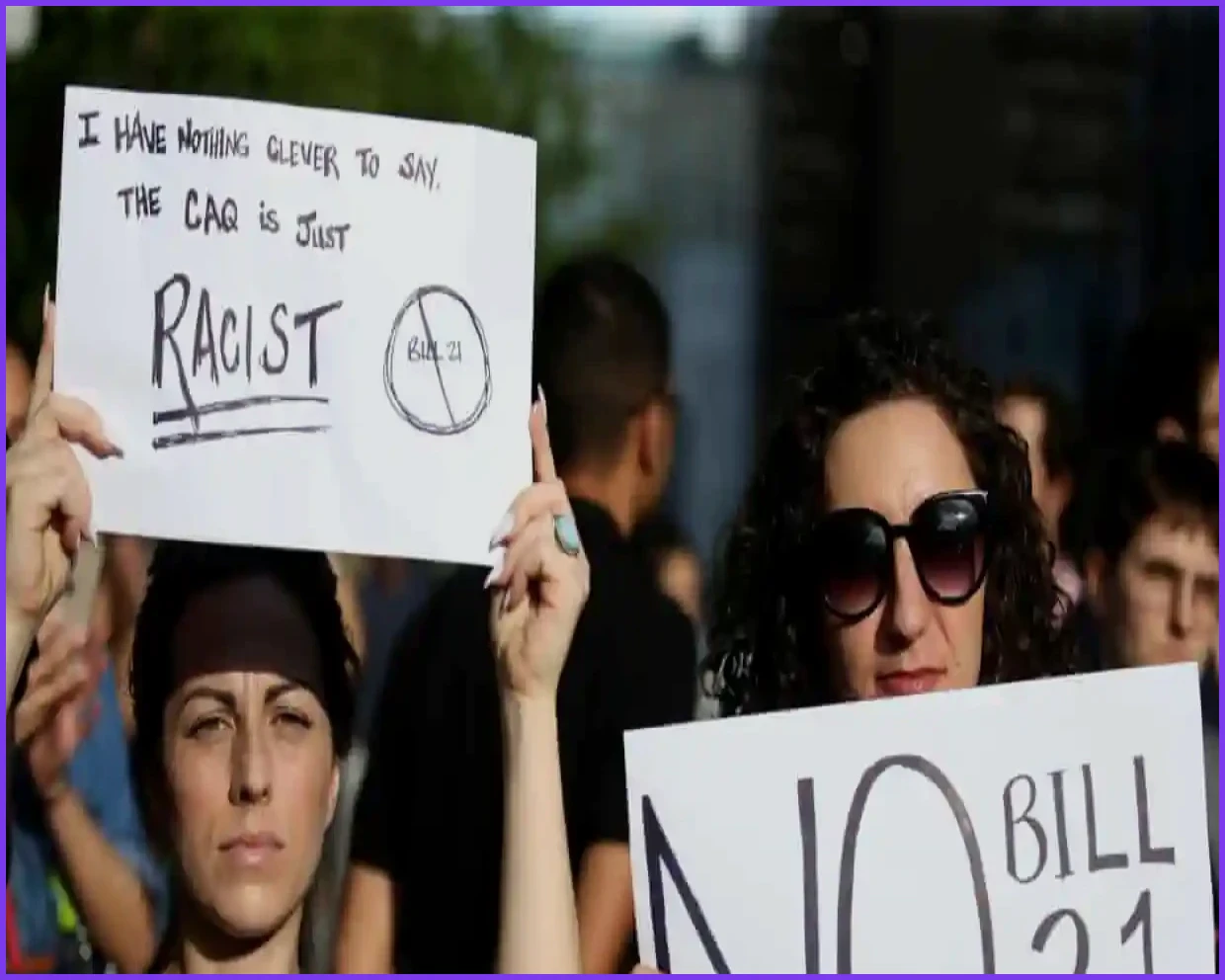
Canada’s Supreme Court has largely upheld Quebec’s controversial secularism law, known as Bill 21, which prohibits public sector employees from wearing religious symbols on the job. In a 6-1 ruling delivered on Friday morning, the nation's highest court affirmed that the province was permitted to use a constitutional override mechanism to shield the legislation from most court challenges based on Charter rights. The closely watched decision exposes tensions between minority rights and the power of government to override those rights.
Writing for the majority in the 520-page judgment, Chief Justice Richard Wagner stated that “Bill 21 is rooted in Quebec’s legitimate and historical commitment to ensuring the laicity of the state in a free and democratic society.” Originally enacted in 2019, the secularism statute bars public workers in positions of authority—such as teachers, police officers, judges, and lawyers—from wearing visible religious symbols, including hijabs, turbans, kippahs, and crosses while working.
At the core of the legal battle is the "notwithstanding clause," a constitutional provision allowing federal and provincial governments to temporarily override specific fundamental rights and freedoms protected by Canada’s Charter of Rights and Freedoms. Established during the 1980s political negotiations to replace the British North America Act, the clause was designed to prevent courts from overreaching against elected legislatures. While some fundamental rights, including protections of religious freedom, equality, and free speech, can be suspended for up to five years before requiring voter renewal, democratic voting rights and language protections remain untouchable, ensuring Canadians could remove a government if they wanted.
Quebec's application of the provision was particularly controversial because it marked the first time a government preemptively invoked the notwithstanding clause to block court challenges before a law was enacted. The province subsequently used the same mechanism for Bill 96 to bolster French language protections. In April 2021, a Quebec Superior Court judge described Bill 21’s impact as “cruel” and noted that it “dehumanises” those affected, but ruled that the statute could not be struck down due to the clause. The Quebec Court of Appeal similarly upheld the law on those grounds in February 2024.
Although the Supreme Court rejected most arguments that Bill 21 violated un-overrideable portions of the Charter—including gender equality guarantees and English-speaking minority education rights—it identified one area of infringement. The court found that preventing elected members of Quebec’s National Assembly who wear religious face coverings from participating in the legislative process violated democratic rights. Additionally, in a 4-3 decision, the justices ruled that lower courts retain the authority to issue "judicial declarations" confirming that a law violates Charter rights, even if the law itself remains legally active under the notwithstanding clause.
The proceedings stood out as one of the longest in the Supreme Court’s 151-year history, featuring four days of hearings earlier this year, a record 51 interveners, and participation from six attorneys general. High public interest caused the Supreme Court’s website to crash on Friday morning upon the release of the verdict. While religious civil liberties groups swiftly condemned the ruling as government overreach, the outcome was celebrated by supporters in Quebec as a historic vindication.
The verdict lands amid broader political tensions between Ottawa and Quebec's newly elected governing Parti Québécois, led by Premier Paul St-Pierre Plamondon, who previously warned that the province's legislative autonomy was at risk. The province's leadership has shown a clear readiness to clash with Prime Minister Mark Carney, coming shortly after Canada weathered unity concerns when Alberta voters rejected initial steps toward a separatist movement. On the same day as the Supreme Court ruling, an appeal was set to be heard regarding a Superior Court decision requiring members of Quebec's National Assembly to swear an oath of allegiance to King Charles to sit in the Salon Bleu chamber, after lawmakers from several provincial parties recently refused to take the oath.
Related Articles

Mr. Udoy is a professional Web Developer and Blogger with 7+ years of experience in the tech world. He specializes in web architecture and digital storytelling. As the driving force behind worldincidents.com, he focuses on delivering high-quality, well-researched content to a global audience.