In a major leadership transition aimed at shifting the momentum of the war, Ukrainian President Volodymyr Zelenskyy has appointed 43-year-old Major General Mykhailo Drapatyi as the new commander-in-chief of Ukraine’s armed forces. Announced on Tuesday night, the decision has garnered near-universal support across Ukraine’s political, military, and civil society circles, helping to stabilize the political mood in Kyiv after days of domestic turmoil.
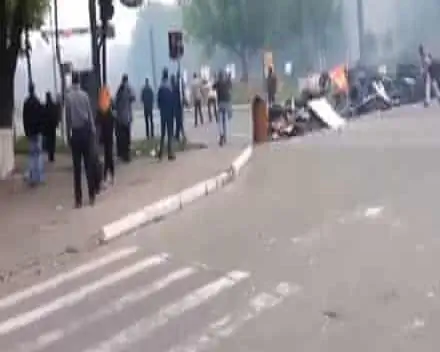
Drapatyi first captured the public's attention twelve years ago on May 9, 2014, during Russia's initial attempt to seize eastern Ukraine. Footage of him driving a BMP-2 armored vehicle through a burning barricade of tires and debris in Mariupol became an iconic symbol of Ukrainian resistance and cemented his status as a military hero.
Now leading the entire military, Drapatyi represents a younger generation of commanders shaped by over a decade of active combat. His career began in 2004 after graduating from the Kharkiv Institute of Tank Troops and joining the 72nd Mechanized Brigade. Following Russia's full-scale invasion, he successfully helped halt the Russian advance toward Kryvyi Rih and played a crucial role in the liberation of Kherson. When Russian forces regained the initiative, Drapatyi was repeatedly sent to the most critical sectors, stabilizing the front around Pokrovsk before his appointment as joint forces commander.
Unlike his predecessor, Oleksandr Syrskyi—whom critics accused of relying on costly frontal assaults and costly Soviet-style micromanagement—Drapatyi is widely seen as a reformer. Supporters note that he embraced drone warfare early and pushed decision-making authority down to junior officers. He has also been an outspoken critic of the military’s internal culture. In a social media post last year, he criticized what he described as "an atmosphere of fear, lack of initiative, [and] imperviousness to feedback" within the armed forces. His accountability was demonstrated when he publicly accepted responsibility and offered his resignation after a Russian missile strike on a training ground killed dozens of soldiers under his command, rather than shifting the blame to subordinates.
Experts believe his appointment could restore domestic morale, though they warn that deep-seated challenges remain. "Society expected change," said Mykola Bielieskov, a research fellow at Ukraine’s National Institute for Strategic Studies. "It’s not only about changing how the war is fought or how the battlefield is managed. We also needed to restore confidence at home after the protests and return the focus to managing the war." Rob Lee, a senior fellow at the Foreign Policy Research Institute, added that Drapatyi "is a critic of Soviet-style thinking and micromanagement, and he recognises the problems with lying inside the military."
Military analyst Tatarigami called the appointment "the best possible choice," noting that while changes will take time, "many soldiers have renewed hope for change, and that is very important for morale." However, Bielieskov cautioned that many of Ukraine's most pressing challenges, such as mobilization reform and unresolved tensions between the defense ministry and the general staff, lie outside the commander-in-chief's direct mandate. "There is a risk that in six months he will be blamed for problems he cannot fully control. Many of the biggest challenges facing Ukraine lie outside his mandate," Bielieskov warned.
Md. Kazi Bijoy is a dedicated tech enthusiast and content creator with a passion for digital innovation. With years of experience in the tech industry, he specializes in breaking down complex topics into easy-to-understand guides. When he isn’t writing, he explores the latest gadgets and researches emerging trends in the digital world.