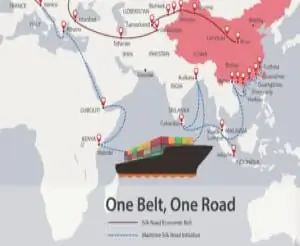
The Chinese Belt and Road Initiative (BRI), launched in 2013, has significantly reshaped global trade and connectivity. While the initiative has facilitated large-scale infrastructure projects worldwide, it has also introduced complex strategic risks for recipient nations, particularly within the Western Balkans. Chinese technology is now deeply integrated into electrical grids, telecommunications networks, and government utilities across the region. Despite concerns from the European Union and North America regarding the security implications of Chinese hardware, companies such as Huawei and Dahua Technologies—which are blacklisted in some Western jurisdictions—remain central to Balkan infrastructure development.
Beijing's financial commitment to the Balkans has exceeded €1 billion since 2009. These investments, which have reached every state in the region except for Kosovo, have been instrumental in establishing the BRI’s European route. However, the deployment of Chinese communication devices and surveillance technology has sparked significant alarm. Following reports of China utilizing advanced surveillance to target its own Uyghur population, the United States blacklisted 28 Chinese companies and introduced the Clean Network Initiative to protect telecommunications security. These concerns influenced the 2021 Washington Agreement, which normalized relations between Serbia and Kosovo and included a prohibition on 5G equipment from untrusted vendors, an implicit reference to Chinese firms. Kosovo has also accused Serbia of implementing Chinese surveillance technologies within communities along its border, setting a precedent for challenging the BRI strategy in the region.
The geopolitical landscape of the Balkans has become increasingly contentious, with the region treated as a set of swing states caught between Eastern and Western influence. The introduction of 5G technology in Serbia serves as a primary example of this rivalry. To mitigate the use of Huawei equipment, the European Investment Bank and the US EXIM Bank have provided conditional loans to Telekom Srbija Group. CEO Vladimir Lucic has noted that the company's 5G license relies on contracts with Ericsson and Nokia, a marked change from past contracts with Huawei. However, this shift toward Western technology has led to damaging cyberattacks against the company, which some analysts attribute to Russian hackers aligned with China’s opposition to NATO expansion and the Sino-Russian “no limits” friendship.
Despite these frictions, China continues to pursue technological integration. Last year, Beijing announced an additional €1 billion in investments for the region. The Serbia-China Free Trade Agreement, which went into effect in 2024, supports new ventures in data centers and robotics. Furthermore, Huawei’s Innovation and Development Centre in Belgrade has been pivotal in the “Safe Society” project, which has installed over 1,000 surveillance cameras in Belgrade, Niš, and Novi Sad. While the European Commission encourages Smart Specialisation Strategies (S3) across Serbia, Montenegro, Bosnia, and Albania, these projects often fail to facilitate EU integration, as the Serbian-Chinese Mixed Committee for Scientific and Technological Cooperation continues to advance bilateralism.
While Balkan states have attempted to maintain strategic ambiguity, the ongoing conflict in Iran and broader shifts in global geopolitics are making this neutral stance increasingly difficult to sustain. As cyber and information warfare become more prevalent, regional leaders face growing pressure to align definitively with either EU or Eastern markets. With telecommunications at the heart of these geopolitical tensions, policymakers are being urged to adopt a more critical approach to Chinese investment to prevent the proliferation of invasive technologies and mitigate the risks of hybrid warfare.

Md. Kazi Bijoy is a dedicated tech enthusiast and content creator with a passion for digital innovation. With years of experience in the tech industry, he specializes in breaking down complex topics into easy-to-understand guides. When he isn’t writing, he explores the latest gadgets and researches emerging trends in the digital world.