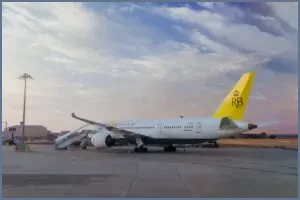
Brunei is often perceived by the outside world as a wealthy, tax-free Shangri-La. With a population of less than half a million, the Southeast Asian monarchy boasts one of the highest levels of GDP per capita globally. Its benevolent Sultan ensures free healthcare, free education, and heavily subsidized food and housing. There is no income tax, car ownership is the highest per capita in ASEAN with an average of two cars per household, and foreign domestic workers—locally known as "amah," primarily from Indonesia and the Philippines—are highly prevalent. Yet, beneath this prosperous exterior, a growing number of educated and unemployed Bruneians are quietly traveling to Australia to work illegally as fruit pickers.
This unusual migration trend has surfaced in online discussions, such as Reddit threads focused on Brunei's unemployment, where many local job seekers blame foreign workers for occupying private-sector roles. For some, Australia represents the easiest escape. The Bruneian passport is ranked 19th globally, offering visa-free or visa-on-arrival entry to 163 countries. This allows citizens to easily obtain an Electronic Travel Authority (ETA) tourist visa for just A$20, granting a three-month stay. While working on an ETA is strictly illegal and can lead to visa cancellation if caught, desperate young Bruneians find the risk worthwhile. Agricultural work in Australia pays between A$30 and A$50 per hour, which remains highly attractive even after factoring in the costs of travel, food, and lodging.
Australia does operate a Working Holiday Maker (WHM) scheme, commonly known as the backpacker visa, which permits travelers to work to fund their travels. However, this program imposes a six-month limit with a single employer and is restricted to citizens of just over 40 partner nations. Because Brunei is not a partner country, its citizens cannot access this legal channel, prompting some to use the ETA as a backdoor route to find farm work.
This economic desperation is a stark contrast to the lack of visible poverty in Brunei, where street begging is virtually non-existent. Instead, the country is grappling with a paradox: its highly educated youth cannot find work in one of the world's wealthiest nations. Economists point to the "Dutch Disease" as a primary cause. With 90 percent of Brunei's export revenues derived from oil and gas, the dominant hydrocarbon sector has stunted the growth of other industries like agriculture, tourism, and manufacturing.
"The economy is just broken and is too skewed in one direction," explained an anonymous communications consultant. "Too much emphasis on the hydrocarbon sector has not only shrunk the job market but also made different clusters of the economy stagnant." She added: "Outside of oil and gas, what do we have? What job opportunities are there?"
This stagnation is reflected in the official data. Brunei’s 2025 Labor Force Survey, published in July and utilizing International Labor Organization standards for those aged 15 and older, revealed that unemployment rose to 11,800 people, or 5.1 percent, up from 4.8 percent in 2024. The national headline unemployment rate for those aged 18 and older was 5.0 percent. Youth unemployment among those aged 15 to 24 reached a staggering 18.4 percent, with a sharp gender disparity: 15.3 percent for young men and 23.7 percent for young women, meaning nearly one in four young women looking for work could not find it. Furthermore, the median monthly income from employment dropped from BN$1,000 in 2024 to BN$950 in 2025.
Sociological factors also complicate the job market. A seminal 2022 study by Siti Fatimahwati Pehin Dato Musa and Pg Dr Siti Rozaidah Pg Hj Idris of Universiti Brunei Darussalam, titled "Addressing Issues of Unemployment in Brunei: The Mismatch Between Employers’ Expectations and Employees’ Aspirations," highlighted that most young Bruneians seek prestigious, secure jobs in professional, managerial, or technical fields. This risk-averse mindset has fostered a heavy reliance on government jobs, which offer lifelong financial security and make the public sector the country's largest employer. Consequently, young people show a low preference for private-sector jobs and are generally averse to manual labor at home.
This aversion creates a striking paradox. A teacher at Universiti Brunei Darussalam observed that while Brunei relies heavily on foreign workers for manual and agricultural jobs at home, its own youth are now willing to leave their comfortable lives to perform manual farm labor in Australia. "The reason why we have so many foreign workers doing manual jobs, even in the agriculture sector, is that many times we are told that Bruneians are averse to manual work. Here, a young Bruneian, leaving the comforts of home, is ready to go to Australia to do manual work on farms. I am not sure about the monetary benefit if you take into account air tickets, board, and lodging," the teacher noted.
Financially, the incentive remains clear. Although the Bruneian dollar is stronger than the Australian dollar due to Brunei's currency interchangeability agreement with the Singapore dollar, the wage disparity still makes the Australian trip appealing. As of 2026, the minimum wage in Brunei is just BN$2.62 per hour (equivalent to A$2.88), and the average gross monthly salary is BN$2,500 (A$2,752). An unemployed Bruneian could earn that entire monthly average in just about two weeks of fruit picking in Australia.
As Australia enters its harvest season, local farmers are facing their usual seasonal labor shortages, which are typically filled by legal WHM backpackers. With social media buzz growing in Brunei, the Australian High Commission in Bandar Seri Begawan has set up a dedicated webpage warning Bruneians against visa scams and clarifying that the ETA does not permit employment.
To escape this economic trap, experts say Brunei must diversify. A social media consultant noted that during the era of oil prices exceeding $140 per barrel, the economy ran smoothly, but those days are gone. Pointing to Gulf nations like Saudi Arabia that have successfully begun diversifying away from oil, the consultant remarked, "The notion that Brunei is a utopia that is shielded from turbulent economic and natural forces no longer exists today."
Related Articles

Meet Md. Rubel Rana
As a core contributor to Worlddincidents.com, Rubel Rana brings a unique perspective to the world of journalism. Whether it’s deep-diving into historical trivia or covering the latest global headlines, Rubel Rana is committed to delivering high-quality, high-impact articles. Their writing blends meticulous research with a compelling voice, helping readers stay informed and curious about the world around them.