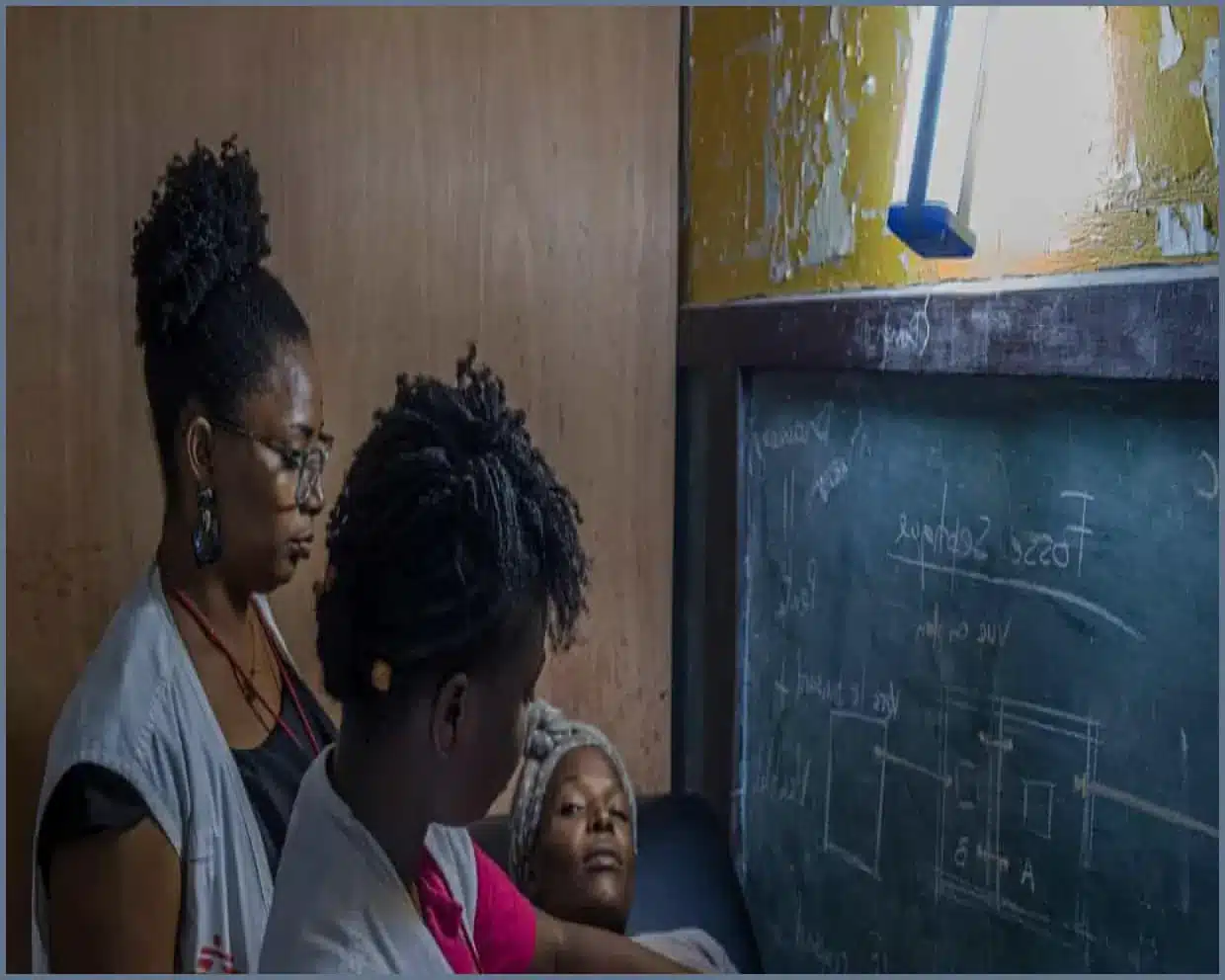
In Port-au-Prince, the escalating conflict between rival gangs has severely crippled the city's maternity infrastructure, leaving only a fraction of health services operational. For pregnant women in impoverished districts like Bel Air and Tabarre, accessing medical care has become a perilous necessity. In Bel Air, a neighborhood under gang control since 2019, a deserted school has been transformed into a temporary, pop-up clinic by the aid organization Médecins Sans Frontières (MSF). The facility, where windows are boarded up and sandbags are stacked to deflect stray bullets, serves as a lifeline for women who have nowhere else to turn.
The humanitarian situation across Haiti has deteriorated significantly since the 2021 assassination of President Jovenel Moïse. Currently, about 1.4 million Haitians are internally displaced, and more than 6 million people require urgent humanitarian aid. According to Human Rights Watch, the suspension of USAID funding by the Trump administration in 2025 further exacerbated the crisis, stripping approximately 750,000 women and girls of access to essential healthcare. Maternal health outcomes have suffered as a result; MSF reported that between February 2022 and April 2025, the proportion of maternal deaths in hospitals climbed from 250 to 350 per 100,000 live births.
Among those seeking help is 45-year-old Françoise, who is eight months pregnant and facing a condition that elevates her risk of eclampsia. The midwife at the Bel Air clinic has indicated that a caesarean section will likely be required to ensure the survival of both mother and child. Ten days prior to her visit, the area had been the site of a violent clash that left dozens dead, including 10 children. Despite the constant threat of gunfire, women like Françoise continue to queue for hours for prenatal checkups, which are conducted behind screens using battery-powered lamps due to the lack of electricity.
The instability is widespread, with an estimated 60% of births in the capital occurring without any medical oversight—often at home, on the streets, or in displacement camps. When complications arise, such as hemorrhage, infection, or hypertension, they frequently go untreated. Clinics are frequently forced to close; a facility in Cité Soleil was shuttered in May due to the violence. The danger is not limited to patients; weeks after Françoise visited the Bel Air site, heavy fighting forced seven MSF volunteers to trap themselves inside a building for hours to evacuate safely. A former volunteer was killed at the gate, leading to the temporary suspension of services once again.
The government controlled Port-au-Prince district of Pétion-Ville
A month-old baby girl, Luguiona, in the arms of Ruth, a friend of the child’s mother, Adeline, at the Bel Air clinic
Related Articles

Md. Kazi Bijoy is a dedicated tech enthusiast and content creator with a passion for digital innovation. With years of experience in the tech industry, he specializes in breaking down complex topics into easy-to-understand guides. When he isn’t writing, he explores the latest gadgets and researches emerging trends in the digital world.