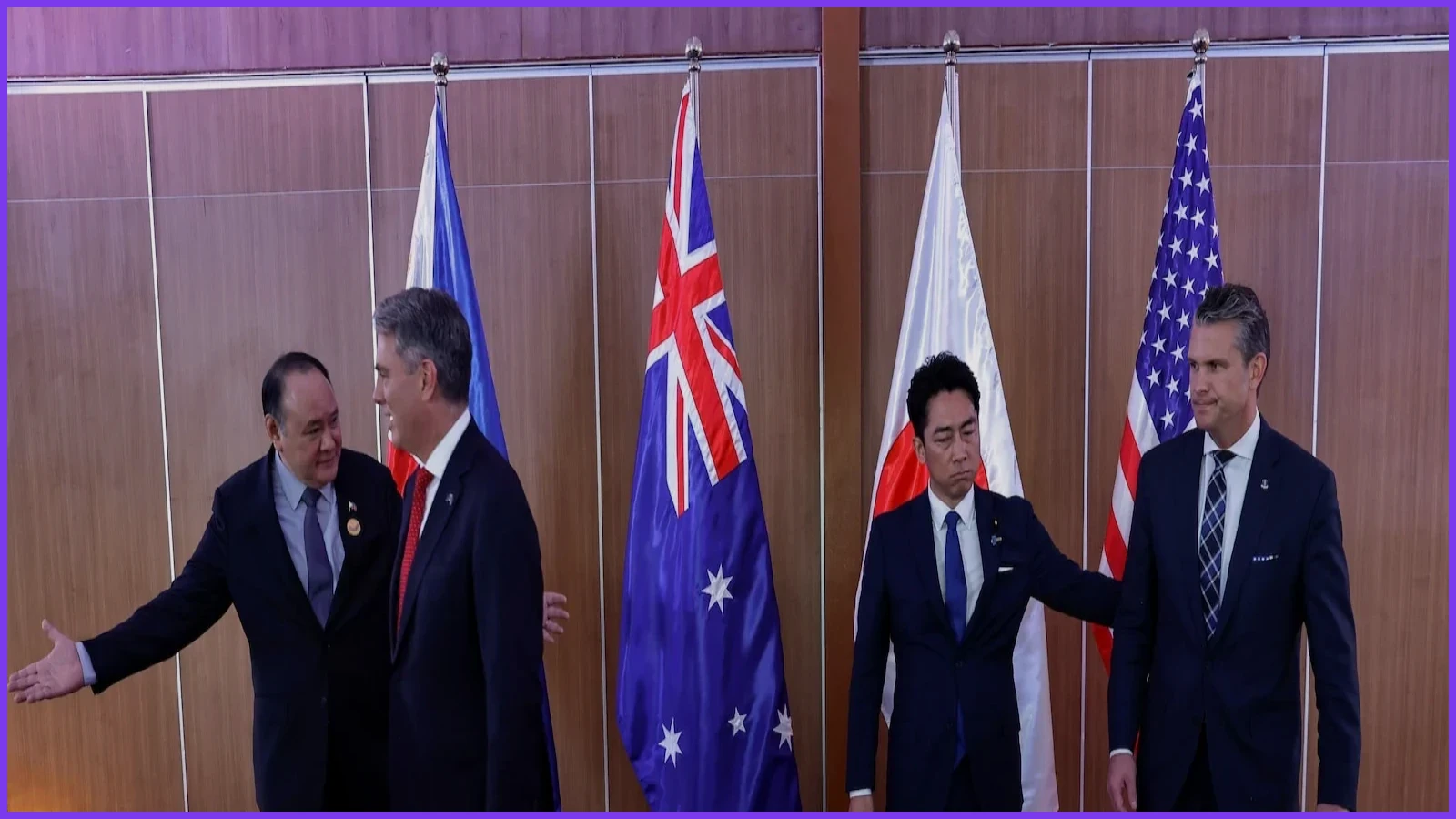
The United States and Japan have agreed to establish a manufacturing facility in Japan to jointly produce advanced medium-range air-to-air missiles, Japanese Defense Minister Shinjiro Koizumi announced. Speaking during a news conference on Wednesday night in the central Philippine province of Cebu, Koizumi revealed that the weapons program, designated as Operation Supercharge, will generate missiles that are essential for F-35 fighter jets used by both military forces.
Koizumi made the announcement following a bilateral meeting with U.S. Defense Secretary Pete Hegseth. The talks took place on the sidelines of an annual gathering of Southeast Asian defense ministers alongside their major Asian and Western counterparts, a regional forum intended to strengthen defense cooperation and prevent major conflicts.
During their encounter in Cebu, Koizumi stated that he shared a sense of crisis regarding the increasingly severe security environment in the region. He noted that both nations agreed to enhance the response capabilities and deterrence of the Japan-U.S. alliance with greater intensity and speed than before. Koizumi reaffirmed the importance of maintaining a free and open international order based on the rule of law, rejecting any attempts to alter the status quo through coercion, force, or other unilateral means, while cautiously adding that their discussions were not aimed at any specific country.
In a separate meeting with defense leaders from the Association of Southeast Asian Nations (ASEAN), led by host Philippine Defense Secretary Gilberto Teodoro Jr., Hegseth renewed assurances regarding the U.S. commitment to deter regional aggression. Hegseth described the strategy of the Trump administration as strong, quiet, and clear, emphasizing that it aims to deter coercion without engaging in public theatrics or unnecessary escalation, while making Washington's position explicit to allies, partners, and potential adversaries.
Hegseth also reassured the Philippines, Washington's oldest treaty ally in Asia, that the administration will build robust deterrence against increasingly aggressive maritime actions in the South China Sea. Beijing claims nearly the entire busy waterway, where overlapping territorial claims exist among the Philippines, Vietnam, Malaysia, Brunei, and Taiwan, leading to frequent confrontations between Chinese and Philippine vessels near disputed shoals. Washington maintains that it is legally bound to defend the Philippines if Filipino forces, aircraft, or vessels face an armed attack in the South China Sea.
Additionally, Japan and China remain engaged in a separate territorial dispute over small Japanese-administered islands in the East China Sea, where both governments frequently exchange accusations of maritime domain infringement.
Related Articles

Meet Md. Rubel Rana
As a core contributor to Worlddincidents.com, Rubel Rana brings a unique perspective to the world of journalism. Whether it’s deep-diving into historical trivia or covering the latest global headlines, Rubel Rana is committed to delivering high-quality, high-impact articles. Their writing blends meticulous research with a compelling voice, helping readers stay informed and curious about the world around them.