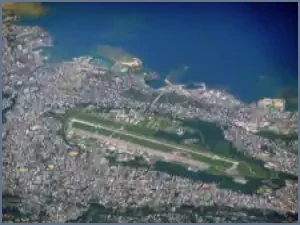
The arrest of a 20-year-old U.S. Marine on murder charges has cast a shadow over the early tenure of Okinawa Governor Koja Genta, complicating efforts to manage the prefecture’s complex defense relationship with Tokyo and Washington. Lance Corporal Devin Jacob Ballard, who is stationed at Marine Corps Air Station Futenma, was taken into custody by Okinawan police on October 4. He is suspected of killing Yagi Anna, a 39-year-old resident of Naha, at a hotel and stealing her belongings. While Ballard has denied the allegations, the U.S. Marine Corps has pledged full cooperation with the ongoing Japanese investigation.
The incident has triggered a sharp response from both national and prefectural leaders. Prime Minister Takaichi Sanae condemned the killing on October 5, demanding that the U.S. military implement stricter discipline and provide comprehensive investigative support. In a show of diplomatic urgency, Foreign Minister Motegi Toshimitsu summoned U.S. Ambassador George Glass, while Defense Minister Koizumi Shinjiro met with the commander of U.S. Forces Japan, Lieutenant General Stephen Jost.
For Governor Koja Genta, who assumed office on September 30, the timing of the crime is particularly sensitive. Having won his election on September 13, Koja sought to move away from the 12-year policy of total opposition to the relocation of Futenma to Henoko. By October 1, he had already reorganized the prefectural office to prioritize the return of U.S. military land, signaling a desire for a more pragmatic, cooperative relationship with the central government. However, Koja has maintained that this cooperation is contingent upon transparency and local understanding.
During a meeting on October 5 with III Marine Expeditionary Force commander Lieutenant General Benjamin Watson and U.S. Consul General Andrew Ou, Koja delivered a formal protest. He characterized the crime as evidence that previous U.S. military human rights education and disciplinary measures have been ineffective. He further called for a thorough review of the Status of Forces Agreement (SOFA), which governs the legal status of U.S. personnel in Japan. In response, Watson offered condolences and reiterated the U.S. military’s commitment to maintaining the trust of the local community.
The incident highlights the persistent friction in Okinawa, which hosts approximately 70 percent of land dedicated to U.S. military facilities in Japan. Residents frequently cite noise, accidents, and criminal activity as significant burdens. While statistics show an increase in Penal Code offenses involving U.S. personnel—rising from 73 cases in 2024 to 101 in 2025—the current case remains under Japanese jurisdiction, with the suspect held in local custody. As Japan continues its defense buildup across the southwestern islands, the challenge for Governor Koja remains balancing the need for regional security with his duty to protect the interests and safety of his constituents.
You have reached the limit of 2 free articles this month.
Plans to store the U.S. Army’s Typhon and HIMARS systems at Kadena and deploy Marine NMESIS anti-ship missiles and MADIS air defense systems to Ishigaki during October’s Keen Sword exercise make cooperation with local authorities particularly consequential. Koja has so far withheld judgment on the storage plan, saying Tokyo has not adequately explained the reasons or its duration.
Related Articles

Md. Kazi Bijoy is a dedicated tech enthusiast and content creator with a passion for digital innovation. With years of experience in the tech industry, he specializes in breaking down complex topics into easy-to-understand guides. When he isn’t writing, he explores the latest gadgets and researches emerging trends in the digital world.