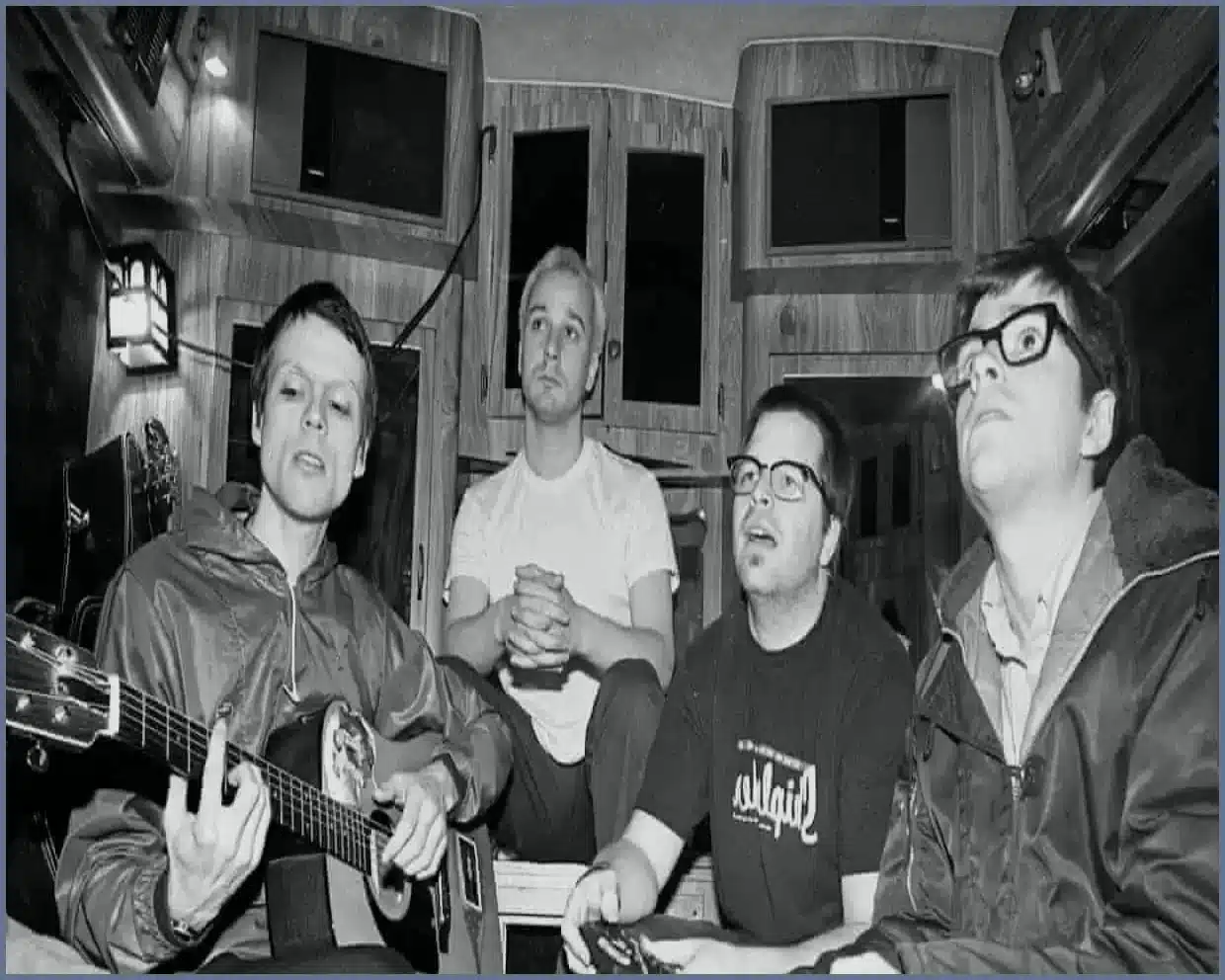
Weezer is preparing to release their self-titled 20th album, a record already affectionately dubbed the "Gold" album by fans due to its sleeve color. The album's opening track, "CEO," directly addresses the tension between creative evolution and fan expectation. Written by frontman Rivers Cuomo, the song blatantly mimics the band's 1994 debut single, "Undone (The Sweater Song)." Over a slow, Velvet Underground-style backing, Cuomo sings about the pressure to produce "another 90s jam" while wishing he could explore new musical territories. The track serves as a meta-commentary on his lingering frustration with audiences who want him to exclusively recreate the sound of the band's first two albums.
The inspiration for "CEO" came directly after the release of SZNZ, a highly analytical, four-album song cycle Weezer put out throughout 2022, with each record named after a season. Cuomo, who tracks streaming data closely, realized that listenership declined with each subsequent seasonal release. This observation prompted a shift in strategy for the Gold Album, focusing on creating a record that the group's dedicated fanbase would love. Cuomo's methodical approach to songwriting is legendary, often utilizing Google Sheets to organize his ideas, including a massive spreadsheet of unused concepts known to fans as "The Encyclopedia o' Riffs."
While Cuomo describes himself as a "composer" who builds "sonic architecture," his bandmate, 57-year-old drummer and guitarist Patrick Wilson, views their work through a more visceral lens. Speaking from his California home garage, Wilson notes that their music is ultimately about the energy of sharing a powerful guitar riff. For the Gold Album, Cuomo drew inspiration from the Swedish heavy rock band Ghost to capture the power of stadium-rock riffage, blending it with the loud guitars and pop melodies that defined Weezer's 1994 self-titled debut.
The new record also touches on deeper historical anxieties. A line in "CEO" about keeping "this rocket in the sky" refers to the initial failure of Weezer's second album, 1996's Pinkerton, which Cuomo felt threatened to derail their career before it truly began. To combat these anxieties, the band collaborated more closely on the songwriting of the Gold Album than on any previous release, building a sense of group solidarity to withstand potential audience pushback.
Cuomo's path to alternative rock stardom was unconventional. Raised in a Buddhist ashram in Connecticut, where he learned mindfulness techniques, he became a teenage heavy metal fan. He eventually formed the hair-metal band Avant Garde, later renamed Zoom, under the influence of Swedish guitarist Yngwie Malmsteen. The group relocated to Los Angeles to pursue success but quickly disbanded, leaving Cuomo to work at Tower Records in West Hollywood. Guitarist Brian Bell's contribution to the Gold Album, "The LA Sound," reflects on this era of struggling Sunset Strip metal bands. Cuomo views the collapse of Zoom as a blessing in disguise, noting that it forced him to pivot from guitar shredding to singing and emotional self-expression.
Weezer formed shortly after Nirvana's mainstream breakthrough, drawing heavy influence from the Pixies' signature blend of melody and heavy, distorted guitars. Cuomo initially tried to emulate the rock vocals of Black Francis, Kurt Cobain, and Perry Farrell before embracing his natural, choir-trained singing voice. The band's unhip clothing, glasses, and lyrics about comic books and Dungeons & Dragons led the rock press to label them as nerds—an identity they embraced. They recently launched their "Weezer: The Gathering" tour, named after the card game Magic: The Gathering, which commenced with a fan pickleball tournament.
Cuomo's academic pursuits also shaped the band's history. He temporarily left the tour bus to study classical composition at Harvard University, where he isolated himself to write Pinkerton. Inspired by Puccini's opera Madama Butterfly, the 1996 album was a deeply personal, raw confession of loneliness and sexual confusion, featuring controversial lyrics on tracks like "Across the Sea," "Pink Triangle," and "The Good Life." The album's dark themes alienated many fans and their debut album's producer, Ric Ocasek, leading to a commercial failure that prompted Cuomo to put the band on hiatus and go into hiding.
Despite the turbulent eras, Weezer has continued to experiment, exploring heavy metal on Van Weezer (2021) and orchestral rock on OK Human (2021). Cuomo has also collaborated with external songwriters such as Linda Perry, Jermaine Dupri, and Justin Hawkins of the Darkness. He admits his obsessive focus on songwriting has occasionally caused personal strain, including past conflicts with his wife when he prioritized his work over domestic support.
Three decades after the release of Pinkerton, the band members maintain a strong relationship, having navigated major challenges together, including the 2011 death of bassist Mikey Welsh from a suspected drug overdose. Reflecting on his career, Cuomo recalls including Prospero's retirement soliloquy from Shakespeare's The Tempest on the sleeve of their 2005 album Make Believe during a period of spiritual reflection and celibacy. Though he once contemplated stepping away from the spotlight, Cuomo now acknowledges that he cannot escape his lifelong musical calling.
Related Articles

Mr. Udoy is a professional Web Developer and Blogger with 7+ years of experience in the tech world. He specializes in web architecture and digital storytelling. As the driving force behind worldincidents.com, he focuses on delivering high-quality, well-researched content to a global audience.
1 thought on “Weezer Prepares 20th Album as Rivers Cuomo Reflects on Success”