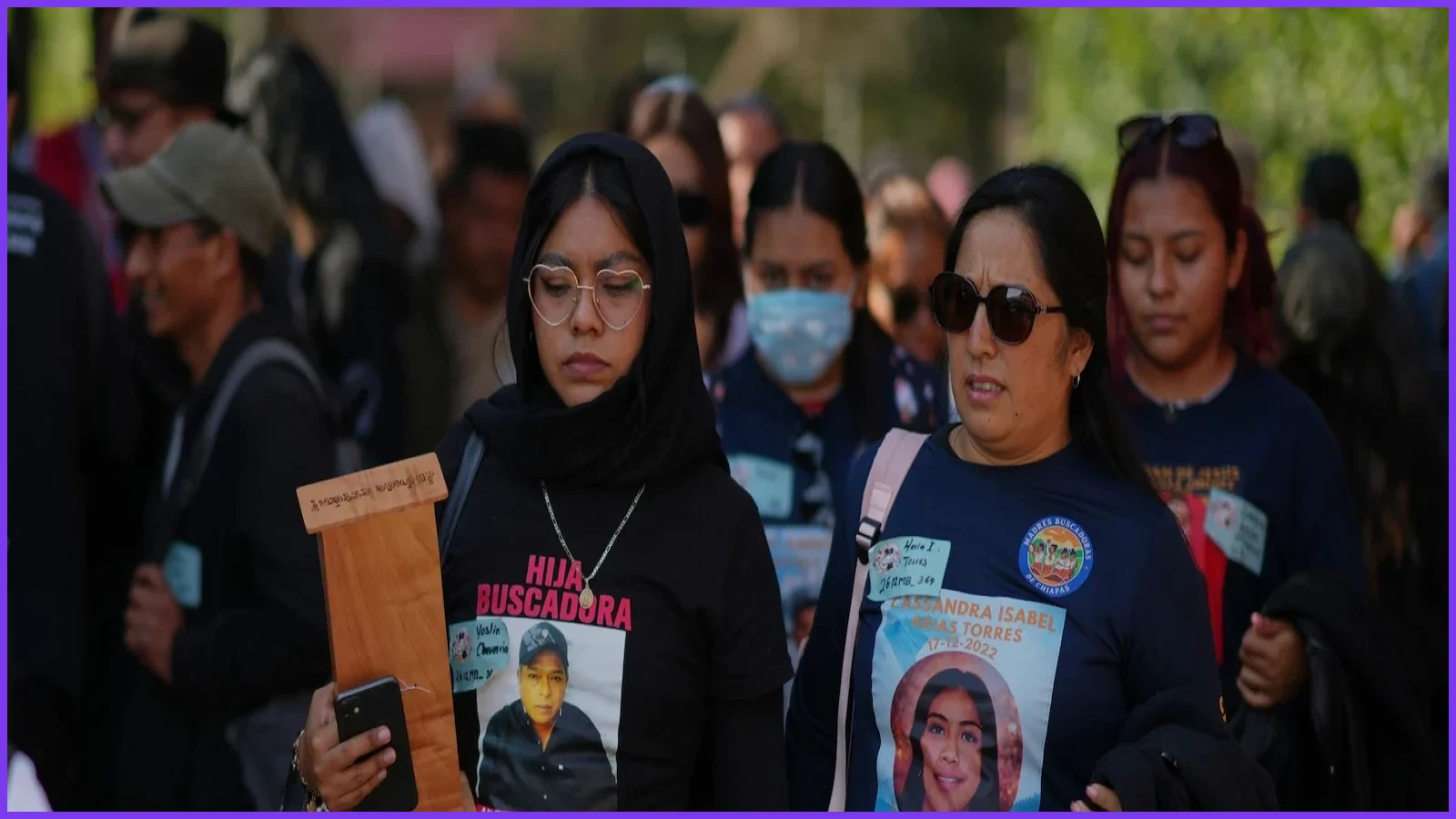
More than 1,500 members of Mexico’s Zapatista movement are set to begin a “Tour for Life” this Saturday, embarking on a journey from the southern state of Chiapas to Mexico City. The initiative seeks to unite the guerrilla group with families of the disappeared to collectively address the crisis of more than 130,000 people missing throughout the country.
The Zapatista Army of National Liberation (EZLN), which famously rose up against the Mexican state in 1994, has maintained its presence without laying down arms. Over the decades, however, the group has primarily focused on social activism and the self-governance of its territories to advocate for human rights and the needs of Indigenous peoples. For 32 years, the movement has consistently reminded the world of its activity through various actions, including a massive 2001 caravan across Mexico, a 2006 tour advocating for political change, and the 2018 nomination of an independent presidential candidate. More recently, the Zapatistas conducted a symbolic journey to Europe to commemorate the historical route of the Spanish conquistadors.
Ahead of the current trip, Zapatista members met with families of the missing in San Cristóbal de las Casas. Yoslín Chavarría, who has been searching for her father since 2023, described the meeting as a vital source of support. “It was a warm embrace for our souls to be heard because so often the government wants to silence our voices,” she said, while holding a handcrafted Zapatista doll. “This is an opportunity for our missing people to be heard in different parts of the country.”
While the Zapatistas have previously championed the cause of the disappeared, this latest effort represents a broader mobilization that has drawn support from hundreds of individuals across 27 of Mexico’s 32 states. Fernando Vargas, the father of an engineering student who vanished two years ago near the capital, has traveled to Chiapas to accompany the group along the entire route. “We hope to unite our struggles — those of the Indigenous peoples and those of the families searching for their loved ones,” Vargas stated, adding, “We would like to initiate a similar process because our problem is one of absolute impunity and zero efficiency on the part of the authorities.”
The Zapatistas plan to remain in Mexico City until January. A key point of their schedule includes joining a demonstration on December 19, which coincides with the first International Day of Recognition for Women Searching for Missing Persons declared by the United Nations.
The 1994 Zapatista uprising initially brought national attention to the deep-seated racism, marginalization, and neglect facing millions in Mexico. Although 1996 agreements with the government led to major constitutional reforms five years later—recognizing Indigenous rights to self-organization and cultural respect—many of these goals remain unfulfilled in various regions.
Related Articles

Meet Md. Rubel Rana
As a core contributor to Worlddincidents.com, Rubel Rana brings a unique perspective to the world of journalism. Whether it’s deep-diving into historical trivia or covering the latest global headlines, Rubel Rana is committed to delivering high-quality, high-impact articles. Their writing blends meticulous research with a compelling voice, helping readers stay informed and curious about the world around them.