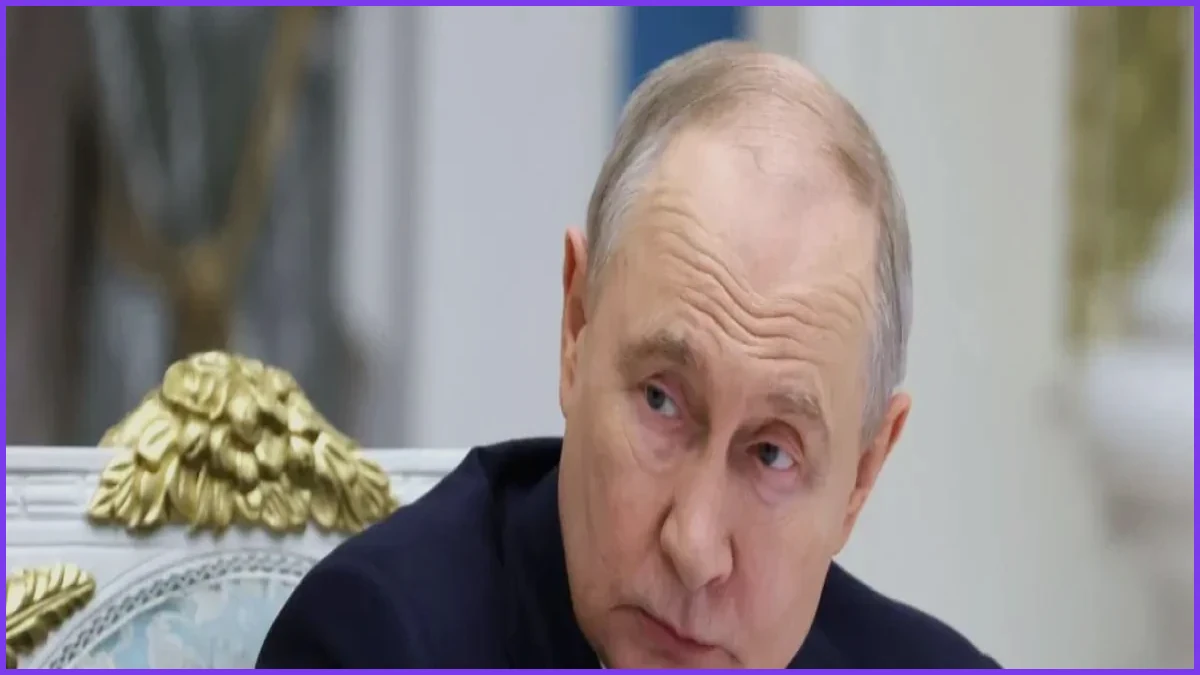
Nearly five years after ordering a full-scale invasion of Ukraine, Russian President Vladimir Putin is taking an uncompromising stance in negotiations with the United States, demanding a complete overhaul of Europe's security structure as a condition for peace. Following talks in Moscow with US envoys Steve Witkoff and Jared Kushner, the Kremlin outlined its core requirement as "a new, long-term architecture of indivisible security and peace," signaling an effort to reshape European security arrangements on terms favorable to Moscow.
The demand effectively resurrects controversial proposals put forward by Moscow in December 2021, just two months before launching the invasion. Those draft treaties presented to the US and NATO sought binding guarantees that Ukraine and Georgia would never be permitted to join the alliance, while also demanding a rollback of NATO military infrastructure in Central and Eastern European countries that joined following the dissolution of the Soviet Union. Western leaders at the time dismissed those terms as an unacceptable Russian ultimatum.
Kremlin officials are now preparing to expand these demands further. Yuri Ushakov, a key foreign policy aide to Putin, indicated that Moscow intends to introduce "certain new considerations" to its position, citing ongoing Western efforts "to inflict a strategic defeat on Russia." Domestic state media in Russia have framed the inclusion of European security in current discussions as a diplomatic victory, with the newspaper Komsomolskaya Pravda asserting that after previous proposals were dismissed, Russian diplomats must now force the West to heed Moscow's concerns regarding NATO enlargement.
European officials have responded to Moscow's strategy with sharp skepticism. The European Union's chief diplomat, Kaja Kallas, described Russia's focus on European security as a tactical "trap" designed to "shift attention away from a ceasefire." Writing on social media, Kallas stressed that the sequencing of negotiations is critical, arguing that the immediate priority must be securing a ceasefire, followed by a formal peace agreement, before any discussions on Europe's wider security architecture take place.
European nations currently remain excluded from direct negotiation sessions, as Moscow continues to criticize European leaders for providing military support to Kyiv and maintaining a tough stance against Russia. Recent peace talks in Abu Dhabi involved representatives only from Ukraine, Russia, and the US. Although Witkoff indicated after his Moscow meeting that Putin had agreed to the concept of European representatives joining future rounds, the Kremlin quickly qualified that position.
On Friday, Kremlin spokesman Dmitry Peskov clarified that no final decision on European participation had been made. Peskov stated that Moscow would first need to understand the "true intentions" of European governments and their "readiness to facilitate the peace process" before agreeing to expand dialogue on Ukraine into a wider format.
Diplomatic discussions could escalate further next week in Shenzhen, China, on the sidelines of the Asia-Pacific Economic Co-operation (APEC) summit. Reports indicate Putin may hold a separate trilateral meeting with US President Donald Trump and Chinese President Xi Jinping. Russian media outlets have already drawn comparisons between the potential meeting and the 1945 "Big Three" conference involving Joseph Stalin, Franklin D. Roosevelt, and Winston Churchill, which reshaped post-World War II Europe.
Despite Putin publicly expressing a desire for "eternal peace" for Ukraine, the Kremlin leader continues to reject a comprehensive ceasefire. Russia maintains this position even as its forces face heavy losses on the battlefield, the Russian economy faces growing strain, and Ukrainian drone strikes targeting domestic oil refineries trigger fears of potential fuel shortages inside the country.
Related Articles
Mr. Udoy is a professional Web Developer and Blogger with 7+ years of experience in the tech world. He specializes in web architecture and digital storytelling. As the driving force behind worldincidents.com, he focuses on delivering high-quality, well-researched content to a global audience.