Artificial intelligence has assisted logicians in unlocking hundreds of unknown mathematical theorems hidden within the personal notebooks of Kurt Gödel, the legendary 20th-century Austrian thinker whose work laid the foundation for modern computing. The breakthrough was achieved after inputting transcriptions of Gödel's obscure shorthand writings into the AI model Claude, producing a comprehensive analysis of material that had stumped human researchers for years.
The research project, launched in 2017 by Finnish logician Jan von Plato at Helsinki University, centers on 16 workbooks written by Gödel during the early 1940s. Comprising 1,009 pages of dense mathematical and logical analysis, the text was primarily composed in Gabelsberger, a German shorthand system that had fallen out of common use even during Gödel's lifetime. Von Plato, who taught himself the system after securing a €2.5 million (£2.1 million) grant from the European Research Council, is one of only six people in the world capable of reading it.
Progress on the project had been exceptionally slow, averaging just one page of translation per week, until September. Following an August conference in France on AI and theorem proving, computer scientists suggested that von Plato test an AI system to process the material. Upon returning to Helsinki, he provided Claude with his shorthand transcriptions alongside six books he had authored on Gödel and additional secondary literature.
In a matter of days, Claude generated a 650-page digest that connected themes across all 1,000 pages into a single cohesive framework. Von Plato expressed astonishment at the output, noting that the AI uncovered dozens of anticipations of mathematical results not officially published until the 1970s and 1980s, as well as 14 distinct logical themes that researchers had never pursued in the eight decades since they were written.
A major focus of the experiment involved settling a long-standing historical question surrounding American mathematician Paul Cohen. In 1966, Cohen received the Fields Medal for demonstrating the independence of the continuum hypothesis and the axiom of choice. At the time, Gödel asserted that he had already completed a proof on the independence of the axiom of choice in the 1940s, though he failed to reconstruct it when prompted by colleagues. When von Plato tasked Claude with locating this specific proof in the workbooks, the AI found that Gödel had been just one step away, having made a minor error in a single definition that he had defined correctly two years earlier. Reconstructing the proof and running it through Coq, a software tool used to verify mathematical accuracy, confirmed its validity.
Beyond the axiom of choice, von Plato asked Claude to identify every theorem in the workbooks for which Gödel had either completed, sketched, or outlined a proof idea. Claude cataloged 663 theorems. When verified using Coq, approximately 400 were confirmed exactly as written, about 200 required minor corrections or refined assumptions, and roughly 50 were determined to be invalid—aligning with marginal notes where Gödel himself had written "falsch!" (incorrect) or "schlecht!" (bad).
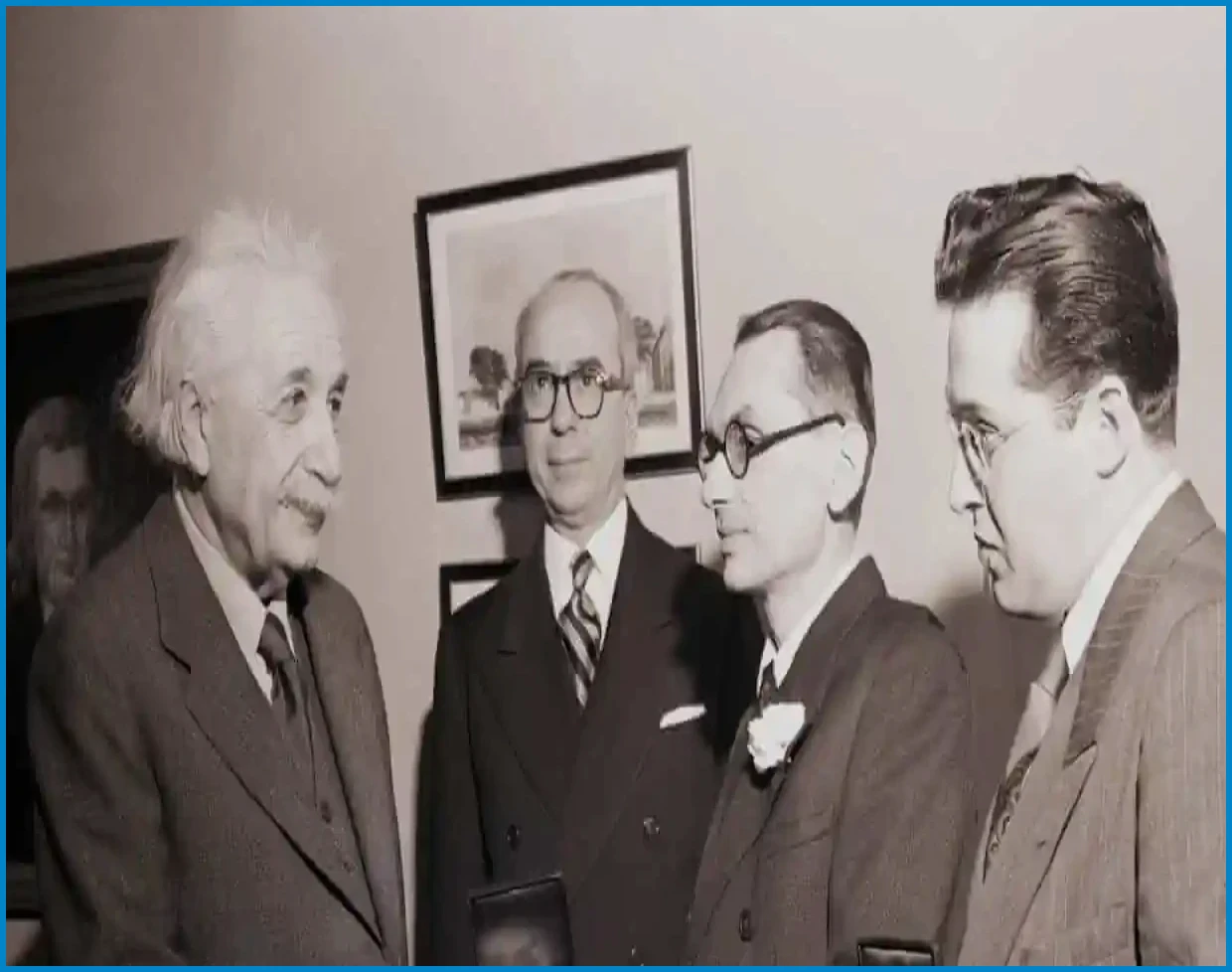
Gödel revolutionized logic with his landmark 1931 incompleteness theorems, which demonstrated that every mathematical system contains true statements that cannot be proved or disproved from within the system. His work directly inspired Alan Turing's seminal 1936 paper establishing the theory of modern computation. Fleeing Nazi-occupied Austria in 1940, Gödel settled in Princeton, New Jersey, where he joined the Institute for Advanced Study and formed a close friendship with Albert Einstein. Later in life, severe paranoia led him to refuse food not cooked by his wife, resulting in his death from starvation in 1978.
Assessing the discovery, Joel David Hamkins, a professor of logic at the University of Notre Dame in Indiana, observed that while mathematicians only receive credit for published work, discovering such material in Gödel's notes remains historically significant, though distinguishing the precise contributions of Claude from Gödel's original work will require further study by historians. Von Plato now plans to extend his research into Gödel's unpublished notebooks on physics and cosmology once his current logic investigations conclude.
After his seminal results of the 1930s, Gödel published only a few papers. His unpublished work, however, runs to tens of thousands of pages, and is of great interest to historians of science.
“In a couple of days, I got to see a 650-page explanation of the workbooks. It had to be controlled page for page, but it’s basically a work that is impossible to do for human beings,” he said. “Humans read one page at a time and we tend to forget things. It takes us a year to read about 50 pages. We just are not able to keep in mind all the different parts.
Related Articles

Meet Md. Rubel Rana
As a core contributor to Worlddincidents.com, Rubel Rana brings a unique perspective to the world of journalism. Whether it’s deep-diving into historical trivia or covering the latest global headlines, Rubel Rana is committed to delivering high-quality, high-impact articles. Their writing blends meticulous research with a compelling voice, helping readers stay informed and curious about the world around them.