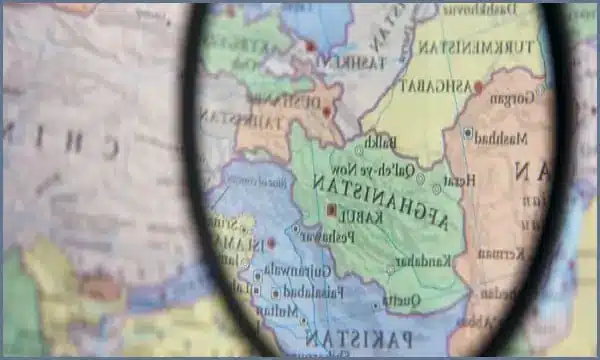
In the five years since the Taliban regained power in August 2021, the global policy environment for displaced Afghans has shifted dramatically. While international governments initially scrambled to evacuate approximately 124,000 people facing immediate protection risks, and millions more fled to neighboring countries like Iran and Pakistan, the focus of host nations has increasingly evolved from providing protection to enforcing returns. This shift, which treats physical return as a durable solution, is occurring despite persistent fragility and unchanged displacement drivers within Afghanistan.
Since 2023, more than 6 million Afghans have returned to their home country from Iran and Pakistan. However, data from the Mixed Migration Centre (MMC) reveals that these returns are overwhelmingly involuntary. Approximately 80 percent of surveyed Afghan returnees reported being deported or expelled under intense pressure, coercion, or direct compulsion. For many, this forced repatriation has meant suddenly leaving behind family members, personal possessions, established livelihoods, and social support networks, only to arrive in Afghanistan with no housing and extremely limited employment opportunities.
This return pressure is now expanding beyond regional neighbors to European nations. In late June, a Taliban delegation traveled to Brussels to hold a technical-level meeting with representatives from 15 European countries and the European Commission. The discussions focused on formalizing and expanding deportation and readmission pathways for Afghans, signaling a growing intent among European states to establish formal return arrangements.
Advocates emphasize that any return of displaced persons must be voluntary, dignified, and safe. However, meeting these preconditions remains highly unlikely under Afghanistan's current political, economic, and social conditions. The risks are particularly acute for vulnerable groups, including religious and ethnic minorities, or individuals perceived to oppose the de facto Taliban authorities.
Even beyond specific risk profiles, the general humanitarian situation in Afghanistan remains dire, exacerbated by the closure of USAID and a sharp decline in international humanitarian funding over the last 18 months. MMC data shows that nearly 40 percent of returnees lack access to healthcare, and more than half live in inadequate housing. Rebuilding lives is exceptionally difficult, as less than 7 percent of women and only 59 percent of men have managed to secure income-generating opportunities after returning.
For Afghan women, the challenges of return are compounded by systemic gender-based restrictions. Since 2021, girls over the age of 12 have been barred from attending school, women have been banned from working in most sectors, and their freedom of movement has been restricted by the requirement of a male relative, or mahram. These restrictions also severely hinder their access to aid. While 53 percent of all returnees report receiving no assistance since their return, that figure rises to 65 percent for women, who face even greater isolation if they belong to ethnic or religious minorities. Consequently, 61 percent of surveyed women reported being dissatisfied or strongly dissatisfied with their lives in Afghanistan.
Addressing this ongoing crisis requires a shift in focus toward holistic and sustainable solutions. The Support Platform of the Solutions Strategy for Afghan Refugees (SSAR) is scheduled to convene a Regional Conference on Afghan Displacement and Solutions later this year. This conference offers a critical opportunity for international stakeholders to prioritize responsibility-sharing and safe, long-term reintegration over simple physical return.
You have reached the limit of 2 free articles this month.
Given the restrictions against women, their difficulty is much worse.
Related Articles

Meet Md. Rubel Rana
As a core contributor to Worlddincidents.com, Rubel Rana brings a unique perspective to the world of journalism. Whether it’s deep-diving into historical trivia or covering the latest global headlines, Rubel Rana is committed to delivering high-quality, high-impact articles. Their writing blends meticulous research with a compelling voice, helping readers stay informed and curious about the world around them.