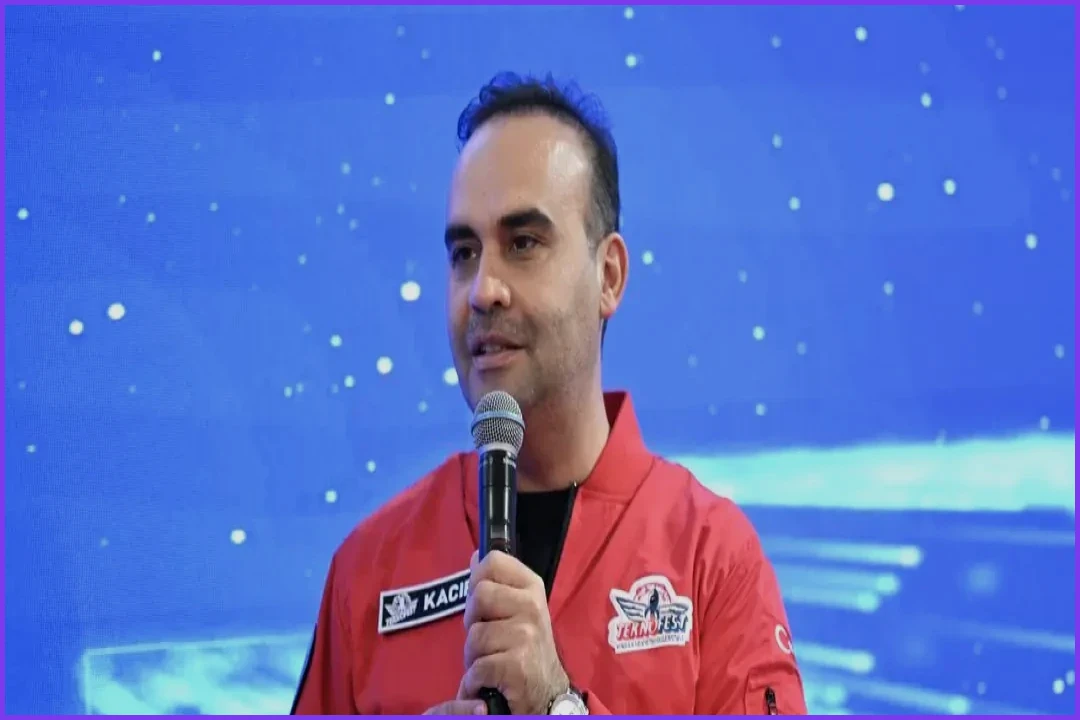
Delegates from 21 countries have officially signed the Antalya Declaration, a landmark agreement promoting peaceful international cooperation in outer space. Announced by Turkish Industry and Technology Minister Mehmet Fatih Kacir, the endorsement occurred during the Ministers and Members of Parliament Meeting at the 75th International Astronautical Congress (IAC) in Antalya, southern Türkiye.
This historic agreement represents the first time a formal joint declaration has been adopted at this specific high-level legislative meeting of the IAC. The document was accepted by 32 participants, including government ministers, lawmakers, and heads of national space agencies, all of whom reaffirmed the role of the International Astronautical Federation in expanding global space partnerships. In total, delegations from 38 nations gathered to discuss the integration of developing economies, legal frameworks, emerging missions, and the peaceful use of space.
Hosted from October 5 to 9, the congress is organized by Türkiye's Ministry of Industry and Technology alongside the Turkish Space Agency and SAHA Istanbul. Minister Kacir emphasized that the Antalya Declaration aligns with President Recep Tayyip Erdogan's diplomatic vision of fostering peace through constructive multilateral dialogue. "Progress in space is meaningful only when it produces tangible benefits for people on Earth," Kacir stated, urging delegates to consider how technological capabilities can be translated into security, resilience, and societal prosperity.
The minister also highlighted the rapid commercialization of the space sector, noting that the global space economy reached a record $686 billion in 2025, with commercial ventures making up approximately 80 percent of the activity. Lower launch expenses and smaller satellites have made the sector far more accessible to startups. Domestically, Türkiye is capitalising on this growth, with over 300 space-technology startups operating in national technoparks. These firms are backed by the government's BiGG seed-funding mechanism and venture capital investments exceeding $750 million.
Looking ahead, Ankara is developing a dedicated space technopark and remains on track to launch its first domestically built lunar spacecraft in early 2027. This lunar mission will feature an indigenous hybrid propulsion engine and boasts an 80 percent domestic production rate.
Related Articles

Md. Kazi Bijoy is a dedicated tech enthusiast and content creator with a passion for digital innovation. With years of experience in the tech industry, he specializes in breaking down complex topics into easy-to-understand guides. When he isn’t writing, he explores the latest gadgets and researches emerging trends in the digital world.