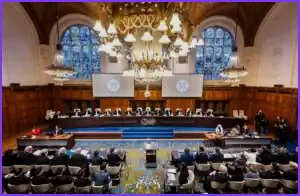
You have reached the limit of 3 free articles this month. The International Court of Justice (ICJ) issued a landmark ruling on January 12, 2026, finding that Myanmar committed genocide against Rohingya Muslims during a 2017 military operation in Rakhine State. In a nine-to-six vote, the court determined that security forces murdered thousands of civilians, engaged in widespread sexual violence, and targeted children. The judgment mandates that Myanmar provide reparations to victims, facilitate the safe return of displaced families, and implement measures to prevent future violations of the Genocide Convention.
Myanmar has formally rejected the court’s decision, labeling it "unfair" and a "great disappointment." Enforcing the ruling remains a significant challenge, contingent upon the political will of foreign governments. Western powers have largely aligned in support of the judgment. The United Kingdom, led by Foreign Secretary David Miliband, condemned the military regime's actions, ordered the expulsion of the Myanmar defense attaché, and requested an urgent U.N. Security Council session. Other nations, including Australia, Norway, the United States, and the European Union, have also issued statements in support of the court’s findings.
In contrast, the response from within Southeast Asia has been notably muted. As of the time of reporting, only Malaysia and the Philippines had issued official statements, while Thailand addressed the ruling through ministerial remarks. Most other ASEAN members—including Brunei, Cambodia, Vietnam, Laos, Timor-Leste, and Indonesia—have not provided an official reaction.
Malaysia, which has been highly critical of the military junta since the 2021 coup, expressed respect for the ruling. The Foreign Ministry stated it would engage with the United Nations, ASEAN, and the Organization of Islamic Cooperation, on whose behalf The Gambia brought the case against Myanmar in 2019, regarding the judgment. Analysts suggest Malaysia’s stance may be influenced by domestic political pressure and the potential precedent the Myanmar case sets for Israel. In 2024, South Africa brought a case against Israel, accusing it of committing genocide against the Palestinians of Gaza.
The Philippines adopted a more cautious tone, acknowledging the judgment and emphasizing the importance of international law and the peaceful settlement of disputes. Meanwhile, Thailand’s government maintained that the ruling is a legal matter between Myanmar and the ICJ that will not disrupt Bangkok’s "calibrated engagement" policy. Prime Minister Anutin Charnvirakul and Foreign Minister Sihasak Phuangketkeow emphasized that Thailand will prioritize national interests while continuing to advocate for humanitarian aid and the reduction of violence.
The general silence from the region is consistent with historical patterns. Beyond these three nations, there has been little official regional comment on the ICJ ruling. As Suwita Hani Randhawa noted in 2022, Southeast Asian governments were also “resoundingly muted” in their response to the Rohingya genocide as it was taking place, a trend that persisted through 2023. Experts note that Southeast Asian governments often prioritize the "ASEAN way," which emphasizes non-interference and national sovereignty. Many regional states have not signed the Genocide Convention or have issued reservations that limit its application. Furthermore, ASEAN has historically focused on conflict management, such as the Five-Point Consensus, rather than retributive international justice.
Despite the ICJ’s ruling, the impact on Myanmar’s standing within ASEAN is expected to be limited. While the bloc has excluded Myanmar from high-level summits due to its failure to implement the Five-Point Consensus, the military administration under Min Aung Hlaing has sought to normalize ties. Several nations, including Thailand, Laos, Cambodia, Vietnam, and Malaysia, have hosted the leader for state visits recently. Richard Horsey of the International Crisis Group noted that the ICJ verdict is unlikely to reverse the trend toward regional normalization, as the ruling targets the state rather than imposing personal restrictions on the leader.
Related Articles

Md. Kazi Bijoy is a dedicated tech enthusiast and content creator with a passion for digital innovation. With years of experience in the tech industry, he specializes in breaking down complex topics into easy-to-understand guides. When he isn’t writing, he explores the latest gadgets and researches emerging trends in the digital world.