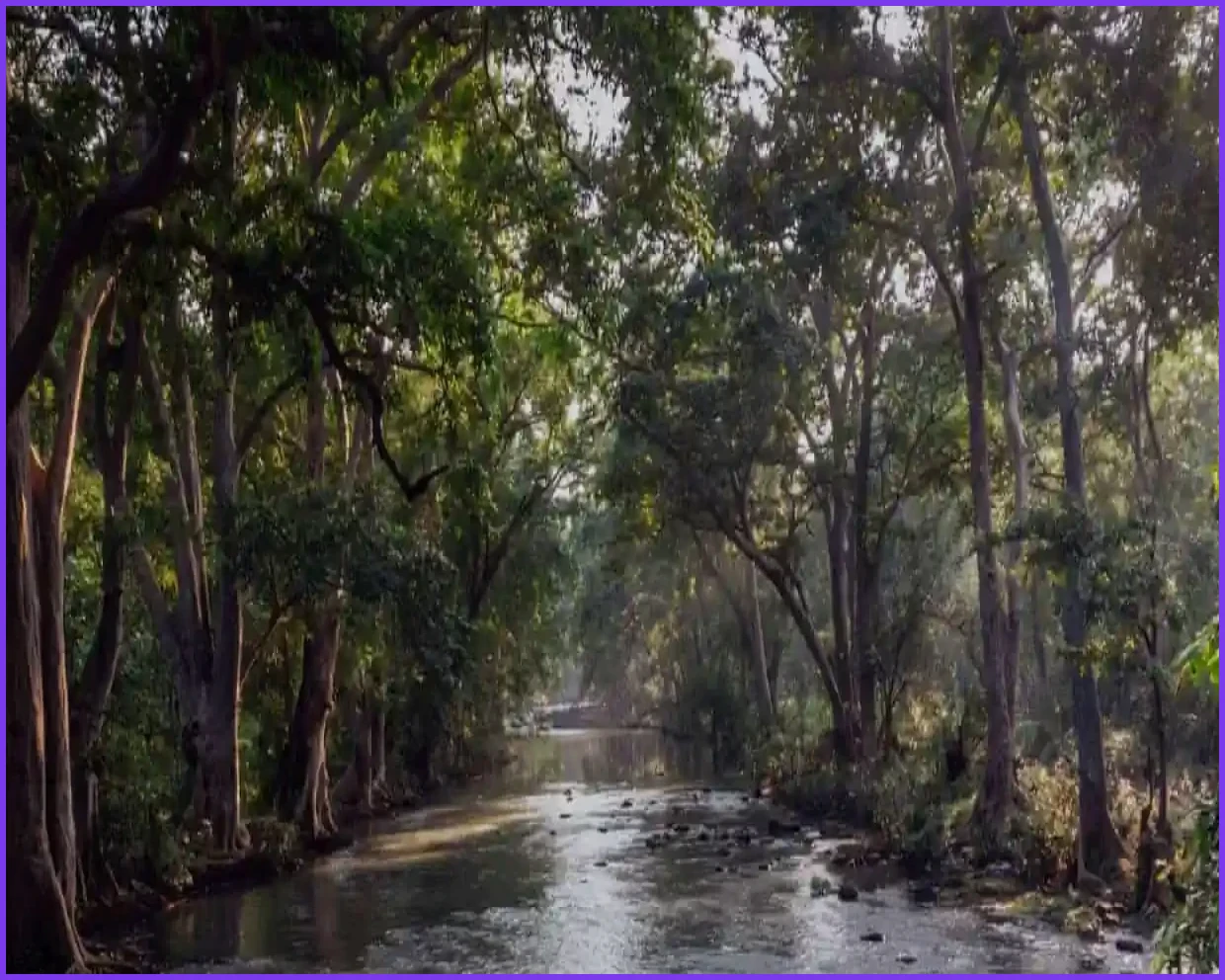
A decade after India launched its flagship environmental initiative to expand the nation's forested areas, a recent government audit has labeled the program's progress as “negligible.” The findings revealed a 97.57% shortfall from the initial 2014 pledge, highlighting a significant gap between official targets and actual outcomes. This report arrives alongside other cultural and social updates, including the work of fusion dance pioneer Usha Jey.
While the government maintains a positive outlook regarding forest cover, independent assessments and former civil servants have challenged these claims. Last year, dozens of former officials criticized the government's 2023 report, arguing that the methodology used to calculate forest growth is unreliable and nonscientific. Critics pointed to the inclusion of smaller orchards, as well as rubber and coconut plantations, as evidence of “creative accounting.” Pooja Choksi, founder of Ficus Research Consulting, noted that the government has broadened its definition of forests to include areas that do not reflect traditional ecological value. Yet, if you ask the government about forest cover, you will get a far greener picture. The government has defended its approach, asserting that its definition is internationally accepted and encompasses tree-covered land outside of formal forests, including palm and bamboo plantations.
This debate occurs against the backdrop of an urgent climate reality. The UK Met Office has issued a calamitous warning that 2027 could become the hottest year on record due to a strong El Niño, placing India's monsoon-dependent agricultural sector at severe risk. In a dispatch from Mumbai’s sweltering summer in Equator magazine, Aruna Chandrasekhar provides a dystopian glimpse of a city pushed beyond its capacity to cope with extreme heat.
Simultaneously, data shared in parliament indicates that India has approved the diversion of forest land for development projects over the past five years totaling an area roughly the size of Hong Kong. Mining remains the largest driver of this diversion, accounting for 22% of the total, followed by road works and irrigation projects. Research mapping 28 years of satellite data across three central Indian coalmine regions found that such projects have led to a 35% reduction in natural ecosystems, along with degraded soil quality and shrinking water bodies.
Perhaps nowhere is this trade-off more starkly visible than in the project proposed in the pristine Andaman and Nicobar Islands, which are home to protected Indigenous tribes. The central government describes the Great Nicobar Project as a strategic necessity for maritime defense, involving a $6.89 billion (Rs 90,000 crore) investment. The plan requires the diversion of 13,075 hectares of forest and the removal of at least 700,000 trees to accommodate a trans-shipment port, an airport, a power plant, and a mega township. Geoscientist CP Rajendran CP Rajendran has argued that the project is “geologically impossible” given its location in a tectonically active zone, characterizing the government’s security claims as a pretext for commercial expansion.
Experts also caution against relying on compensatory afforestation as a simple solution. Choksi emphasized that the rush to meet Paris Agreement targets has led to a one-dimensional focus on “green cover” that ignores biodiversity. She noted that a natural forest patch containing 100 different species holds significantly higher ecological value than a plantation created under the Green India Mission, which may only feature 20 species. As stakeholders await the release of India’s biennial forest report, which was due in 2025, the true health of the nation's forests remains a subject of ongoing concern.
In other news, Gaggan Anand has opened his restaurant, RaGa, on Delhi’s Janpath Road, starting service on 26 August. Meanwhile, journalist Abhishek Upadhyay has alleged police harassment following his reporting on the theft of donations at Ayodhya’s Ram Mandir Temple. Additionally, the PM Cares fund, established during the pandemic, held a balance of £647m (Rs 8,452 crore) at the end of the 2025 financial year, leading to questions about its usage, which BJP spokesperson Pradeep Bhandari defended as being for long-term rehabilitation.
Related Articles

Md. Kazi Bijoy is a dedicated tech enthusiast and content creator with a passion for digital innovation. With years of experience in the tech industry, he specializes in breaking down complex topics into easy-to-understand guides. When he isn’t writing, he explores the latest gadgets and researches emerging trends in the digital world.
1 thought on “India’s Green India Mission Audit Reveals Negligible Forest Progress”