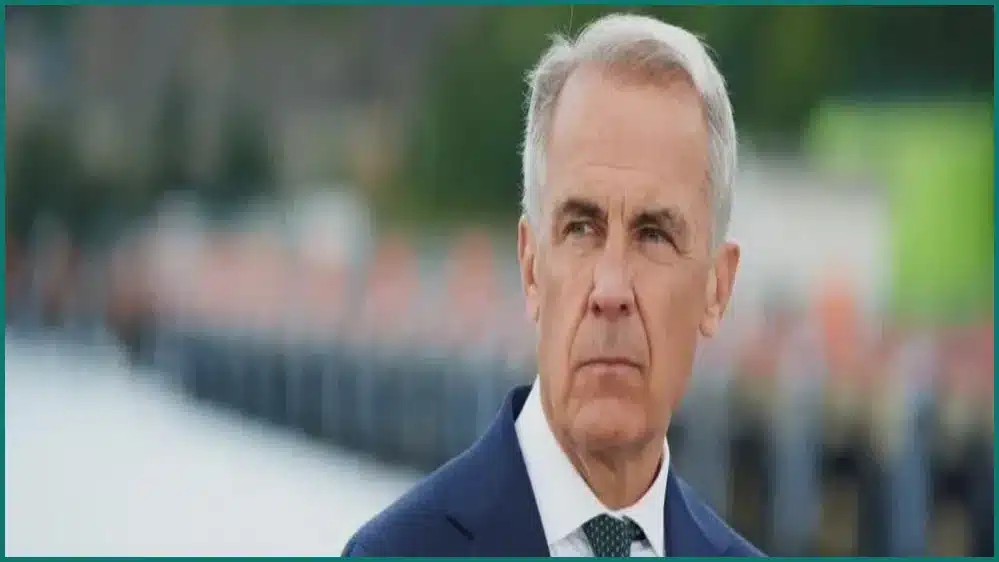
Canadian Prime Minister Mark Carney has announced that Canada will implement dollar-for-dollar retaliatory tariffs starting September 8, following the collapse of trade negotiations with the United States late Friday. Carney characterized the new wave of US import taxes as a "miscalculation" intended to "hurt and divide us," declaring that the country is now in a trade "war."
The breakdown of negotiations ends a deeply integrated trading partnership between the two allied nations, leaving no clear path forward. Consequently, Canada has been hit with a new 50% US tariff on approximately $20 billion (£15 billion; C$28 billion) of its goods, representing about 5% of its total imports. These new levies target products such as wine, dairy, cement, clothing, and hockey equipment, adding to existing US duties on Canadian steel, aluminum, automobiles, and lumber.
"They asked too much and they offered too little," Carney told Canadians on Saturday morning. He explained that Canada was retaliating "reluctantly" to safeguard its own interests, with specific details of the counter-measures expected to be released in the coming days. The planned Canadian levies starting September 8 will target US steel, dairy, appliances, and electronics.
On the US side, negotiators accused Canada of backtracking and introducing new demands on previously settled terms. US Trade Representative Jamieson Greer told Fox News on Saturday that there are currently no plans to resume negotiations. US President Donald Trump has yet to comment on the collapse.
The fallout has drawn reactions from across Canada's political spectrum. Provincial leaders and federal opposition parties voiced support for the prime minister. Doug Ford, the premier of Ontario, Canada's most populous province, backed Carney and stated that Trump "can't be trusted." British Columbia's leader, Eby, remarked, "It was never acceptable to Canadians." Quebec Premier Christine Fréchette warned of inevitable job losses, noting that "behind these numbers are real people" and promising provincial support for affected sectors.
Meanwhile, Alberta Premier Danielle Smith urged both countries to return to the negotiating table.
Tariffs are a cornerstone of Trump's trade agenda, which he argues protects American manufacturing and jobs, though critics contend they raise consumer prices and disrupt global markets. The dispute also casts a shadow over the USMCA, the trilateral trade pact between the US, Canada, and Mexico that underpins $1.6 trillion (£1.2 trillion) in annual trade.
Trump signed the agreement during his first term to replace the 1994 NAFTA. While Canada and Mexico recently requested a 16-year renewal of the pact, the US declined to renew it in its current form. When asked about the impact of the collapsed talks on the USMCA, Carney admitted it was "certainly not good news."
Many Canadians are boycotting the US, so this is where they're travelling instead
Related Articles

Mr. Udoy is a professional Web Developer and Blogger with 7+ years of experience in the tech world. He specializes in web architecture and digital storytelling. As the driving force behind worldincidents.com, he focuses on delivering high-quality, well-researched content to a global audience.