China’s domestic economy continues to face headwinds, with delayed figures released by the National Bureau of Statistics on August 17 showing further signs of stagnation in July. However, Beijing has found a significant economic bright spot in the rising sales of Chinese electric vehicles (EVs) to Western European consumers. Despite ongoing geopolitical friction and trade barriers, Chinese automakers are successfully expanding their market share in the region.
According to data compiled by Schmidt Automotive Research, Chinese EV models accounted for 14.2 percent of all electric vehicles sold in Western Europe between January and May 2026. This means approximately one out of every seven EVs purchased in the region was manufactured in China. This sales surge has occurred despite the European Union imposing substantial tariffs on Chinese EV exports starting in 2024. The upward trend has been partially bolstered by the United Kingdom, which has not replicated the EU's tariff structure, though sales have also spiked across various continental European markets.
This consumer shift toward Chinese green technology is being accelerated by the dual forces of climate change and geopolitical conflict. Europe has experienced a record-breaking heatwave this summer, bringing severe drought, widespread wildfires, and rising household and business electricity bills as demand for air conditioning climbs. The resulting rise in natural disasters and business losses has driven up insurance costs, prompting European households and companies to speed up their transition to a green economy by investing in heat pumps, solar panels, and electric vehicles.
Simultaneously, the on-again, off-again military conflict between the United States and Iran, which began in February, has caused petrol and diesel prices to spike across Europe. These fuel price shocks have made battery-powered vehicles increasingly attractive to European drivers looking to insulate themselves from the volatility of global crude oil prices.
Chinese EV manufacturers have moved quickly to capitalize on this growing European demand. Motivated by a fierce domestic price war, Chinese firms have exported more than 120 distinct EV designs to Europe this year, outstripping the approximately 100 designs offered by European car manufacturers. Major Chinese companies, including BYD, Chery, SAIC, and Xpeng, are steadily expanding their European footprint. They are doing so despite challenges like the EU’s proposed Industrial Accelerator Act (IAA), which aims to introduce "Made in Europe" requirements in public procurement—an instrument Beijing criticizes as a non-tariff trade barrier.
The EU's shift toward protectionism is fueled by deep-seated concerns over its long-term dependency on Chinese clean technology. European policymakers fear the risks of weaponized dependencies, cybersecurity vulnerabilities, and espionage. Some defense and foreign policy think tanks have gone as far as to label Chinese clean technology exports as a direct national security threat to Europe.
Washington is also encouraging European capitals to adopt a highly skeptical stance toward Chinese smart and clean technology. U.S. lawmakers are already moving forward with the Connected Vehicle Security Act, which seeks to ban imports of Chinese-linked smart vehicles and components by 2030, including blocking their entry into the U.S. from Canada or Mexico. While it remains a low-probability scenario, some analysts warn the EU could eventually mimic this sweeping American approach.
Europe’s broader opposition to China’s industrial strategy is growing alongside fears of supply chain vulnerabilities. Beijing has previously used its dominance of critical mineral supply chains to restrict Japan's access to vital goods, raising concerns that it could use similar leverage to disrupt Western defense supply chains in the future. Furthermore, China has increasingly utilized its economic and political leverage to demand diplomatic concessions on sensitive issues such as Taiwan, Tibet, and its maritime boundary disputes in the South China Sea.
These fears were reinforced last year when the Dutch government attempted to take over Nexperia, a global semiconductor firm and subsidiary of the Chinese technology company Wingtech. In a sharp retaliatory response to what it viewed as Dutch infringement on a Chinese asset, Beijing restricted automotive chip supplies to Europe, disrupting European car manufacturing operations and highlighting the continent's exposure to Chinese supply chain pressures.
These security anxieties are compounded by a massive trade deficit with China, which reached a record 359.9 billion euros in 2025. The EU attributes this gap to a significant asymmetry in market access between the two economies. In June, the EU established a three-month deadline for China to deliver tangible progress on reducing non-tariff barriers and addressing the trade deficit. EU Trade Commissioner Maroc Sefcovic is scheduled to travel to Beijing in October to evaluate progress.
Ahead of those talks, the EU is considering additional trade measures, including potential tariffs on Chinese plug-in hybrid EVs. China has signaled that it will retaliate against any new restrictions rather than offer concessions, raising the likelihood of an outright trade war in 2026. However, the EU faces a difficult balancing act. Policymakers require access to China’s advanced battery and EV technologies to meet the bloc's target of a 100 percent reduction in new vehicle emissions by 2035, as well as its broader 2050 green transition goals. Reindustrializing Europe will likely require Chinese capital and manufacturing participation, forcing European governments to balance security fears with their domestic environmental and economic ambitions.
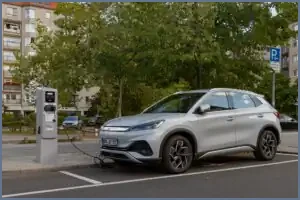
A BYD Atto 3 charges on the street in Berlin, Germany, Sep. 24, 2023.
You have reached the limit of 2 free articles this month.
Related Articles

Md. Kazi Bijoy is a dedicated tech enthusiast and content creator with a passion for digital innovation. With years of experience in the tech industry, he specializes in breaking down complex topics into easy-to-understand guides. When he isn’t writing, he explores the latest gadgets and researches emerging trends in the digital world.