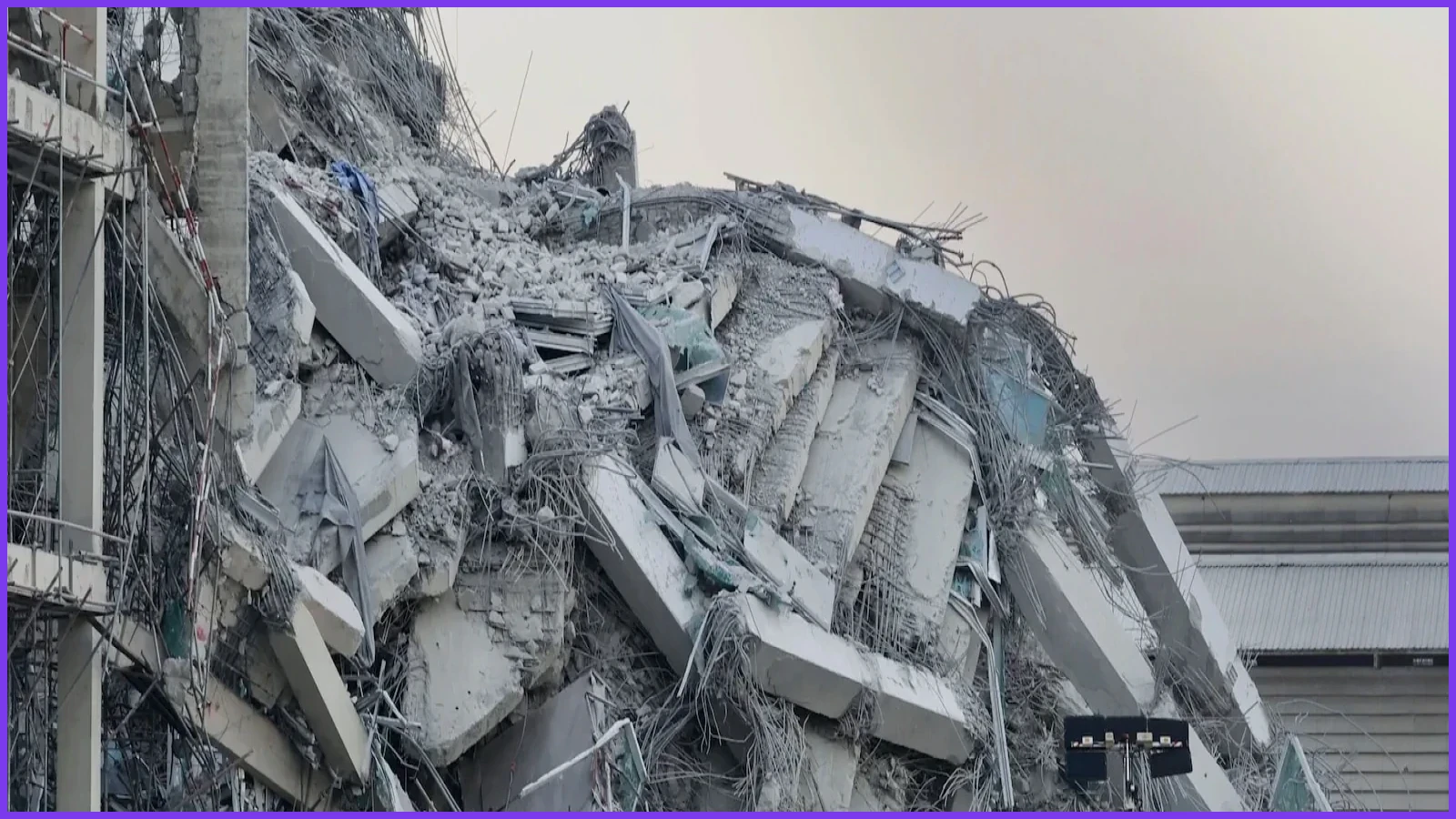
A Bangkok court has convicted a Chinese business executive and three Thai nominee shareholders for illegally operating a construction enterprise associated with a high-rise structure that collapsed during a severe earthquake, authorities confirmed. The Criminal Court in Bangkok ruled that Zhang Chuanling and China Railway No. 10 (Thailand) violated Thailand’s Foreign Business Act by using Thai citizens to conceal foreign ownership and conducting business without required authorization.
The court imposed a fine of 1 million baht ($29,450) each on Zhang and the firm, sentenced Zhang to three years in prison, and ordered China Railway No. 10 (Thailand) to cease all business operations. The enterprise is a Thai-registered affiliate of China Railway No. 10 Engineering Group, which is part of the state-owned, internationally operating China Railway group. Zhang and the corporate entity had previously denied the charges and were released on bail prior to the judgment.
The legal proceedings stem from a fatal disaster on March 28, 2025, when a 7.7-magnitude earthquake centered in neighboring Myanmar shook the region. The partially constructed high-rise in Bangkok, intended to house the State Audit Office, was the only building in Thailand to collapse completely during the earthquake, resulting in the deaths of at least 92 people.
In addition to the executive and corporate entity, three Thai shareholders were found guilty on Wednesday for acting as nominees for China Railway No. 10 (Thailand). Two of the shareholders received six-year prison sentences and fines of 2 million baht ($58,900) each, while the third was sentenced to three years in prison alongside a 1-million-baht ($29,450) fine. However, the court reduced their prison terms and financial penalties by one-fifth following their confessions.
The trial unfolds against a backdrop of growing public concern in Thailand regarding foreign commercial influence, particularly the practice of utilizing local citizens as proxies to disguise underlying ownership. Beyond regulatory non-compliance, public worries extend to suspicions that such front operations may conceal illicit activities, including money laundering and online scams.
Regarding related infrastructure projects, Italian-Thai Development served as the construction contractor for the railway project, while a Chinese firm oversaw design and construction supervision. Following an earlier train accident, China's ambassador to Thailand, Zhang Jianwei, stated that Beijing requires its enterprises to comply with local regulations on foreign projects and confirmed China's willingness to "guide Chinese companies to actively cooperate with the Thai authorities' investigation."
Related Articles

Mr. Udoy is a professional Web Developer and Blogger with 7+ years of experience in the tech world. He specializes in web architecture and digital storytelling. As the driving force behind worldincidents.com, he focuses on delivering high-quality, well-researched content to a global audience.