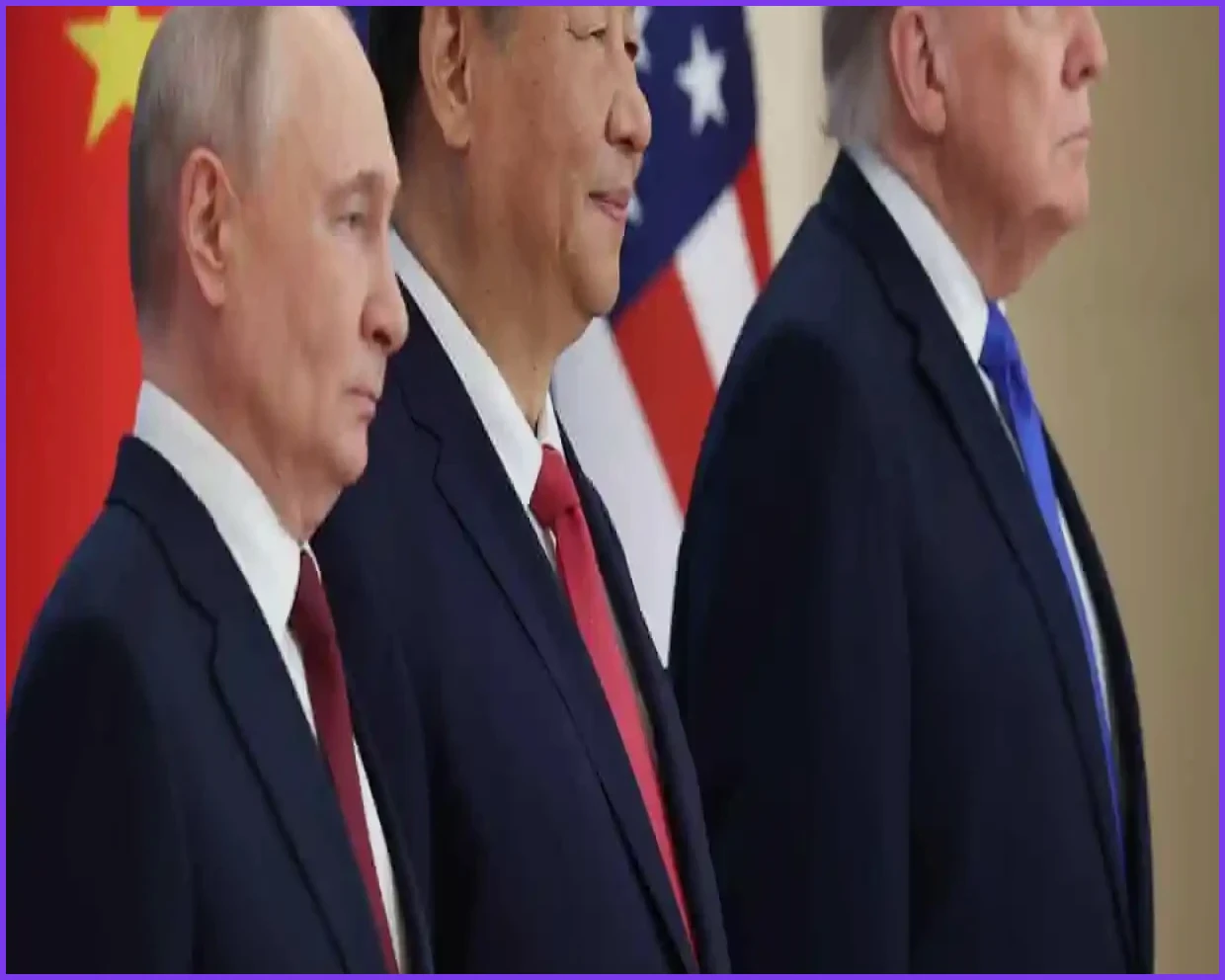
The recent gathering of the leaders of China, the United States, and Russia in Shenzhen marked a significant moment as the first such trilateral meeting, yet its long-term impact appears likely to be minimal. Despite Vladimir Putin’s characterization of the event as a “new page in the history of diplomacy,” the 90-minute session produced few tangible outcomes, suggesting it may serve as little more than a footnote in 21st-century diplomatic records.
For the three participants, the meeting offered distinct political optics. Donald Trump, who reportedly fell asleep during the main APEC summit, utilized the platform to demonstrate his rapport with the two authoritarian leaders. Following the destruction of Russia’s bridge into Crimea by Ukraine, Trump greeted Putin as a wartime ally. Meanwhile, Putin successfully projected his influence to a domestic audience, positioning Moscow as a central player in global affairs, even as he faced minor protocol challenges during photo sessions. The Russian president claimed the summit was a “free gift” for his government, reinforcing his argument that Europe’s efforts to isolate Russia have failed as the Asia-Pacific region assumes a dominant role in the global economy. He further noted that his relationship with Trump is built on “similar civilisational values.”
The joint statement released by the trio covered four broad areas: energy supply, UN reform, the powers of the International Criminal Court (ICC), and a tentative dialogue on nuclear disarmament. Critics have noted that these goals lack the ambition of the 1945 Yalta conference or the 1943 Tehran summit, where leaders pledged to build a democratic world order. In contrast, the Shenzhen meeting appeared to lack a concrete agenda, focusing on vague commitments to maintain international security. There were no specific plans provided regarding how to reform the United Nations or boost energy production. Former British foreign secretary Jeremy Hunt commented that the summit underlined that Trump was no longer the leader of the free world.
Putin, who acted as the primary instigator for the summit, sought to frame the meeting in a historical context by identifying the three nations as the victors of the second world war, a remark interpreted as a slight toward Britain. The focus on preserving international law was seemingly intended to ensure certain world leaders were shielded from the prospect of the ICC serving them with arrest warrants. Coincidentally, the International Court of Justice (ICJ) ruled on the same day that Myanmar was guilty of genocide, though the Shenzhen statement avoided naming the ICJ, targeting the ICC and “other similar institutions” instead. Doubtless, this omission occurred because ICJ rulings can be dismissed with near impunity.
Xi Jinping, nervous that China’s status as protector of the global south might be damaged by being involved in a global superpower carve-up, stuck to a familiar script: “History tells us that when major powers are at peace, the world is secure. When they clash, there is chaos.” As the summit concluded, observers noted that the event failed to match the gravity of the global crises it sought to address, leaving little evidence of lasting historical significance.
Related Articles
Meet Md. Rubel Rana
As a core contributor to Worlddincidents.com, Rubel Rana brings a unique perspective to the world of journalism. Whether it’s deep-diving into historical trivia or covering the latest global headlines, Rubel Rana is committed to delivering high-quality, high-impact articles. Their writing blends meticulous research with a compelling voice, helping readers stay informed and curious about the world around them.