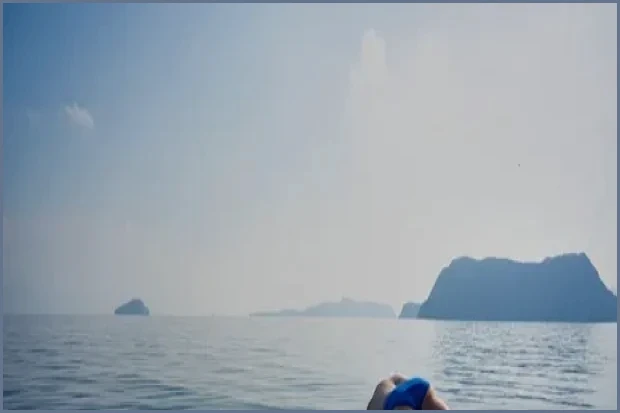
United Nations Patron of the Oceans Lewis Pugh completed a dangerous 9.3-mile swim across parts of the Strait of Hormuz on November 21, 2026, aiming to highlight how the active war with Iran poses a severe threat to the area's marine habitats and natural wildlife. Wearing only a cap bearing the U.N. logo, goggles, and swimming trunks, the 56-year-old endurance athlete navigated the volatile waterway over three days, beginning at the Musandam Peninsula on the strait's southern tip and ending around the Cape of Hormuz. Pugh is believed to be the first person to undertake a long-distance swim through the region since the conflict erupted.
The journey was fraught with immediate danger as active combat erupted around him. Just minutes after entering the water on Monday, Pugh was shaken by two massive underwater detonations. Speaking following his return to London, Pugh recalled seeing an oil tanker roughly four kilometers away burst into flames after being struck, followed quickly by the arrival of military aircraft. He noted that the loud booms and incoming fighter jets made it instantly clear that he and his support crew needed to evacuate the area immediately.
Safety concerns forced Pugh to execute the challenge in staggered sections, accumulating roughly 6½ hours of actual swimming time across the three-day period. On the second day, while returning toward the harbor, he witnessed a gas carrier being attacked. He described passing the struck vessel as an unforgettable horror, recalling the overpowering smell of chemicals, fireballs shooting high into the air, and the ocean surface surrounding the ship actually catching fire. He emphasized that the acute damage inflicted on nature by such casualties is devastatingly severe.
While the world typically views the Strait of Hormuz strictly as a heavily used strategic shipping lane, Pugh emphasized its ecological significance as one of the natural world's primary treasure troves and one of the most beautiful places he has ever visited. Pugh warned of how oil leaking from the dozens of tankers damaged since February could create lasting problems for the region's animals, as well as its coastlines, coral reefs, and mangrove forests. He emphasized that chemical pollution and oil leaking from damaged ships will take years or even decades to recover from, creating ecological damage that will persist across generations.
During his passage into the area, Pugh observed large numbers of dolphins following his boat, alongside sea turtles and ospreys. Reflecting on past journeys, he marveled at the hundreds of sea turtles he had encountered during a pre-war swim along the Omani coastline, contrasting that pristine biodiversity with the acute environmental peril now caused by oil spills and toxic contamination.
The environmental crisis comes against the backdrop of escalating military hostilities in the crucial shipping corridor. Iran has stepped up attacks in recent weeks against vessels it claims are navigating unauthorized routes in a bid to exert control over the strait. Before the United States and Israel launched the war on Feb. 28, roughly one-fifth of all globally traded oil passed through the waterway. In addition to targeted strikes, several commercial tankers have detonated sea mines deployed by Tehran, causing vessels to burst into flames. Among the incidents was an explosion last month involving a tanker carrying over 2 million barrels of oil.
For Pugh, who has spent four decades swimming in extreme conditions—ranging from Antarctica and the Red Sea to the English Channel—swimming through an active combat zone introduced unprecedented hazards, even for someone who has previously faced great white sharks and freezing temperatures. Over his career, Pugh became the first athlete to swim across the North Pole and complete long-distance swims across all of the world's oceans. In 2023, he swam all 315 miles of the Hudson River to advocate for clean riverways.
Pugh's unique combination of extreme aquatic feats and global political outreach has earned his efforts the nickname "Speedo diplomacy." According to his foundation, these environmental campaigns have helped secure formal commitments to protect more than 1.35 million square miles of vulnerable ocean ecosystems worldwide. Summarizing his mission in the Strait of Hormuz, Pugh stressed that sport opens crucial doors for dialogue and encourages people to confront urgent crises, issuing a direct plea to end the war, open the strait, and clean up the ocean pollution.
"I looked up and I could see that an oil tanker about four kilometers away had been hit," he told The Associated Press after he returned to London. "The explosion was so loud, two booms, and then fighter jets coming in. And at that moment I realized we have to get out of here right now."
"My message is very simple," he added. "We've got to stop the war. We've got to open the strait, and we've got to clean up the pollution."
Related Articles

Meet Md. Rubel Rana
As a core contributor to Worlddincidents.com, Rubel Rana brings a unique perspective to the world of journalism. Whether it’s deep-diving into historical trivia or covering the latest global headlines, Rubel Rana is committed to delivering high-quality, high-impact articles. Their writing blends meticulous research with a compelling voice, helping readers stay informed and curious about the world around them.