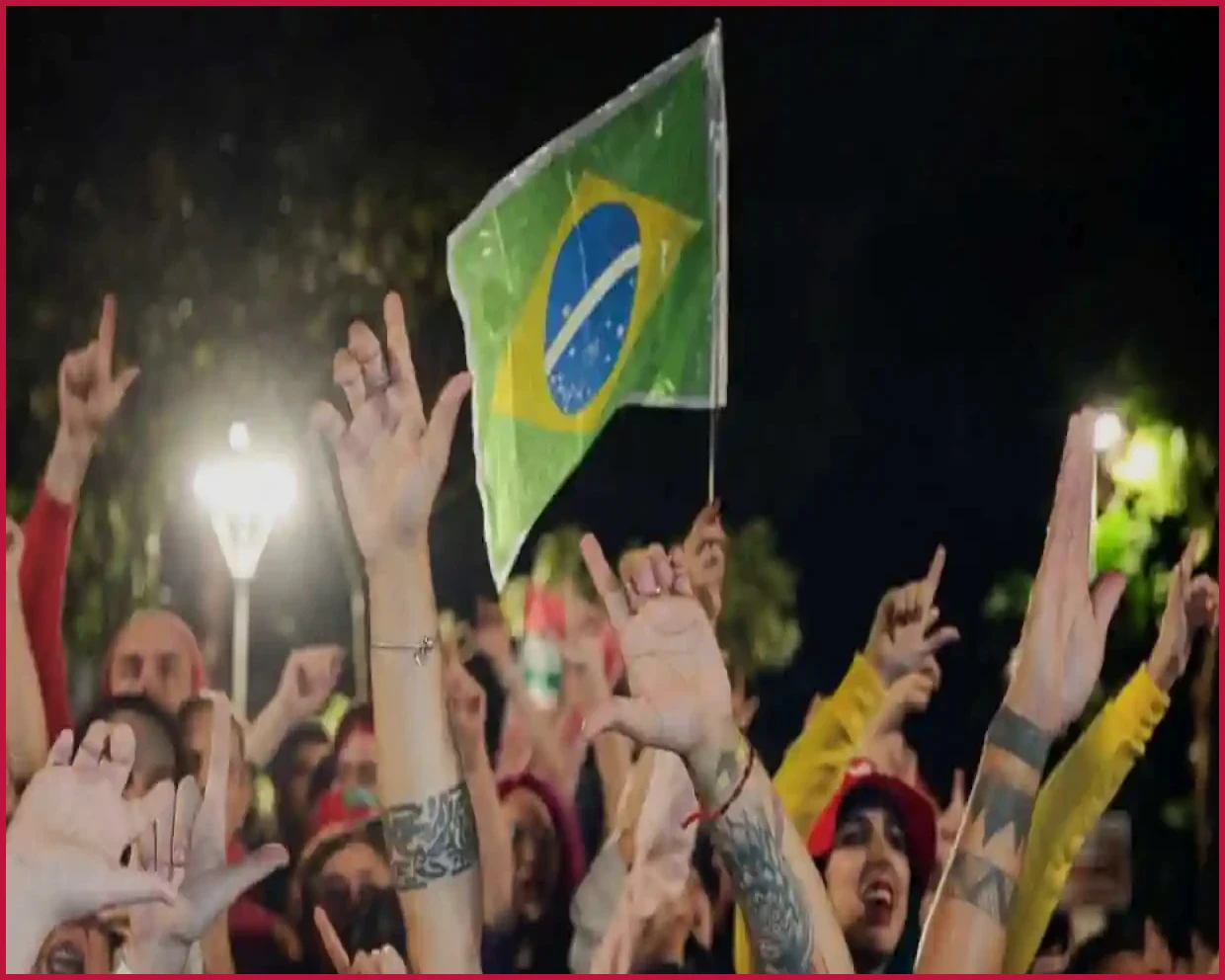
President Luiz Inácio Lula da Silva secured a fourth term in Sunday’s runoff election in Brazil, completing a historic comeback by overcoming Flávio Bolsonaro’s first-round advantage. The outcome marks the first time in Brazilian history that a candidate has lost the initial voting round and emerged victorious in the runoff. Lula’s campaign relied on intense grassroots mobilization and social welfare policies, framing the vote as a essential referendum on Brazilian democracy against an opponent intent on restoring the legacy of his father, Jair Bolsonaro, who remains imprisoned for plotting a coup following his 2022 electoral defeat.
After entering the runoff with limited room to expand among traditional allies, Lula focused his efforts on mobilizing non-voters and reconnecting with working-class communities. The Workers’ party expanded its digital and ground operations, leveraging social media influencers and messaging networks to drive voter participation. Nearly 3 million additional Brazilians cast ballots in the runoff compared to the first round. Lula achieved key gains in major urban centers and maintained dominant support in his traditional north-eastern strongholds. Throughout the campaign, Lula highlighted his administration's track record of reducing poverty and expanding benefits under Bolsa Família, the signature welfare initiative launched during his first presidency in 2003, while warning that Flávio Bolsonaro’s alignment with Donald Trump posed a threat to domestic democratic institutions and national sovereignty.
Lula’s victory halts a momentum that saw right-wing candidates win seven presidential elections across Latin America over the past 18 months. Two decades after leading the initial "pink tide" of progressive regional leaders seeking greater distance from Washington, Lula now finds himself confronting a dominant conservative wave without a broad bloc of regional allies. Political figures such as Nayib Bukele in El Salvador, Javier Milei in Argentina, and the newly elected Abelardo de la Espriella in Colombia have achieved electoral success by tapping into public discontent over economic insecurity, rising living costs, crime, and traditional political parties through promises of aggressive security measures and attacks on progressive agendas.
Despite Lula's triumph, the election underscored the deep political divide within Brazil. Flávio Bolsonaro captured over 48% of the valid votes, demonstrating strong support that is echoed by a conservative majority in Congress. His messaging on economic relief and tougher security measures resonated with working-class voters who previously supported Lula. Following the announcement of the results, Flávio Bolsonaro refused to concede and petitioned to annul the election over a late extension of voting hours. Electoral authorities stated that the extension, which had been jointly requested by both campaign teams, had no bearing on the final outcome.
The election outcome also carries major geopolitical implications, directly intersecting with Washington's regional strategy under Donald Trump. In his victory speech, Lula emphasized that recent street demonstrations proved Brazil "refuses to be anyone’s back yard," directly challenging expanded U.S. policy aims in the hemisphere. The Trump administration has utilized tariffs, sanctions, financial packages, and public endorsements to back conservative leaders in the region, including offering a $20 billion financial assistance package to Argentina's Milei ahead of the 2025 legislative elections conditioned on political alignment. Washington has also extended support to candidates in Honduras and Colombia, while overlooking allegations regarding Salvadoran President Bukele's informal negotiations with criminal networks, which Bukele denies.
Furthermore, Washington has used counter-narcotics and anti-terrorism designations to step up its regional security footprint. Such measures justified the military operation that captured Nicolás Maduro in Venezuela, alongside threats of unilateral actions against Mexican cartels, joint military engagements in Ecuador, and exploratory security discussions with Colombia. In Brazil, the Bolsonaro family previously sought U.S. pressure against the domestic judicial system during Jair Bolsonaro’s legal proceedings. The Trump administration subsequently enacted tariffs on Brazilian goods, placed sanctions on Supreme Court Justice Alexandre de Moraes, and designated Brazil’s two largest criminal groups as foreign terrorist organizations. Additionally, Washington has pressed Brasilia for access to critical minerals to reduce dependence on China, though Lula continues to maintain Brazil's independence to trade with diverse global partners.
Related Articles

Meet Md. Rubel Rana
As a core contributor to Worlddincidents.com, Rubel Rana brings a unique perspective to the world of journalism. Whether it’s deep-diving into historical trivia or covering the latest global headlines, Rubel Rana is committed to delivering high-quality, high-impact articles. Their writing blends meticulous research with a compelling voice, helping readers stay informed and curious about the world around them.