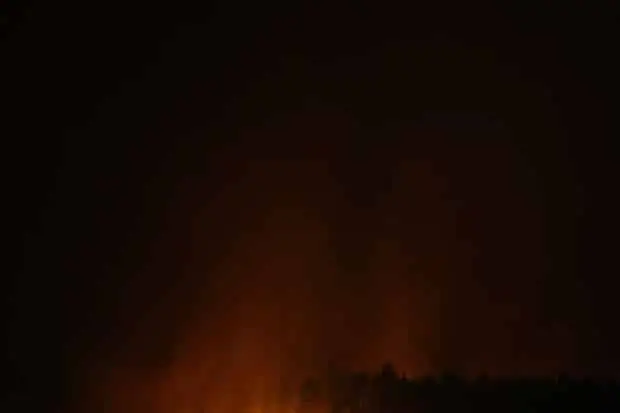
French President Emmanuel Macron convened an emergency government crisis meeting on Monday morning, July 27, 2026, to address the massive, uncontrolled wildfires that have forced more than 250,000 people to flee their homes. The high-level meeting, reported at 6:03 AM EDT, comes amid a race against time for emergency crews on the ground and in the air, where water- and retardant-dropping aircraft are battling to make progress before a forecast surge in temperatures on Tuesday threatens to worsen conditions.
There was a slight glimmer of hope on Monday that the spread of the largest blaze in southwest France may have slowed. In the Gironde region, where flames have consumed an area four times the size of Paris, local authorities reported that the situation remained "globally stable" overnight. This marked a notable shift from previous days, when the giant fire had been steadily advancing toward the wine-producing city of Bordeaux.
In the neighboring Landes region, hundreds of firefighters have made steady progress against another virulent but smaller blaze. Overnight rain provided some temporary relief, leading local officials to describe the current conditions as "favorable" for firefighting efforts. However, authorities cautioned that the situation remains highly volatile and could quickly change.
While no new evacuation orders have been issued, Gironde authorities are taking extra precautions as the peak August tourist season begins. To keep vacationers away from the active fire zones, local officials have banned holiday camps for children and individuals with disabilities.
The sheer intensity of the French blazes has triggered a rare atmospheric phenomenon known as a "pyrocumulonimbus." According to France's national firefighters federation, this giant fire cloud has the capacity to generate its own winds, lightning, and occasionally tornadoes, which can spark additional blazes. The federation noted that this phenomenon has never been documented before in France. Eric Brocardi, a spokesman for the federation, described the struggle as "a David-versus-Goliath scenario," adding, "At some point, we'll find a weak spot and strike there."
President Macron, who presided over Monday's crisis session, previously pledged long-term support for the affected areas. In a post on social media platform X over the weekend, Macron wrote, "We will rebuild, we will repair and we will be present for as long as necessary."
Meanwhile, Spain is grappling with its own severe wildfire crisis, with out-of-control blazes burning near Madrid and in the eastern Valencia region. Spanish authorities have evacuated 76,000 residents and ordered another 30,000 people to remain confined to their homes to ensure their safety.
The scale of the destruction in both nations has intensified public pressure for stronger global action against climate change. The fires have been fueled by intense, early-season heat waves that have left forests and scrublands tinder-dry. Spanish Prime Minister Pedro Sánchez connected the disasters directly to global warming, stating, "What we are experiencing is not a series of isolated incidents. It is the consequence of a climate emergency that is making wildfires even more violent, heat waves more frequent."
Displaced residents are facing immense anxiety over the state of their properties. Rocío Domínguez, who was forced to flee the town of Chapinería, west of Madrid, alongside her dog Simba, recalled the terrifying escape. "It looked like the apocalypse. You couldn't see anything. Everything was covered in ash," Domínguez said. "We don't know when we get to the town, if we'll have half the house burned down or we'll have it intact or we won't have a house. All the clothes, all the memories, everything."
Related Articles

Md. Kazi Bijoy is a dedicated tech enthusiast and content creator with a passion for digital innovation. With years of experience in the tech industry, he specializes in breaking down complex topics into easy-to-understand guides. When he isn’t writing, he explores the latest gadgets and researches emerging trends in the digital world.
1 thought on “Macron Calls Crisis Meeting as Wildfires Rage in France and Spain”