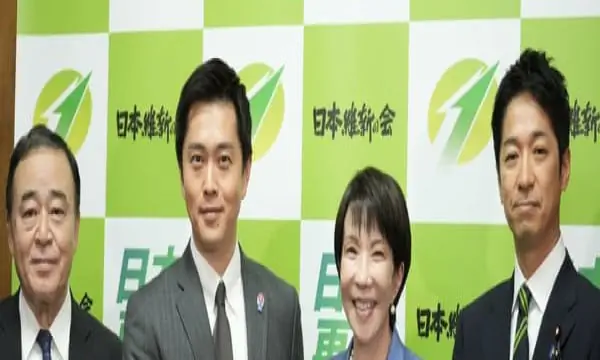
Following a sweeping winter snap election victory in early 2026, Japanese Prime Minister Takaichi Sanae stood alongside two key figures who did not belong to her ruling Liberal Democratic Party (LDP). Instead, they were the leaders of Nippon Ishin no Kai: Osaka Governor Yoshimura Hirofumi and Fujita Fumitake, the head of the party's Diet delegation. During the campaign, Yoshimura’s rhetoric strongly aligned with Takaichi, declaring that they would never leave her standing alone and were determined to move Japan forward. This alliance has allowed Nippon Ishin to wield political influence far exceeding its actual parliamentary strength, effectively serving as Takaichi's external power base.
The partnership was initially unexpected. During the October 2025 LDP leadership race to succeed Ishiba Shigeru, Nippon Ishin had favored Koizumi Shinjiro, who now serves as the minister of defense. Nippon Ishin viewed Koizumi as a true reformer who shared their neoliberal commitment to challenging vested interests. By offering the LDP the votes needed to secure a parliamentary majority, which the ruling party lacked in both houses at the time, Nippon Ishin hoped to advance its own reform agenda. Takaichi’s victory in the leadership race came as a shock to Nippon Ishin, which lacked close political ties to her inner circle.
However, a sudden political deadlock changed the landscape. The LDP's long-term coalition partner, Komeito, declined to join a government under Takaichi's leadership, citing dissatisfaction with the LDP's handling of a political funding scandal and doubts about the implementation timeline of desired reforms. This left Takaichi’s path to the premiership highly uncertain, prompting her to wryly call herself "the woman who may never become prime minister." During this crisis, Takashi Endo of Nippon Ishin utilized his cross-party connections to act as an intermediary between Yoshimura and Takaichi. The two leaders quickly found common ground as fellow reformers, resulting in a coalition agreement signed just a week after their talks began.
Since taking office, Prime Minister Takaichi has advanced key policy goals outlined in the coalition agreement, many of which align with her long-term conservative agenda. Among these is a bill criminalizing the desecration of the Japanese flag, an initiative she had unsuccessfully attempted to pass in both 2012 and 2021. Furthermore, replacing Komeito with Nippon Ishin has removed previous constraints on national security reforms. This has allowed the conservative wing of the LDP to aggressively pursue defense and public security objectives that were heavily emphasized in the coalition agreement.
Takaichi's political debt to Nippon Ishin has also driven her to champion policies outside her traditional priorities. Most notably, she introduced highly contentious legislation to reduce the number of seats in the House of Representatives by 10 percent, explicitly framing the proposal as a promise made to Nippon Ishin. The bill provoked a boycott of Diet deliberations by rival parties, particularly those relying on proportional representation where the cuts would fall. Although Takaichi ultimately withdrew the bill after consulting with Yoshimura, her willingness to push such a controversial measure highlighted the depth of her commitment to her coalition partner. Additionally, the LDP extended the Diet session specifically to pass the deputy capital bill, a major victory for Nippon Ishin's decentralization agenda.
This external alliance has proven crucial for Takaichi, who has long been regarded as an outsider within the LDP. Rather than relying on party elders, she built her career through a strong conservative grassroots following and a close alliance with the late Prime Minister Abe Shinzo. Her decision to call the early 2026 snap election was aimed at consolidating her authority over LDP moderates and fiscal conservatives who remained skeptical of her social conservatism and expansionary fiscal policies. Nippon Ishin Secretary General Hiroshi Nakatsukasa openly acknowledged this dynamic during the campaign, stating that their role was to guard against "forces of resistance within the LDP" and act as an accelerator for the government.
Despite the LDP now holding an outright supermajority, which has led some party members to call for a reconsideration of the coalition, the alliance continues to shape Japan's political trajectory. Takaichi and LDP defense hawks view Nippon Ishin as a useful external force to push the government further to the right on constitutional revision and forward-leaning nuclear policies, including potential nuclear-sharing agreements with the United States. While the LDP seeks to keep the existing language of Article 9, Paragraph 2 of the Constitution, Nippon Ishin advocates for deleting the paragraph entirely to replace the Self-Defense Forces with a constitutionally recognized National Defense Force. While some of Nippon Ishin’s signature goals—such as banning corporate political donations and sweeping social security reform—remain stalled, the party has successfully integrated many of its defense and security priorities into active government policy.
Related Articles

Md. Kazi Bijoy is a dedicated tech enthusiast and content creator with a passion for digital innovation. With years of experience in the tech industry, he specializes in breaking down complex topics into easy-to-understand guides. When he isn’t writing, he explores the latest gadgets and researches emerging trends in the digital world.